

Dog hair is one of those inevitable parts of life with a furry friend, but that doesn’t mean your home has to look like a shedding zone. From couches to carpets, dog hair seems to appear everywhere, turning simple cleaning into a never-ending battle. Understanding why dogs shed and how to manage it effectively is the first step toward maintaining a cleaner, more comfortable living space.
In this guide, we’ll cover practical tips and strategies to minimize dog hair around your home, from grooming routines and smart cleaning tools to preventative measures that reduce shedding at the source. Whether you’re a seasoned dog owner or welcoming a new pup into your family, these actionable steps will help you enjoy the companionship of your dog without sacrificing a tidy home.
Winning the War on Dog Hair Before It Starts
If you’ve ever found dog hair in your morning coffee or woven into your favorite sweater, you're not alone. In fact, this furry struggle is so universal that it supports a massive industry.
In 2023, the global dog hair remover market was valued at a staggering USD 2.1 billion. That number says it all—with about 65.1 million American households owning a dog, millions of people are looking for real solutions. You can dig deeper into these market trends over at DataIntelo.
Understanding Why Your Dog Sheds
Before we jump into solutions, let's quickly understand the "why." Shedding is a natural process where dogs lose old or damaged hair. But several things can crank up the volume:
- Breed Genetics: Let's be honest, some breeds are professional shedders. Siberian Huskies, German Shepherds, and Golden Retrievers, with their thick double coats, are prime examples.
- Seasonal Changes: Many dogs "blow their coat" twice a year—in the spring to ditch heavy winter insulation and in the fall to prepare a new, warmer coat.
- Health and Nutrition: Your dog's diet and health directly impact their skin and coat. Excessive shedding can sometimes be a red flag for poor nutrition or an underlying health issue.
Quick Fact: The goal isn't to stop shedding completely—that’s impossible and unnatural. The real secret is managing it proactively so it doesn’t take over your living space.
This guide gives you a practical game plan to finally get the upper hand in the fight against fur.
Strategy 1: Proactive Grooming to Stop Hair at the Source
The best way to deal with dog hair in your house is to catch it before it ever hits the floor. A proactive grooming routine isn't about blocking out hours for a deep-clean session; it’s about building smart, daily habits that prevent fur tumbleweeds from ever forming.
A friend with a German Shepherd was constantly battling fur. He was amazed when he committed to just 10 minutes of brushing a day and saw a massive reduction in his vacuuming time. It was a total game-changer.
Choose Your Grooming Tools Wisely
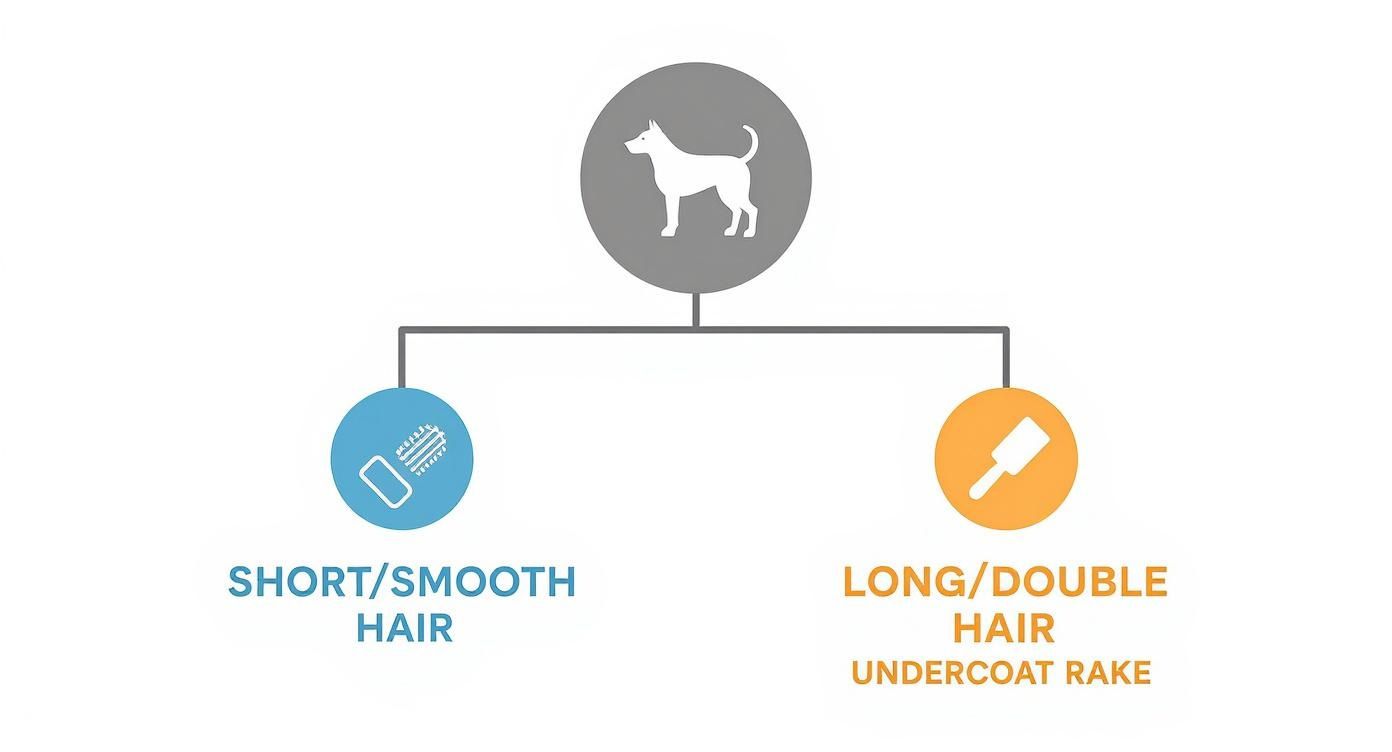
Not all brushes are created equal. Using the wrong tool is frustrating, ineffective, and can even be uncomfortable for your dog. Matching the tool to the coat is critical for success.
- For Double Coats (Huskies, Retrievers): An undercoat rake is your best friend. It gets past the topcoat to gently pull out the loose, fluffy undercoat where most shedding originates.
- For Short, Smooth Coats (Boxers, Beagles): A rubber curry comb or grooming mitt is perfect. It lifts away loose hair and dander, and most dogs love the massage-like feel.
- For Curly or Wiry Coats (Poodles, Terriers): You'll want a slicker brush. It’s key to preventing mats and tangles, which trap dead hair and create bigger messes down the line.
Beyond the Brush: Diet and Bathing
While brushing is the star of the show, a few other things make a huge difference.
- Diet: A diet high in omega-3 and omega-6 fatty acids promotes healthy skin and a strong, shiny coat that naturally sheds less. Look for foods with fish or flaxseed, or talk to your vet about a supplement.
- Bathing: Using a quality de-shedding shampoo and conditioner can release a ton of loose fur in the tub, which means less of it on your couch.
Key Takeaway: Proactive grooming is your first and best line of defense. Consistent brushing can cut down on the amount of hair shed around the house by as much as 90%, according to some experts at Dog Pawlour.
Strategy 2: Your Strategic Cleaning and Removal Toolkit
Even with dedicated grooming, some hair will escape. This is where having the right cleaning toolkit makes all the difference. The right gear makes the job faster and far more effective.
A good vacuum designed for pet hair is non-negotiable. These models have incredible suction and tangle-free rubber brush heads that yank stubborn, embedded fur out of carpets and upholstery. In fact, a quality pet vacuum with a HEPA filter can pull up over 70% of visible pet hair in a single pass. The demand for these tools is huge, as you can see in recent pet hair remover market research.
Beyond the Vacuum: Specialized Tools
Your vacuum does the heavy lifting, but these specialized tools are essential for daily touch-ups.
- Rubber Brooms: A must-have for hardwood or tile. It works like a hair magnet, using static to clump fur for easy sweeping.
- Squeegees: A secret weapon for carpets and fabric sofas. Just drag it firmly across the surface and watch as it pulls up piles of hidden fur.
- Reusable Lint Rollers: A washable, super-sticky surface picks up hair from clothes, lampshades, and cushions in a flash.
Dog Hair Removal Tool Comparison
Here's a quick breakdown of common tools and where they shine.
| Tool | Best For (Surface) | Effectiveness Rating (1-5) | Pro Tip |
|---|---|---|---|
| Pet Vacuum | Carpets, Rugs, Large Areas | 5 | Look for a model with a detachable hose and upholstery tool for versatility. |
| Rubber Broom | Hardwood, Tile, Laminate | 4.5 | Use short, pulling strokes to create static and build a "fur ball" for easy pickup. |
| Squeegee | Low-Pile Carpet, Fabric Furniture | 4 | Works best when pulled firmly towards you. Great for stairs! |
| Reusable Lint Roller | Clothing, Upholstery, Lampshades | 3.5 | Keep one in your car for quick cleanups on the go before you have company. |
A truly effective cleaning strategy isn't about working harder; it's about using smart tools that do the heavy lifting for you.
Remember, a clean home starts with a clean pet and a clean yard. The less debris your dog tracks inside, the less work you do later. This is why backyard hygiene is important, and having the best pooper scooper for large dogs makes that daily task quick and sanitary.
Strategy 3: Creating a Hair-Resistant Home Environment
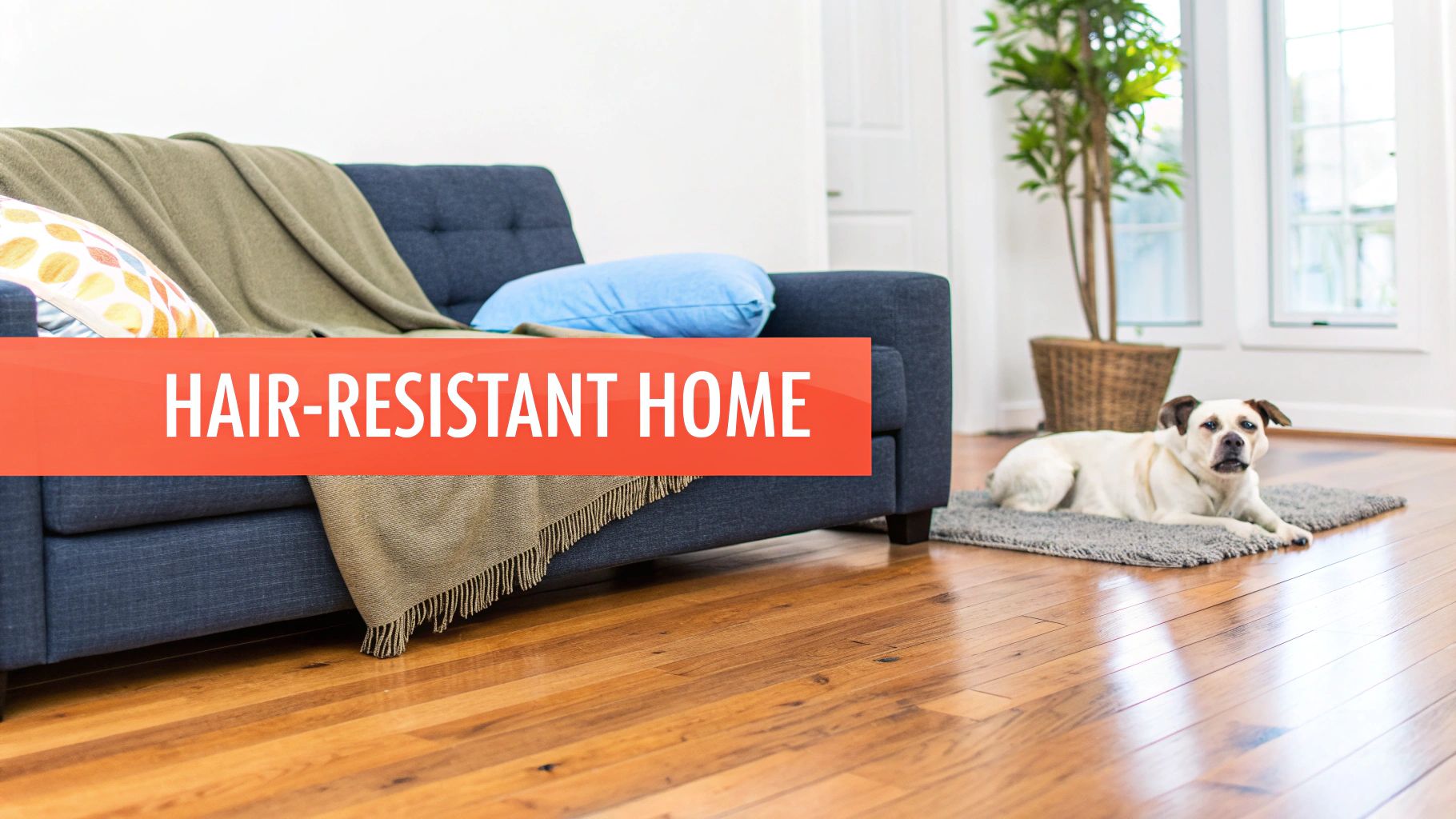
You can also set up your home to passively fight back against fur. Making smart choices with your flooring and furniture can drastically cut down on cleanup time.
When it comes to flooring, pet owners almost universally agree: hardwood, tile, or laminate is a lifesaver. Unlike carpet that traps hair deep in its fibers, hard surfaces let you see the mess and deal with it instantly. If you must have a rug, choose a washable, tightly woven one.
Strategic Furniture and Fabric Choices
Your furniture is another major battleground. Choose materials that release fur easily.
- Best Fabrics: Leather, pleather, and most microfiber fabrics are fantastic because a simple wipe-down is often all it takes.
- Worst Fabrics: Avoid tweed, corduroy, or velvet, which act like magnets for pet hair.
Protect your dog's favorite napping spots by throwing a stylish, washable cover or blanket over the area. This contains the hair to one easy-to-clean layer.
The most effective way to manage dog hair is to create zones. By using washable covers and designated dog beds, you concentrate the fur in specific, easy-to-clean areas, protecting your main furniture.
This proactive approach simplifies your routine. It doesn't stop at the back door, either. A clean yard means a cleaner dog. Keeping your outdoor space tidy with a tool like Potomo’s pooper scooper helps maintain that indoor-outdoor balance, so your pup isn’t tracking in dirt along with all that fur. It's a small step that makes your whole home feel cleaner.
Strategy 4: The Outdoor Solution You Haven't Considered
The secret to a cleaner home often starts before your dog even steps back inside. The battle against indoor dog hair is frequently won or lost in the backyard. A tidy, well-kept yard means less dirt, debris, and loose fur getting tracked all over your floors.
How a Clean Yard Creates a Cleaner Home
A muddy, messy yard inevitably leads to muddy paws and a dirty coat. All that grime, plus loose fur, gets a free ride into your living room.
On the other hand, a clean outdoor space encourages more playtime—a fantastic, natural way for your dog to shed loose hair outside on the grass instead of on your couch.
Keeping the yard clear of waste is the crucial first step. It's not just about hygiene; it’s about creating an inviting space. Having an efficient tool on hand makes this easy. For instance, the Potomo pooper scooper is designed for quick, sanitary cleanups, making it simple to maintain a consistently tidy yard. This small outdoor habit has a huge impact on your indoor cleaning routine. You can get more ideas for building a seamless routine by reading up on a complete waste disposal system for dogs.
A clean pet coming into a clean home is the ultimate win. Your outdoor maintenance directly supports all the hard work you put in indoors.
Frequently Asked Questions (FAQ)
1. Does shaving a dog reduce shedding?
No, this is a common myth. Shaving a dog, especially a double-coated breed like a Husky, doesn't stop shedding. You’ll just end up with shorter, pricklier hairs everywhere. Worse, it can damage their coat and interfere with their natural ability to regulate body temperature. Consistent brushing with the right tool is a much better solution.
2. Can special supplements really help reduce shedding?
Yes, they often can. A dog's diet has a huge impact on their skin and coat health. Supplements rich in Omega-3 and Omega-6 fatty acids (found in fish oil or flaxseed) can improve skin hydration and strengthen hair follicles, which may reduce shedding caused by dry skin or nutritional gaps. Always check with your vet before starting any new supplement.
3. How often should I vacuum to control dog hair?
It depends on your dog and your home. For heavy shedders or in households with allergies, a quick daily vacuum of high-traffic areas is best. For most other dog owners, a thorough vacuuming 2-3 times per week is usually enough. A robot vacuum can be a great investment for daily maintenance.
4. Do air purifiers help with dog hair and dander?
Absolutely. An air purifier with a HEPA filter is a game-changer. It captures airborne particles, including pet hair and dander, before they can settle on your furniture and floors. This not only helps keep your home cleaner but also improves overall air quality.
For more answers to common questions about pet care products and routines, check out the detailed Potomo FAQ page for additional insights.
A truly clean home is a team effort between you, your dog, and the right tools for the job. Make your outdoor cleanup effortless with the hands-free pooper scooper from PoTomo. Learn more and simplify your routine today.