

Choosing the right waste disposal system for dogs isn't just about ticking a chore off your list; it's about creating a cleaner, safer, and more enjoyable space for you and your furry friend. A good system transforms a dreaded task into a simple, responsible habit, protecting your family, your lawn, and the environment.
Why a Dedicated Dog Waste System Is a Must-Have
No one enjoys poop patrol. It's tempting to leave it, hoping it will magically disappear. But that small pile is more than just an eyesore; it's a little bundle of health and environmental hazards. My neighbor, Dave, learned this the hard way when his pristine lawn developed mysterious yellow spots—the calling card of dog waste burn.
When you ignore pet waste, you're inviting some unwelcome guests to the party. Did you know the average dog produces over 270 pounds of waste each year? When left to sit, this waste can:
-
Contaminate Waterways: Rain washes bacteria from dog poop into storm drains, rivers, and lakes. This pollutes our local water and can harm fish and other aquatic life.
-
Destroy Your Lawn: The high nitrogen content in dog waste acts like a fertilizer burn, creating those ugly yellow patches on your grass.
-
Spread Nasty Diseases: Dog feces can carry harmful bacteria and parasites like E. coli, salmonella, and roundworms, which pose a health risk to both pets and people. We explore the unseen dangers lurking in dog poop in another one of our guides.
The Big Picture of Pet Poop
When you zoom out, the sheer volume of pet waste is staggering. In the U.S. alone, our dogs produce an estimated 21.2 billion pounds of waste annually. That's a massive amount, highlighting why a smart disposal strategy is so crucial for every dog owner.
This infographic gives you a great visual of how an in-ground digester can blend right into your yard, saving it from becoming a minefield of dog waste.
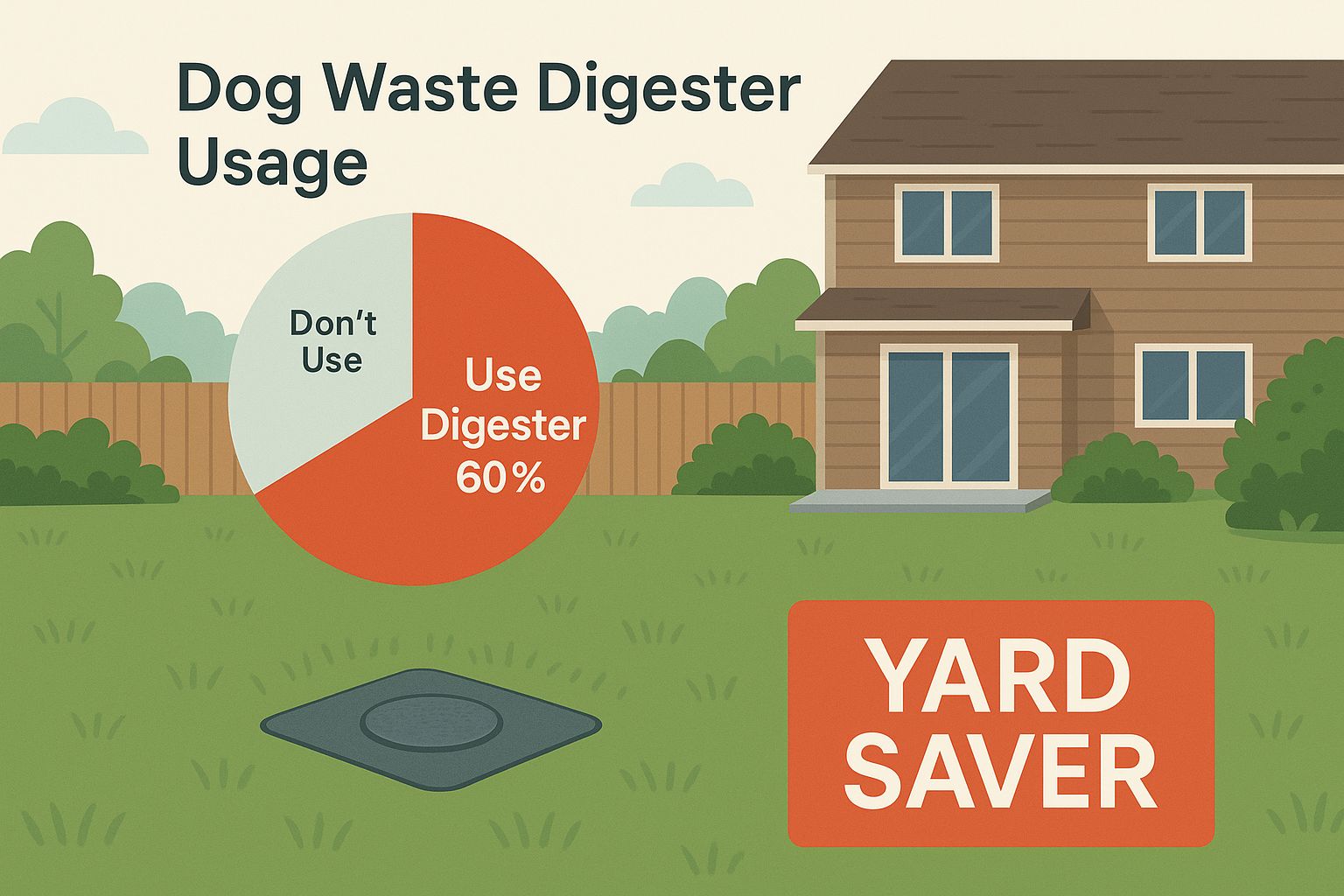
As you can see, a discreet system keeps your lawn looking pristine while taking care of the dirty work. It turns a messy problem into a manageable, out-of-sight solution. Ultimately, a good system isn’t just about cleanup; it’s about creating a healthier, happier space for everyone.
Decoding Your Dog Waste Disposal Options
Feeling a bit overwhelmed by the sheer number of bins, bags, and digesters out there? You're not alone. Picking the right waste disposal system for dogs can feel like a huge commitment, but it's much simpler once you break it down.
Think of it like choosing the right gardening tool—each one is designed for a specific purpose. Every method offers a different way to manage pet waste, tailored to various lifestyles, home types, and even climates. Whether you've got a tiny urban patio or a sprawling suburban lawn, there’s a solution that fits your life perfectly. The real goal is to turn a daily chore into a clean, simple, and responsible routine.
Comparing Dog Waste Disposal Systems
To help you get a clear, side-by-side look at the most common systems, we’ve put together this quick comparison table. It’s a simple way to weigh the pros and cons to find the perfect match for your needs.
| System Type | How It Works | Best For | Pros | Cons |
|---|---|---|---|---|
| Scoop & Bin | Collect waste with a scooper and store it in a dedicated lidded bin for municipal trash pickup. | Virtually anyone, especially those in apartments or without a yard. | Low initial cost, easy to set up, and works anywhere. | Can create odors if not managed well; reliant on plastic bags and landfills. |
| In-Ground Digester | A mini septic tank installed in your yard that uses enzymes and water to break down waste into the soil. | Homeowners with yard space looking for an eco-friendly, long-term solution. | Environmentally friendly, out of sight, and reduces landfill waste. | Requires installation and a specific soil type; higher upfront cost. |
| Composting | Dog waste is added to a dedicated compost pile or tumbler, separate from your garden compost. | People with large yards who are comfortable with the composting process. | Creates usable soil for non-edible plants and is highly sustainable. | Requires careful management of temperature and materials; not for beginners. |
No single system is the "best"—it all comes down to what works for you, your dog, and your home.
The Classic Scoop and Bin Method
This is the one we all know. It’s the most straightforward and common approach to handling dog waste, and it’s exactly what it sounds like. You scoop the poop, drop it in a dedicated outdoor trash can, and take it to the curb on collection day. Simple.
It's the go-to for a reason: it's easy and doesn't cost much to get started. The catch? Its success really depends on having the right gear. A flimsy scooper or a cheap bin without a tight-fitting lid can quickly turn this simple task into a smelly, unpleasant chore nobody wants to do.
Quick Fact: A dedicated, lidded waste bin can reduce odors by over 80% compared to an open container, making your yard a much more pleasant place to be.
A great pooper scooper is the foundation of any good waste management plan. A tool like Potomo’s pooper scooper, for example, is designed to hold the bag open for you, making the entire pickup process fast and completely hands-free. This small upgrade ensures the first and most frequent step of any system is as clean and easy as possible.
In-Ground Dog Waste Digesters
Picture a mini septic system, but just for your dog. That's essentially what an in-ground digester is. This clever device gets installed right in your yard, where it uses a simple mix of water and natural enzymes to break down pet waste and release it back into the soil as a harmless liquid.
This system is a fantastic, eco-friendly option for anyone with a yard. It keeps waste completely out of sight and, more importantly, out of landfills. Once it's in the ground, it's pretty low-maintenance—just add waste, water, and the enzyme powder every so often.
-
Best For: Homeowners with a yard who want an environmentally friendly, set-it-and-forget-it solution.
-
How It Works: Waste goes into an underground tank where natural digestants liquefy it over time.
-
Key Benefit: You can ditch the plastic bags for good and keep pet waste out of the municipal trash system entirely.
For a deeper dive into all the options, our comprehensive guide on doggie waste disposal systems can help you weigh your choices. This approach is perfect for anyone looking to create a self-sustaining system right in their own backyard.
The Eco-Friendly Power of In-Ground Digesters
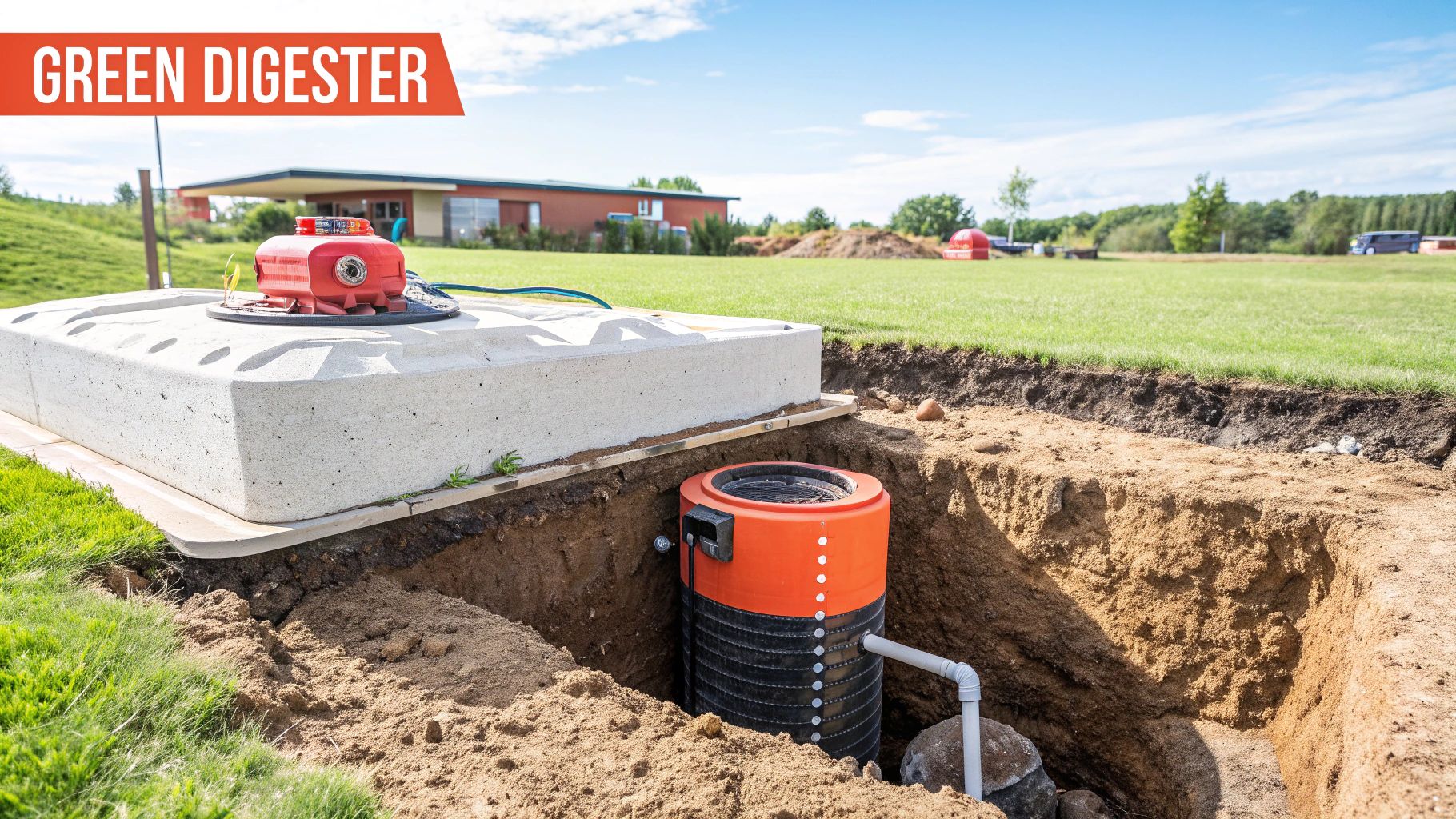
Imagine if your dog’s waste could just… disappear. Right in your own backyard, safely and completely out of sight. That’s pretty much the magic behind an in-ground digester, a truly clever and eco-friendly waste disposal system for dogs.
This device works like a miniature septic system just for your pet. Instead of bagging up waste and sending it off to a landfill where it produces harmful methane gas, a digester breaks it all down naturally, right on site. It’s a game-changer for any dog owner trying to shrink their environmental footprint. The best part? The process is surprisingly simple, relying on natural enzymes and bacteria to do all the dirty work for you.
How Does a Dog Waste Digester Work?
Think of it as a specialized composter, but built specifically for the tough job of handling pet waste. A dog waste digester is basically a small tank with a lid that you install in your yard, so the top sits neatly at ground level. You just lift the lid, drop the waste in, add some water, and sprinkle in a special digester powder. Then, you let nature take its course.
The science behind it is refreshingly straightforward:
-
Enzymes and Bacteria: The powder you add is packed with beneficial bacteria that get to work breaking down the solid waste into a liquid.
-
Water: Adding water regularly is key. It helps liquefy everything, allowing the resulting "doggy septic tea" to be safely absorbed by the surrounding soil.
-
Soil Drainage: This system needs soil that can drain. It works like a charm in most yards but might struggle in heavy, dense clay.
This kind of set-it-and-forget-it approach is really catching on. As more of us look for sustainable ways to manage pet ownership, the demand for eco-friendly products like these is on the rise. You can read more about these market trends in dog waste management tools to see just how popular they're becoming.
What to Expect With Installation and Maintenance
Getting one set up is a one-time chore. It involves digging a hole, popping the unit inside, and backfilling the dirt around it. Once it's in, the ongoing maintenance is incredibly low-key.
The main thing is consistency. Just remember to add water and a scoop of the enzyme powder on a regular schedule. This keeps the whole system balanced, humming along, and, most importantly, odor-free. It’s a simple routine that ensures your yard stays clean and safe for everyone.
Of course, you still have to get the poop from the lawn to the digester. Using an efficient tool like Potomo’s pooper scooper makes that daily task fast and totally hygienic, so there’s no mess or fuss involved.
Key Takeaway: In-ground digesters give you a sustainable, "out of sight, out of mind" solution. They turn a never-ending problem into a simple, earth-friendly process.
How to Choose the Right System for You
Alright, let's figure out which of these systems is actually going to work for you. Now that you've seen the options, it's time to find the perfect match for your home, your dog, and your lifestyle.
Choosing the right waste disposal system for dogs isn't about picking the fanciest or most expensive one. It’s about being realistic. Your yard size, how many dogs are tearing around, the local climate, and what you’re willing to spend are all going to steer you toward the right answer.
Think about it: an in-ground digester sounds amazing for a homeowner with a big backyard, but it’s a total non-starter if you live in a high-rise apartment. On the other hand, a simple scoop-and-bin setup might be all you need for a single, tiny pup, but it'll be completely overwhelmed by a pair of German Shepherds. A little bit of thinking now will save you a ton of headaches later.
Consider Your Living Situation
First things first: where do you live? This is probably the biggest factor and will immediately knock a few options off your list.
-
For Homeowners with Yards: You've got the most freedom. An in-ground digester is a fantastic, eco-friendly choice if your soil drains well. If you'd rather not dig, a dedicated, high-quality waste bin is a solid, simple alternative.
-
For Apartment Dwellers or Homes Without Yards: The classic scoop-and-bin method is your best bet. The key here is to find a bin with a really tight-fitting lid to keep smells contained on your balcony or patio. Good, odor-sealing bags are a must.
-
For Renters: You need something portable and non-permanent. A specialized waste pail is ideal. Anything that involves digging or permanent installation, like an in-ground digester, is obviously out of the question.
Factor in Your Dog's Details
Next up, let's talk about your furry friend. The size and number of dogs you have directly translate to the amount of waste you'll be dealing with every single day. What works for a Chihuahua is going to be a disaster for two Great Danes.
A single small dog produces a pretty manageable amount of poop, making a basic bin system easy enough to keep up with. But if you're wrangling multiple large dogs, that waste piles up fast. This is where an in-ground digester with a higher capacity or a larger, more heavy-duty bin becomes absolutely essential to avoid overflow and, let's be honest, a really bad smell.
One of the most common mistakes people make is underestimating how much space they'll need. If you're on the fence, always size up. You'll be glad you did.
The Foundation of Every System: Collection
No matter which system you end up with—a bin, a digester, or a composter—it all begins with the same task: actually picking up the poop. This is the part you'll be doing most often, so making it as painless as possible is key.
Having a good scooping tool can completely change the game, turning a dreaded chore into a quick, clean process. An ergonomic, hands-free scooper like Potomo’s pooper scooper makes pickup almost effortless. Because it holds the bag open for you, the whole operation is more hygienic and much faster. A smooth collection process makes any disposal system you choose that much easier to stick with for the long haul.
Keeping Your System Clean and Odor-Free
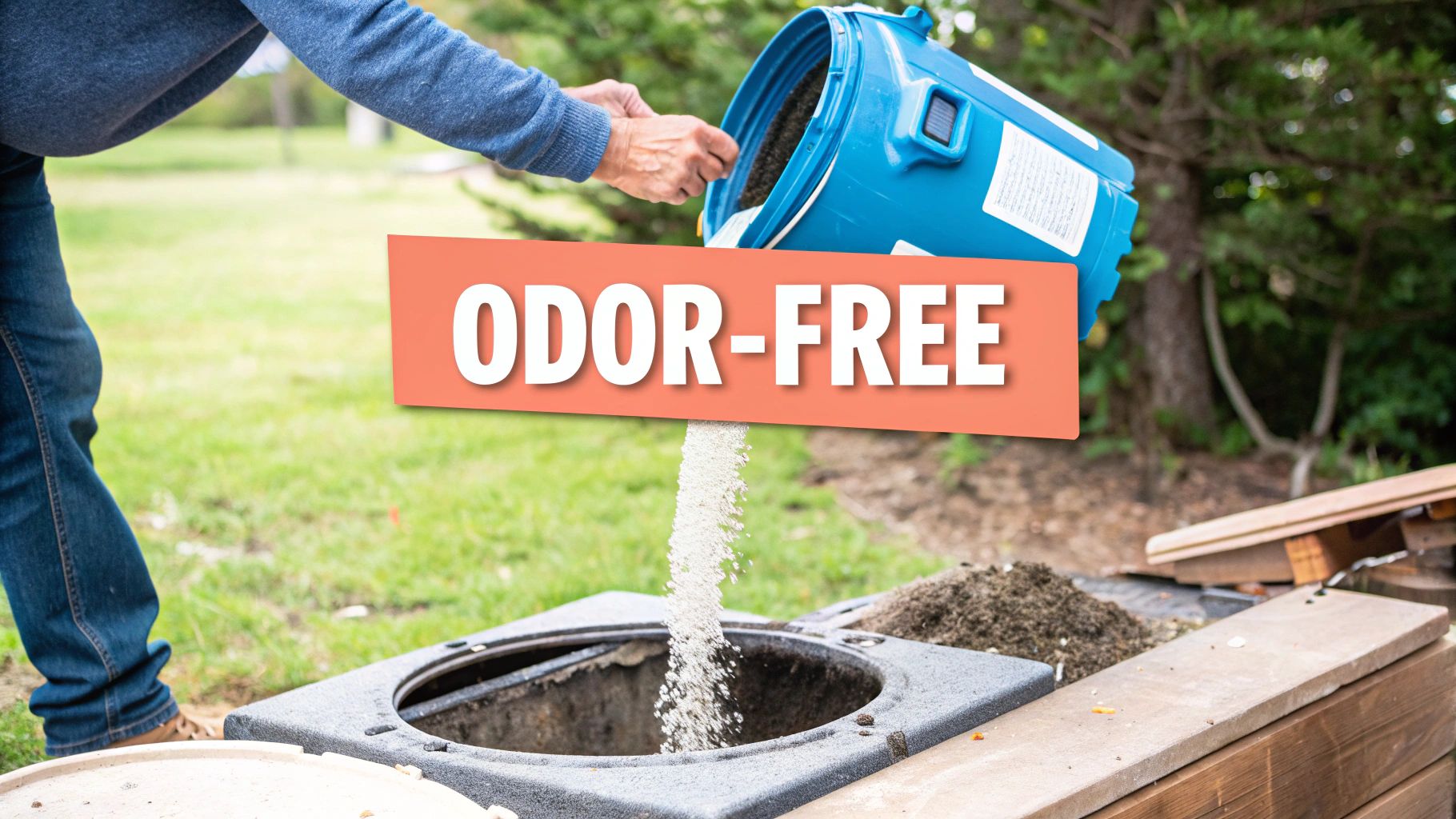
The best waste disposal system for dogs is one you completely forget is there. To get to that point, a little routine maintenance is all it takes to keep nasty smells from ever becoming an issue and ensure the whole setup works just right.
Think of it like any other chore—a few minutes of prevention are worth hours of cure. Staying on top of it means you won't have to deal with bigger headaches later, like stubborn odors that won't go away or a digester that’s stopped digesting. A clean system isn't just more pleasant; it’s more effective and will last a whole lot longer.
Tips for Waste Bins and Pails
If you’re using a standard bin or pail, your main job is to keep things contained and clean. The battle against odor begins the second you scoop the poop.
-
Always Use Quality Liners: This is non-negotiable. Go for thick, durable bags made specifically for pet waste. A cheap bag that rips is the number one reason you’ll end up with a smelly, disgusting bin.
-
Double-Bag When in Doubt: On a scorching hot day or if you're dealing with a particularly soft mess, don't think twice about double-bagging. It's an extra layer of security.
-
Set a Cleaning Schedule: Once a month, at a minimum, empty the bin completely. Give it a good scrub with a disinfectant spray or just hot, soapy water. Then, let it air dry in the sun before you pop in a new liner—the UV rays are a great natural sanitizer.
Maintaining Your In-Ground Digester
An in-ground digester is wonderfully low-effort, but it's not a "set it and forget it" solution. You're essentially managing a tiny, underground ecosystem that needs the right conditions to function.
Maintaining your digester is like tending a tiny, specialized garden. It needs the right balance of waste, water, and "food" (enzymes) to thrive and do its job effectively.
The most important thing you can do is add water regularly, especially when it’s hot and dry outside. Without enough moisture, the whole decomposition process grinds to a halt, which leads to smells and backups. A good rule of thumb is to pour in a gallon of water at least once a week.
Also, don't forget to add the enzyme or digester powder exactly as the manufacturer recommends. This keeps the population of good bacteria strong and hungry. A clean collection process, using a hands-free tool like Potomo’s pooper scooper, also helps by getting the waste into the system without making a mess on the lid or surrounding area.
FAQ: Your Dog Waste Disposal Questions Answered
We get it—talking about dog poop isn't glamorous, but getting the details right is part of being a responsible pet owner. Here are answers to some of the most common questions we hear.
1. What's the best waste disposal system for dogs in an apartment?
For apartment dwellers, the classic scoop-and-bin method is your best bet. The key is to upgrade your tools: invest in a high-quality, lidded pail for your balcony and use durable, odor-sealing bags. It makes all the difference in a small space.
2. Can I just flush dog poop down the toilet?
While it sounds easy, it's generally not recommended. Many municipal water treatment facilities are not equipped to handle the specific bacteria and parasites found in dog waste, which differ from human waste. Always check with your local wastewater authority before flushing.
3. Are in-ground dog waste digesters smelly?
When maintained correctly, they are virtually odor-free. Smells usually only occur if the system becomes too dry or if the waste-to-enzyme ratio is off. Regularly adding water and the digester powder keeps everything working smoothly and without any unpleasant aromas.
4. How does climate affect my choice of system?
Climate plays a big role! In hot regions, waste in a bin can start to smell quickly, making a well-sealed container or an in-ground digester a better option. In very cold climates, frozen ground can make installing a digester difficult and will slow down the decomposition process significantly.
5. What's the most eco-friendly way to dispose of dog poop?
An in-ground digester is one of the top eco-friendly choices because it breaks down waste on-site without creating landfill trash. Another great option is using certified compostable bags and disposing of them at an industrial composting facility that accepts pet waste. The market for sustainable pet products is growing, and North America made up over 32% of the global revenue in the pet waste market in 2023, driven by this demand. You can see how the industry is evolving and check out other pet waste trends here.