

Finding an unexpected "present" from your dog on the living room rug is one of the most frustrating parts of being a pet parent. Your first reaction might be anger or confusion, but it's crucial to understand this isn't an act of revenge. Instead, when your dog poops in the house, it’s a direct signal that something is off—and it’s your job to decode the message.
Decoding Why Your Dog Poops in the House
When a house-trained dog suddenly starts soiling indoors, it’s rarely a random act. Think of it as a form of communication. Your dog is trying to tell you something important about their physical health or emotional state, and figuring out the root cause is the only way to find a real solution.
This behavior almost always stems from one of three core areas. By looking into each one, you can get to the bottom of the issue and finally get a clear plan for a cleaner home and a happier dog.
The Three Main Culprits
Most indoor accidents can be traced back to one of these common reasons:
- Medical Issues: A sudden change in a well-trained dog often points to an underlying health problem. Things like gastrointestinal upset, food intolerances, parasites, or even pain from arthritis can make it physically difficult for your dog to hold it or get outside in time.
- Behavioral Triggers: Emotional distress is a huge factor. Stress from a new routine, fear from loud noises like thunderstorms, or separation anxiety can all manifest as house soiling. Dogs don't have many ways to express complex emotions, and this is a common physical outlet for their anxiety.
- Incomplete Training: Sometimes, the problem is simply that the house-training was never 100% solid to begin with. This is common with new puppies, a rescue dog with an unknown past, or even an adult dog who has regressed and needs a "back to basics" approach to reinforce the rules.
"A dog pooping inside is a signal, not an act of spite. It’s a call for help, indicating that they are struggling with a medical issue, feeling deep anxiety, or were never fully clear on the house-training rules."
To help you narrow down the possibilities, here’s a quick guide to some common scenarios.
Quick Guide to Common Causes of House Soiling
This table can help you start your detective work. Find the scenario that best matches your situation to get a clue about what might be going on.
| Potential Cause | Common Signs | Best First Step |
|---|---|---|
| Medical Problem | Sudden change in a well-trained dog; accidents happen even when you're home; changes in poop consistency or frequency. | Call your vet for a check-up immediately. |
| Separation Anxiety | Accidents only happen when you're gone; destructive behavior or excessive barking when left alone. | Consult a certified dog trainer or behaviorist. |
| Fear or Stress | Accidents happen during specific events like thunderstorms, fireworks, or when strangers are over. | Identify the trigger and work on desensitization and creating a "safe space" for your dog. |
| Incomplete Training | The dog is young, new to the home, or has a history of inconsistent training; accidents are frequent and seem random. | Go back to house-training basics: frequent potty breaks, crate training, and positive reinforcement. |
Remember, this is just a starting point. A vet visit is always the best first step to rule out any health concerns.
No matter the cause, dealing with the mess is the first immediate task. Quick, hygienic cleanup is essential—not just for your own sanity, but also to prevent your dog from returning to the same spot. A tool like Potomo’s pooper scooper makes outdoor cleanup instant and hands-free, which helps reinforce the idea that potty time happens outside.
Keeping your yard clean is a small but powerful part of the overall training process. It's also critical to be aware of the unseen dangers in dog poop for both human and pet health. This guide will walk you through identifying the specific reason for your dog’s accidents and give you a clear roadmap to solving them for good.
Revisiting the Rules of Potty Training
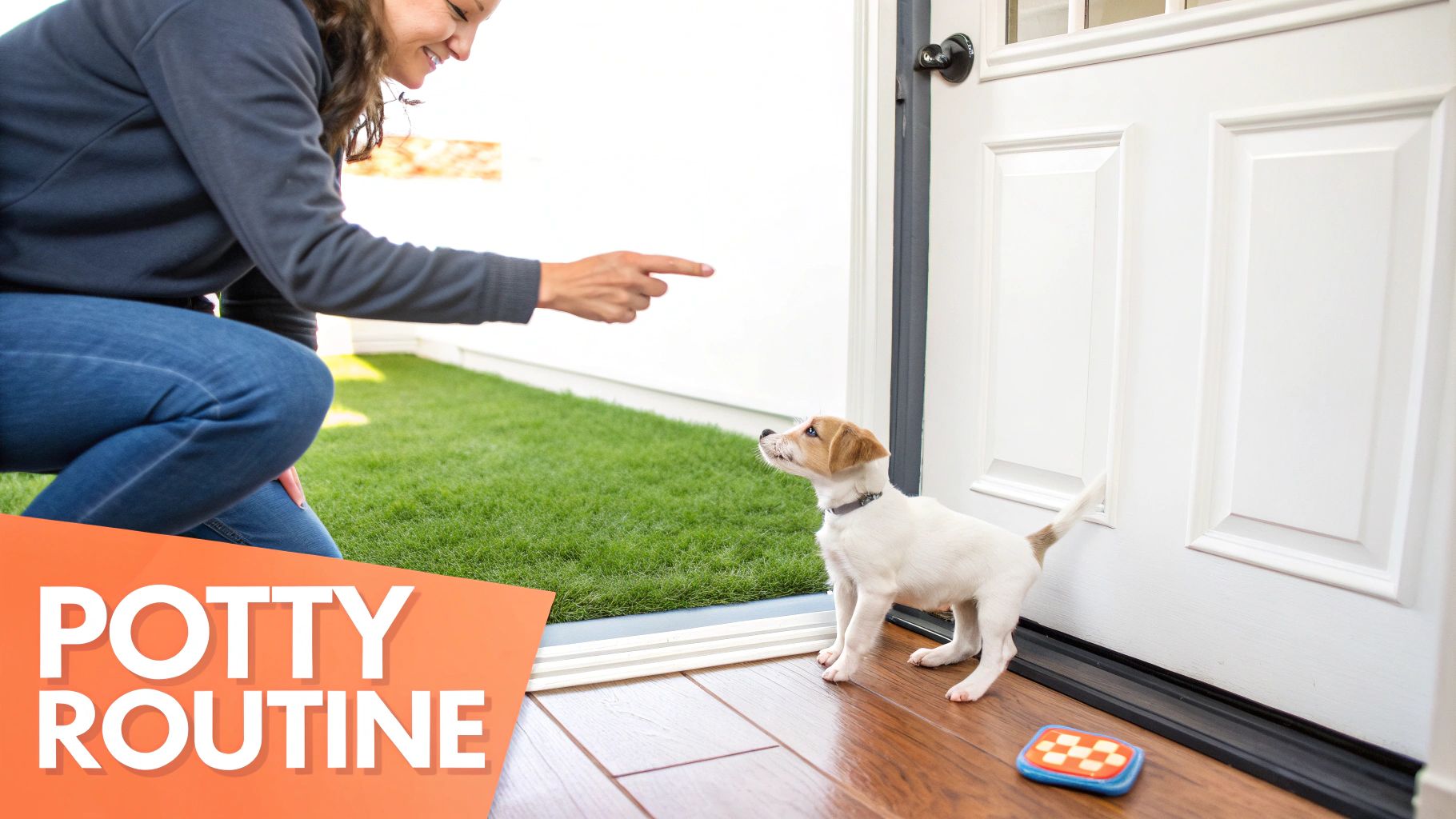
When you’re standing there asking, "why is my dog pooping in the house again?!" the answer often winds all the way back to the very beginning. It's a tough pill to swallow, but most indoor accidents happen because the initial potty training just wasn't fully cemented.
Think of it like building a house. If the foundation is shaky, you're going to see cracks appear down the road. This is especially true for puppies who seemed to "get it" suspiciously fast or for rescue dogs with an unknown history. A few successful trips outside don't always mean the lesson is truly learned.
In fact, incomplete housebreaking is the number one reason people seek veterinary help for indoor soiling. One huge veterinary study found that inadequate training was to blame for a staggering 84% of all canine housesoiling cases they looked at. You can dig into the findings from this veterinary study yourself. It just goes to show how critical it is to get those fundamentals right from the start.
Identifying Common Training Gaps
Before you can fix the problem, you’ve got to figure out where things went off the rails. Potty training isn't a single action; it's a whole system of management, scheduling, and positive reinforcement. If any one of those pieces breaks down, you get confusion and, well, messes on the rug.
Here are a few of the most common pitfalls that can sink even the best of intentions:
- Inconsistent Schedules: Dogs are creatures of habit. If potty breaks and meal times are all over the place, their internal clock never gets a chance to sync up. They simply don't know when to expect an opportunity to go.
- Accidental Rewards for the Wrong Thing: Do you rush back inside the second they do their business? You might be accidentally teaching them that pooping ends their fun outdoor time. Another classic mistake is letting them out unsupervised, which means you miss the critical window to praise them the instant they go.
- Too Much Freedom, Too Soon: Handing a new dog the keys to the kingdom is a recipe for disaster. Without constant supervision, they'll inevitably find a quiet, out-of-the-way corner to relieve themselves, creating a bad habit before you even realize it’s happening.
The real goal of potty training isn't just stopping accidents. It's about clearly teaching your dog that there is a right place and a wrong place to go. This means making the 'right' choice (outside) the best, most rewarding thing ever, while making the 'wrong' choice (inside) nearly impossible.
A Back-to-Basics Potty Training Reset
If you suspect a shaky training foundation is the culprit, the best thing you can do is go back to square one with a potty training boot camp. This isn't about punishment. It's a reset—a chance to reteach the rules clearly and build a stronger understanding with your dog.
Here’s a simple, actionable plan to get back on track:
- Get Serious About a Schedule: Take your dog out first thing in the morning, last thing at night, after every meal, after every nap, and after any playtime. For an adult dog, this might mean every 2-4 hours at first. Set alarms on your phone if you have to!
- Supervise or Confine. No Exceptions: Your dog needs to be within your line of sight at all times. This means leashed to you in the house, in a crate, or in a dog-proofed room when you can't be watching them like a hawk. This step is non-negotiable because it prevents them from practicing the bad habit.
- Reward Like You Mean It: The moment your dog finishes pooping outside, throw a party. We're talking high-value treats (think tiny pieces of cheese or chicken), and tons of enthusiastic praise. The reward has to happen immediately so they make the connection: "Pooping here gets me the good stuff!"
- Manage the Potty Spot: While you're retraining, keeping the outdoor potty area clean is just as important. A yard littered with old piles of poop isn't very inviting. Using a tool like the Potomo pooper scooper makes this daily chore quick and painless. Because it clips right to you, it's always there on walks, letting you clean up instantly and keep their designated spot pristine.
This kind of reset takes real patience, but every single successful trip outside rebuilds that foundation, one brick at a time. You're teaching a vital skill, so be consistent, stay positive, and remember that every dog learns at their own pace.
Understanding Your Dog's Emotional Triggers
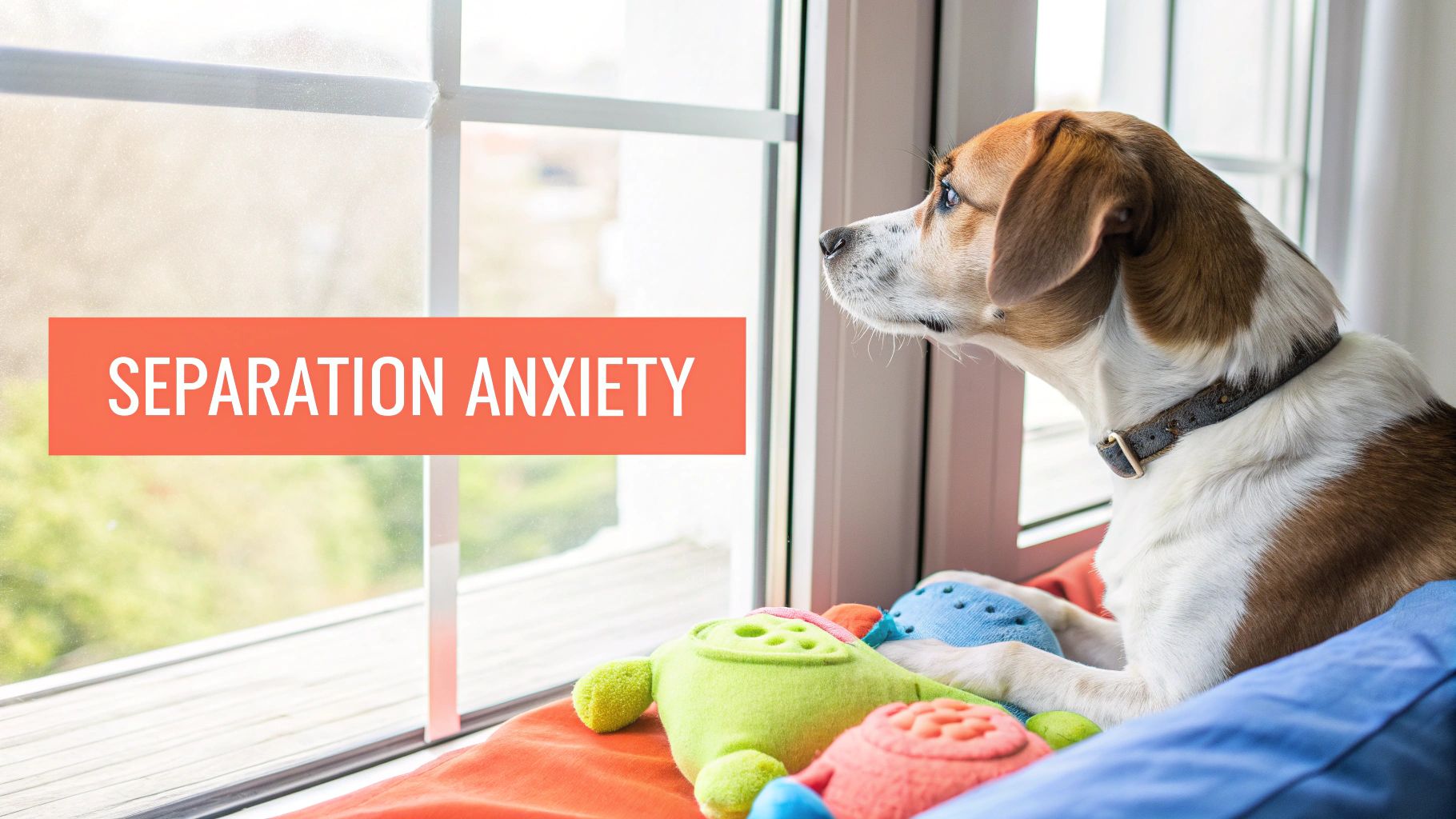
Sometimes, the answer to "why is my dog pooping in the house?" has nothing to do with training and everything to do with their feelings. Dogs have a rich emotional inner life, and when those emotions get overwhelming, their bodies can react in ways they simply can't control—including soiling indoors.
This isn’t a deliberate choice or an act of spite. Think of it like a person whose hands get clammy when they’re nervous; for some dogs, intense emotion can trigger a complete loss of bowel control. Getting to the root of these triggers is the only way to solve the problem with compassion instead of frustration.
Separation Anxiety: The Leading Culprit
One of the most powerful emotional triggers is separation anxiety. For a dog suffering from this condition, being left alone isn't just a bummer—it's utterly terrifying. They can experience a level of panic similar to a human panic attack, which often leads to destructive behavior, non-stop barking, and yes, pooping in the house.
These accidents are not a "protest poop." They are a physical symptom of genuine distress. The dog isn't trying to get back at you for leaving; their body is just overwhelmed by fear.
This is a far more common cause of house soiling than many people realize. One large-scale study found that separation and attachment issues were present in a staggering 85.9% of dogs, with house soiling specifically cited as a symptom. It just goes to show how deeply anxiety can impact a dog's behavior. To learn more, you can explore the full research on dog behavior issues.
Fear and Stress from Environmental Changes
It’s not just being left alone. Other intense emotions can lead to accidents, too. These triggers can be sudden and jarring, or they can be slow-building stressors that gradually wear your dog down.
- Loud Noises: The boom of a thunderstorm or the crackle of fireworks can send a fearful dog into a state of panic, causing them to lose control of their bowels.
- Major Life Changes: Moving to a new house, bringing home a new baby, or even a sudden change in your work schedule can shatter your dog's sense of security and create deep-seated stress.
- New People or Pets: Introducing a new family member, roommate, or another animal can cause social stress and territorial anxiety, which can easily lead to marking or stress-induced accidents.
It’s important to see the world from your dog’s perspective. What seems like a normal event to you—like having guests over—can feel like a chaotic invasion to an anxious dog, triggering a physical stress response.
How to Help Your Anxious Dog
Tackling emotional soiling is all about building your dog's confidence and changing their emotional response. Punishing the accident itself will only make things worse.
- Create a Safe Zone: Set up a quiet, comfy space—like a crate with a cozy bed or a corner of a room—where your dog can retreat when they feel overwhelmed. This gives them a sense of control.
- Use Desensitization: For predictable fears like fireworks, try playing recordings of the sounds at a super low volume while giving your dog high-value treats. Over many sessions, you can gradually turn it up to help them build a positive association.
- Provide Mental Enrichment: Puzzle toys, snuffle mats, and training games are fantastic for building confidence and lowering overall anxiety. A mentally tired dog is almost always a calmer dog.
Cleaning up an accident caused by stress requires the same diligence as any other. The goal is to manage the situation to prevent future incidents while you work on the underlying emotion. Using a tool like the Potomo pooper scooper can make the outdoor part of your routine quicker and more efficient, ensuring your yard stays clean and inviting. This helps maintain a stable, predictable potty routine, which is incredibly comforting for an anxious dog.
When to Suspect a Medical Problem
When your perfectly potty-trained dog suddenly starts leaving surprises around the house, it’s easy to feel frustrated and jump to conclusions about their behavior. But before you assume it's a training issue, your very first step should always be a call to your veterinarian.
A sudden change in bathroom habits is one of the clearest signs that your dog might be dealing with a health problem they simply can't control. This isn't defiance; it's a potential cry for help. Punishing them will only create fear and confusion, hurting your bond without fixing the real problem. Ruling out health issues is the non-negotiable starting point.
Common Gastrointestinal Problems
Often, the most direct cause is a problem brewing inside the digestive system. These conditions can create such discomfort and urgency that even the most well-behaved dog can’t possibly make it outside in time.
Keep an eye out for these common GI culprits:
- Inflammatory Bowel Disease (IBD): This creates chronic inflammation in the gut, leading to frequent diarrhea and an inability to hold it.
- Food Allergies or Intolerances: A bad reaction to a specific ingredient can cause serious GI upset, resulting in loose stools and sudden accidents.
- Intestinal Parasites: Nasty critters like worms or Giardia can wreak havoc on your dog's digestive tract, causing diarrhea and incontinence.
- Colitis: When the colon gets inflamed, it often leads to frequent, small, and sometimes mucousy or bloody stools, along with a powerful, immediate urge to go.
Mobility and Age-Related Conditions
Sometimes, the issue isn't what's happening inside, but their ability to get outside. This is especially true for senior dogs, where physical limits can turn the simple act of going to the bathroom into a painful ordeal.
For older dogs, physical pain is a huge reason for house soiling. If it hurts to stand up, walk to the door, and get into position, they may start avoiding the effort altogether.
Key Insight: Arthritis, hip dysplasia, or a spinal injury can make movement incredibly painful. A dog in this kind of pain might wait until the very last second to signal they need to go, leading to accidents when they just can't get there fast enough.
Cognitive Dysfunction Syndrome (CDS), which is a lot like dementia in humans, is another major factor for seniors. A dog with CDS can get disoriented, forget their house training, or even lose the ability to signal their needs, leading to confused accidents indoors.
Other Significant Medical Causes
Beyond gut and mobility issues, other health problems can be the root cause. It's crucial to understand that medical conditions are a major player, especially in older dogs. Veterinary literature shows that problems ranging from diarrhea and malabsorption to neurological disorders can all result in a dog pooping in the house. You can discover more insights about canine housesoiling on dvm360.com to get a deeper look at how complex these issues can be.
When you visit your vet, be ready to describe the accidents in detail. Make notes on the frequency, the consistency of the poop, and any other changes in behavior you’ve noticed. This information is gold for your vet, helping them pinpoint the cause and create a plan to get your best friend feeling better.
While your vet works on a diagnosis, remember that cleanup is still part of the equation. Having a tool like the Potomo pooper scooper ready for outdoor trips helps maintain a clean and encouraging potty spot, reinforcing good habits as your dog recovers.
Your Step-by-Step Plan for a Cleaner Home
Alright, now that you know the why behind your dog's indoor accidents, it's time to shift from detective work to direct action. Let's walk through a practical, step-by-step plan to get you a cleaner, accident-free home and restore your peace of mind.
Think of this as hitting the reset button. It doesn't matter if the root cause is medical, behavioral, or just a gap in training—this structured approach covers all the bases and sets your dog up for success. We’ll tackle everything from the non-negotiable vet visit to the nitty-gritty of proper cleanup, which is way more important than most people realize.
Step 1: Start with a Veterinary Check-Up
Before you jump into any training or behavioral fixes, your very first call should be to your veterinarian. When a previously house-trained dog suddenly starts having accidents, it’s a huge red flag for an underlying health issue. You simply can't train away a medical problem.
This decision tree nails down the simple, non-negotiable first step when accidents pop up out of the blue.
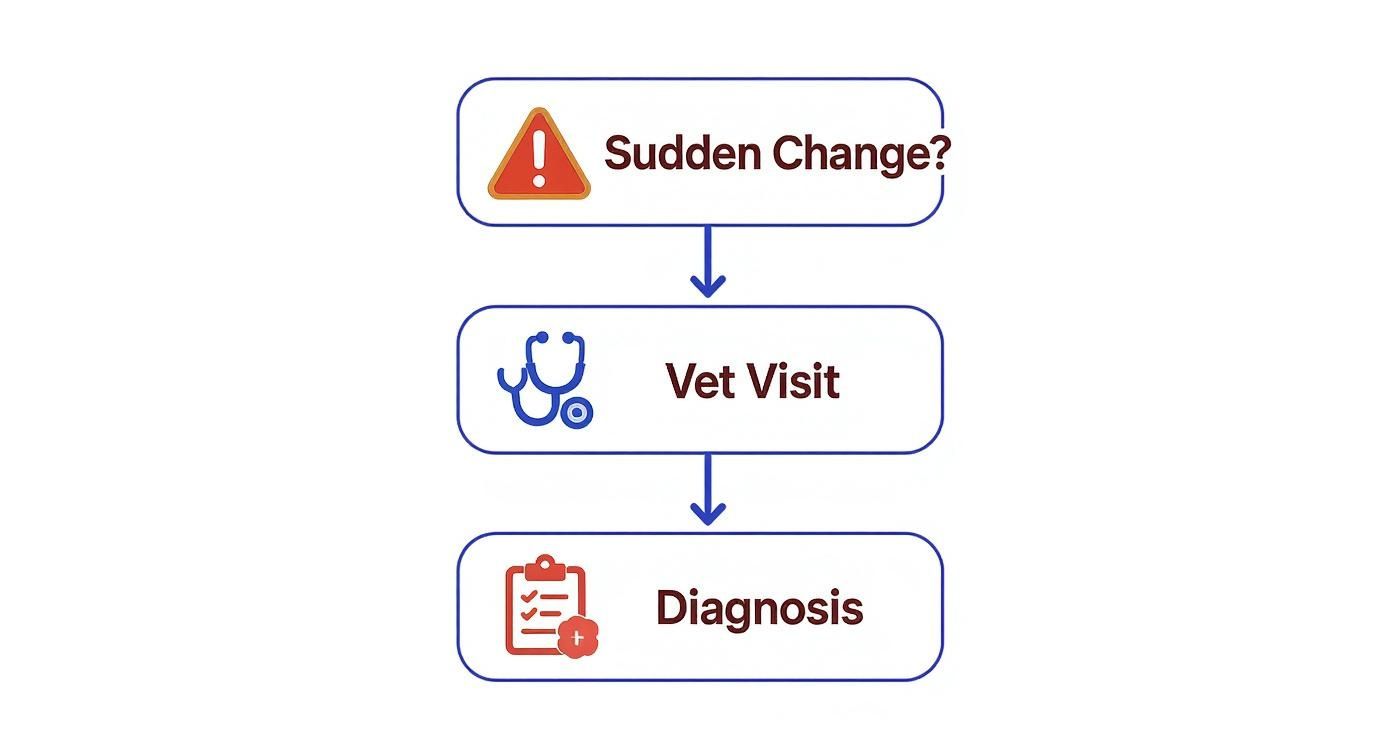
Any abrupt shift in your dog's bathroom habits needs a professional medical opinion before you can even think about it being a training problem. Ruling out pain, digestive disorders, or other conditions is the most responsible—and effective—first move you can make.
Step 2: Master the Art of Cleanup
If you’re not cleaning up accidents the right way, you’re basically sending your dog a written invitation to use the same spot again. A dog's sense of smell is incredibly powerful, and lingering odors from past messes act like a neon sign flashing "RESTROOM HERE." This is why your cleanup game has to be on point.
You absolutely must use an enzymatic cleaner. Your regular household sprays and soaps won't cut it because they don't break down the specific organic proteins in dog waste. An enzymatic cleaner, on the other hand, destroys the odor at a molecular level, truly eliminating the scent cue for your dog.
Here's how to do it right:
- Remove Solid Waste: Get all the solid stuff up immediately.
- Blot, Don't Rub: If the area is wet, use paper towels to blot and absorb as much moisture as you can. Rubbing just grinds it deeper into the carpet.
- Saturate with Cleaner: Be generous with the enzymatic cleaner. You need to make sure it soaks deep into the carpet fibers or upholstery to reach the source.
- Let It Work: Give the cleaner time to do its thing. The label will tell you how long to let it sit—the enzymes need that time to break down the mess.
- Blot Again: Once the time is up, blot the area dry.
Crucial Tip: Never, ever use ammonia-based cleaners. To a dog, ammonia smells a lot like urine, which can actually encourage them to mark right over the spot again.
Step 3: Launch a Back-to-Basics Training Boot Camp
Once the vet gives you the all-clear, it’s time to go back to House Training 101. Forget what you think your dog knows. You're starting from scratch to rebuild a solid, reliable foundation.
- Create a Rigid Schedule: Take your dog out first thing in the morning, last thing at night, and after every single meal, nap, and play session. For an adult dog, this might mean potty breaks every 2-3 hours to start.
- Supervise, Supervise, Supervise: Your dog should not have the run of the house. Use a leash to keep them tethered to you, or use baby gates to keep them in the same room. If you can't watch them, a crate is your best friend.
- Throw a Potty Party: The second your dog finishes their business outside, celebrate like they just won the lottery! Use high-value treats and tons of enthusiastic praise to forge a powerful, positive link with going potty in the right place.
Step 4: Equip Yourself with the Right Tools
The easier you make this new routine on yourself, the more consistent you'll be. The right tools can turn a frustrating chore into a simple, manageable part of your day. This is especially true for outdoor cleanup, a vital piece of the training puzzle.
A clean, poop-free yard is far more inviting for a dog to use. A tool like the Potomo pooper scooper is designed for exactly this. It clips right onto your leash or belt, so it’s always with you on walks or during backyard potty breaks. This makes cleanup immediate, hygienic, and totally hands-free, helping you maintain the clean environment that reinforces all your hard work.
Of course, proper waste management is a huge part of being a responsible owner. For a deeper dive, you can learn more about creating an effective dog waste disposal system in our detailed guide. Follow this complete plan—from the vet visit to consistent training and proper cleanup—and you'll put an end to indoor accidents and bring harmony back to your home.
Frequently Asked Questions
When you're dealing with house soiling, a million questions can run through your mind. It’s a frustrating problem, and you just want answers. Let's tackle some of the most common concerns dog owners have when they're trying to figure out why their dog is pooping in the house.
Is my dog pooping inside out of spite?
Absolutely not. This is one of the biggest myths about dog behavior. Dogs don't experience complex human emotions like spite or revenge. Pooping in the house isn't a "protest" against you for leaving them alone. It's always a sign of an underlying issue: a medical problem causing urgency, a behavioral trigger like anxiety, or a gap in their house-training knowledge. Punishing them will only create fear and make the problem worse.
Why would a potty-trained adult dog start pooping in the house?
A sudden change in a previously well-trained adult dog is a major red flag that something is wrong. Your first step should always be to schedule a vet appointment to rule out medical causes. Common culprits include:
- Gastrointestinal issues like colitis or food intolerances.
- Intestinal parasites causing diarrhea.
- Pain from conditions like arthritis, making it difficult to get outside in time.
- Cognitive Dysfunction Syndrome (doggy dementia) in senior dogs.
If the vet gives a clean bill of health, consider recent changes in your home. A new baby, a move to a new house, or a change in your work schedule can all create stress that leads to accidents.
What’s the best way to clean up dog poop accidents?
Proper cleanup is crucial to prevent repeat offenses. A dog's sense of smell is incredibly powerful, and any lingering scent can signal to them that the spot is an acceptable bathroom. You must use an enzymatic cleaner. Standard household cleaners won't work because they don't break down the specific odor-causing proteins in pet waste. An enzymatic cleaner destroys the odor at a molecular level, removing the "go here" sign for your dog. For more tips, check out our guide on the best way to pick up dog poop.
Will punishing my dog stop them from pooping inside?
No, punishing your dog for an accident is one of the worst things you can do. It doesn't teach them where to go; it only teaches them to fear you. Scolding, yelling, or rubbing a dog's nose in their mess will only increase their anxiety and may lead them to hide when they need to go, making the problem harder to solve. Instead, focus on positive reinforcement. Lavish praise and high-value treats the moment they poop in the correct spot outside.
A clean home and a happy dog are well within reach with the right approach. As you work on reinforcing good potty habits, having the PoTomo pooper scooper on hand makes outdoor cleanup quick and easy, helping you maintain a clean, encouraging environment for your dog. Explore our hands-free solutions at potomo.net and make every walk a little less of a chore.