

Bringing a puppy into your home is an exciting and life-changing experience, but it’s also a big responsibility that requires careful planning and preparation. Puppies are adorable, energetic, and full of curiosity, but they also need time, patience, and consistent care to grow into well-behaved and healthy dogs. Understanding what to expect before welcoming a puppy can save you from common challenges and help create a positive, lasting bond.
From choosing the right breed to preparing your home and schedule, there are several important factors to consider. Puppies require training, socialization, proper nutrition, and regular veterinary care, and their needs can vary depending on age, breed, and temperament. Knowing these key details in advance ensures you’re ready for the joys and demands of puppy parenthood, setting both you and your new furry friend up for a happy, healthy life together.
A Reality Check on Life with a Puppy
Those wonderful moments you're imagining? They absolutely happen. But they are just one small part of the much bigger picture. The reality of raising a puppy is a massive lifestyle change that demands more patience, energy, and time than you can probably imagine right now.
Think about your current daily routine. Now, picture it with multiple potty breaks—including very early in the morning and late at night, no matter the weather. A tiny puppy needs to go outside every couple of hours. House-training is a marathon, not a sprint, and those first few weeks can feel a lot like having a newborn. Sleep deprivation is a real thing for new puppy parents.
Your Social Life and Freedom Will Change
Those spontaneous weekend getaways or long evenings out with friends? They suddenly require a lot more planning. You can’t just leave a puppy alone for 8-10 hours while you’re at work or out for the day. This tiny new family member depends on you for absolutely everything.
- Daily Walks: This isn't an occasional stroll. It's a commitment to multiple walks, every single day, for more than a decade.
- Social Planning: Thinking about happy hour after work? You’ll need to find a pet sitter or make sure you can rush home first.
- Travel: Vacations now mean finding dog-friendly hotels or budgeting for a trustworthy kennel or sitter.
It's common for new owners to experience the "puppy blues"—a shocking feeling of regret and being totally overwhelmed. It often hits when the reality sinks in that their old, free life is gone. One trainer I know mentioned that many clients hit a breaking point around the 72-hour mark, convinced they've made a terrible mistake.
"The thing about raising puppies... if you do it right, it takes up all your time. The more work you put in now, the better things will be later. And yes, that can mean being stuck at home for a while."
The Emotional and Physical Demands
Raising a well-behaved dog is emotionally draining. You will need a deep well of patience for chewed-up shoes, accidents on the rug, and the constant needle-sharp teeth of puppy nipping. And training isn't a one-and-done event; it's an ongoing process that requires absolute consistency from everyone in your home.
Then there are the less-than-glamorous parts. You're going to be dealing with a lot of poop. Constant potty breaks mean you’ll be cleaning up multiple times a day, every day. Having a solution-driven tool like PoTomo’s pooper scooper, which conveniently clips right onto your leash, makes this endless chore faster and way more hygienic. It's a small thing that solves a big daily hassle, freeing you up to focus on the good stuff—like training and bonding.
Understanding the True Cost of a Puppy
That initial adoption fee or the price from a breeder? Think of it as the down payment, not the final price. The real cost of bringing a puppy into your life is a long-term financial commitment, and being ready for it is one of the most important parts of responsible ownership.
This quick snapshot breaks down the commitment you're making in terms of time, money, and years.
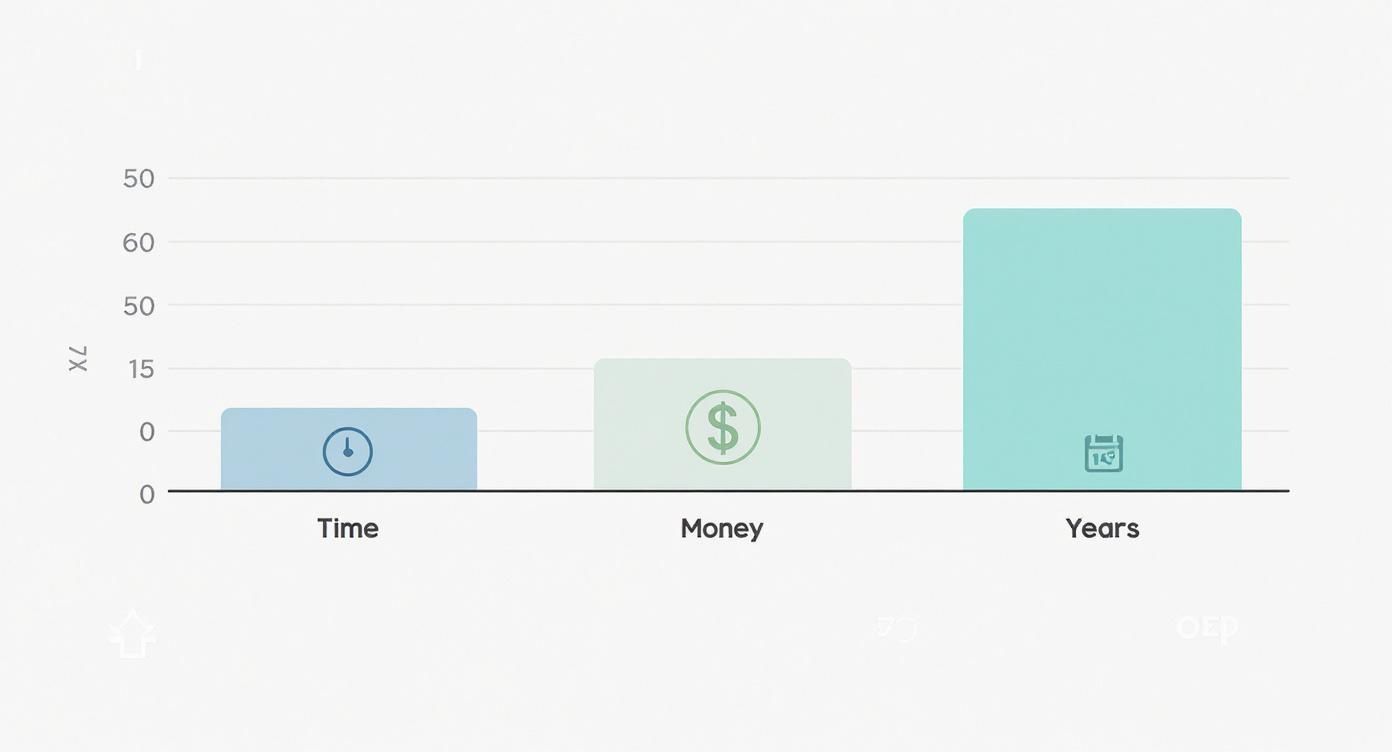
As you can see, the financial investment is just as real as the time and care your new best friend will need for the next 10 to 15 years. Let's dig into where that money actually goes.
One-Time vs. Recurring Expenses
It really helps to think about your puppy budget in two buckets: the upfront, one-time costs and the ongoing expenses you’ll have every month or year. Heads up—that first year is always the most expensive because you're buying all the essential gear from scratch.
Recent data shows the average cost of a puppy's first year can fall anywhere between $1,000 to $2,000. After that initial hump, you can expect the annual costs to level out somewhere between $500 and $1,000, though this can change a lot depending on your dog's breed and any specific health needs.
To help you get a clearer picture of what to budget for, we've put together a handy checklist of common expenses.
Estimated First-Year Puppy Expense Checklist
Here's a detailed breakdown of the potential one-time and recurring costs you'll likely encounter during your puppy's first year. This will help you map out a realistic budget.
| Expense Category | Estimated Cost Range (One-Time) | Estimated Cost Range (Annual/Recurring) |
|---|---|---|
| Adoption/Purchase Fee | $150 - $2,500+ | N/A |
| Initial Vet Visits & Vaccinations | $200 - $500 | $100 - $300 (Boosters, Wellness) |
| Spay/Neuter Surgery | $200 - $800 | N/A |
| Supplies (Crate, Bed, Bowls, Leash) | $150 - $400 | $50 - $150 (Replacements) |
| Quality Puppy Food | N/A | $400 - $1,000 |
| Preventatives (Flea, Tick, Heartworm) | N/A | $200 - $500 |
| Pet Insurance | N/A | $300 - $700 |
| Grooming | N/A | $100 - $600+ (Breed Dependent) |
| Training Classes | $100 - $300 | $50 - $200 (Advanced/Refreshers) |
Keep in mind that these are just estimates. Costs can vary based on your location, your dog's size, and the specific choices you make for their care.
Planning for the Unexpected
Even the most perfect budget can get thrown for a loop. Life just happens. An accidental injury or a sudden illness can easily result in a vet bill that runs into the thousands. This is precisely why pet insurance can be a financial lifesaver for so many dog owners.
Beyond the big emergencies, don't forget the small, everyday costs that sneak up on you. We're talking about chew toys, training treats, and of course, poop bags. A single roll of bags is cheap, sure, but you'll be using them multiple times a day, every day, for years.
Finding smart, efficient solutions for these daily chores really matters. For instance, a quality dog waste disposal system can make the daily cleanup routine a whole lot less of a drag. Investing in a tool like a PoTomo pooper scooper that streamlines a non-negotiable task is a great way to manage your time and make life just a little bit easier. This kind of foresight—planning for both the big what-ifs and the small daily needs—is what responsible puppy ownership is all about.
Finding the Right Puppy for Your Lifestyle
Now that we’ve talked dollars and cents, let's get to the fun part—finding the right furry companion for you. The secret to a happy life with a dog is choosing a puppy that fits into the life you already have, not the one you imagine you’ll have someday. It all starts with an honest look in the mirror before you even peek at a single puppy picture.
Breeder or Shelter: A Big Decision
One of the first forks in the road you'll encounter is where your new puppy comes from. Both reputable breeders and local animal shelters are great options, but they offer two very different paths to dog ownership.
- Reputable Breeders: A good breeder is an incredible resource. They provide health clearances, a full family history, and deep insight into the breed's typical personality. This is the way to go if you have your heart set on a specific breed and want a clearer picture of what to expect in terms of size, energy, and temperament.
- Shelter Adoption: Choosing to adopt from a shelter literally saves a life, giving a wonderful dog a much-needed second chance. You might not get a detailed family tree, but shelter staff are often pros at matchmaking and can help you find a puppy whose personality is a perfect match for your home.
It's worth remembering that puppies are always hot commodities. In fact, puppies see a 60% adoption rate, while older dogs lag far behind at just 25%. This huge demand often leaves amazing adult dogs waiting for months, so it’s always a good idea to consider if an older, more settled dog might be a better fit for you. You can learn more about these pet adoption statistics and how they impact shelters nationwide.
Red Flag Warning: Be extremely cautious of "backyard breeders" or online sellers who won't let you see where the puppies live or meet the mother dog. These are giant red flags for a puppy mill, where animals are often kept in terrible, inhumane conditions. A responsible breeder or shelter will be transparent and welcome your questions.
Matching a Breed to Your Reality
That gorgeous Border Collie or majestic Husky you saw online is breathtaking, but can you handle the reality of their needs? The most critical factors in choosing the right breed are your activity level, your living space, and how much time you really have to spare.
An energetic, whip-smart dog cooped up in a tiny apartment with a couch-potato owner is a recipe for disaster. You'll end up with a frustrated, destructive dog and a whole lot of stress. On the flip side, a low-key Basset Hound probably isn't going to be your new marathon training partner.
Think hard about these key traits:
- Energy Level: How much exercise can you realistically commit to every single day, rain or shine?
- Size: Will a Great Dane even be able to turn around comfortably in your studio apartment?
- Grooming Needs: Do you have the time for daily brushing or the budget for regular trips to a professional groomer?
- Temperament: Are you looking for a goofy, family-friendly companion or a more serious, independent watchdog?
Falling for a puppy based on looks alone is one of the most common mistakes new owners make. Doing your homework now will ensure you bring home a true friend who will thrive with you for years to come.
Preparing Your Home for a New Arrival
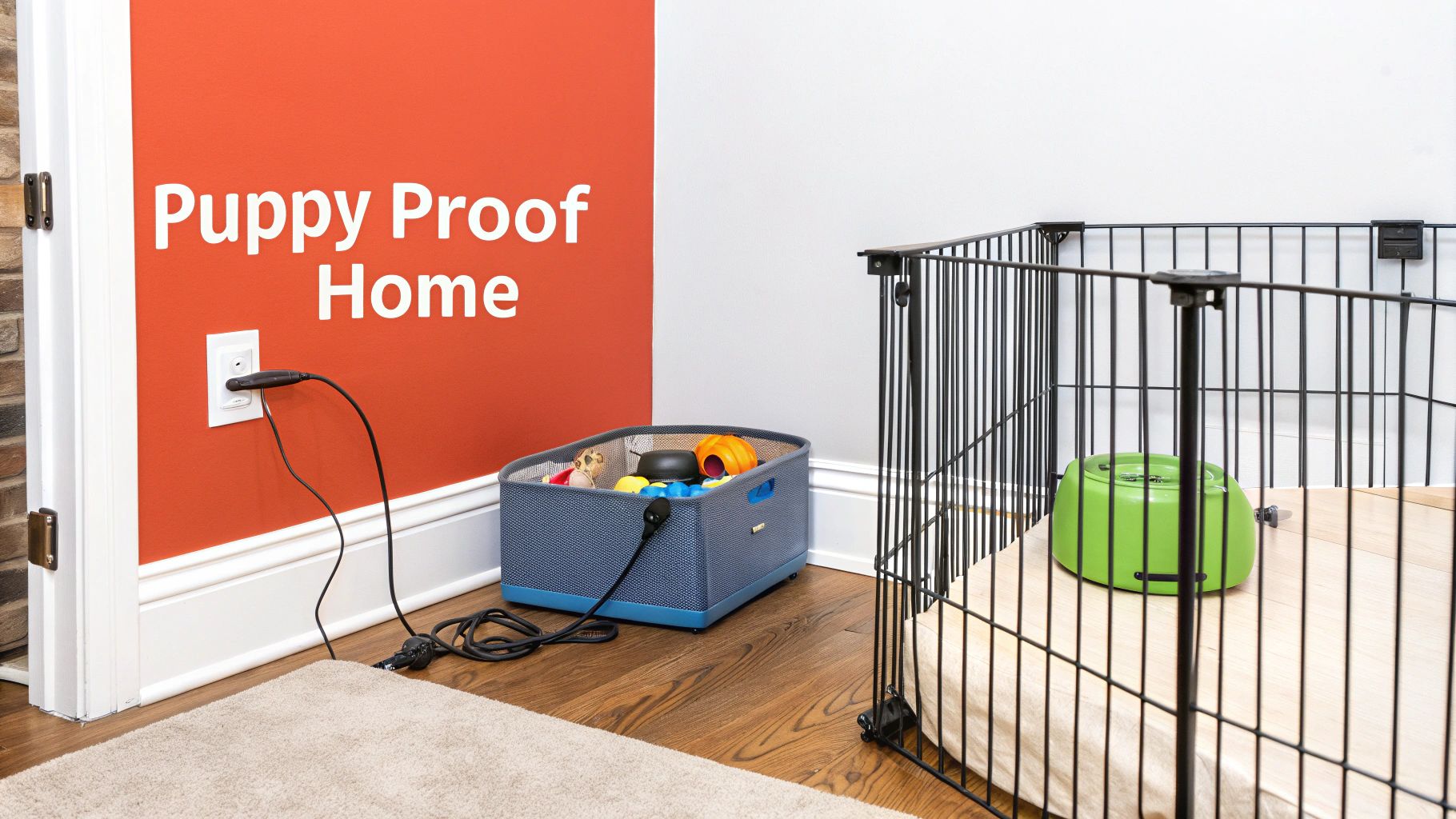
Getting your home ready for a puppy is one of the best things you can do to make their transition a smooth one. Think of it like baby-proofing, but for a tiny, curious creature who explores the world with their mouth. This whole process, which we call puppy-proofing, is all about managing their environment to keep them safe and set them up for success from day one.
A puppy’s first instinct is to investigate everything by chewing on it. To them, a dangling electrical cord or a pretty houseplant looks like a brand-new toy. The problem is, a lot of common household items are downright dangerous, so your first job is to do a full safety sweep of your home.
Creating a Puppy Safe Zone
Let's be realistic—you can't watch your puppy every single second. That's why setting up a designated "puppy zone" is so important. This safe space should be in a common area where the family hangs out, like the kitchen or living room, so your new pup doesn't feel lonely or isolated. Baby gates are perfect for blocking off access to other parts of the house.
Here’s a quick checklist to get your puppy zone ready:
- Secure Cords: Tuck away or cover all electrical cords and phone chargers. They are a massive chewing hazard.
- Remove Toxic Plants: Many common houseplants, including lilies, tulips, and pothos, are toxic to dogs. Move them to rooms your puppy absolutely can't get into.
- Lock Away Hazards: Make sure all cleaning supplies, medications, and human foods (especially things like chocolate and xylitol) are secured in high cabinets or behind childproof locks.
Your puppy's crate should be their cozy, safe den—never a place for punishment. Fill it with a soft bed and a few special toys, and they'll quickly learn to love having their own little hideaway.
Managing Introductions and Routines
If you already have kids or other pets, that first meeting is a big deal. It sets the tone for their entire relationship, so you want to get it right. Keep these initial introductions calm, short, and always supervised. Reward gentle, polite behavior from everyone involved (two-legged and four-legged!) with plenty of praise and treats.
Establishing a solid household routine before the puppy even comes home will minimize stress for everybody. Figure out feeding times, set a schedule for potty breaks, and agree on the ground rules—for instance, is the puppy allowed on the furniture? Consistency is what helps your new companion feel secure and understand what's expected of them.
A huge part of this new routine will be taking your puppy outside constantly for potty training. That means you’ll be dealing with cleanup multiple times a day, every day. Being ready with the right tools, like PoTomo's leash-clip pooper scooper, can make this never-ending task way more manageable. For more tips on handling this daily chore, check out our guide to doggie waste disposal.
Navigating the First Few Months of Puppyhood
The first few months with your new puppy are an absolute whirlwind. It’s a chaotic mix of adorable moments, sleepless nights, and some serious on-the-job training (for both of you!). This period isn't just about surviving the puppy chaos; it's about laying the foundation for a lifetime of good behavior. Getting it right now saves you from trying to fix much bigger issues down the road.
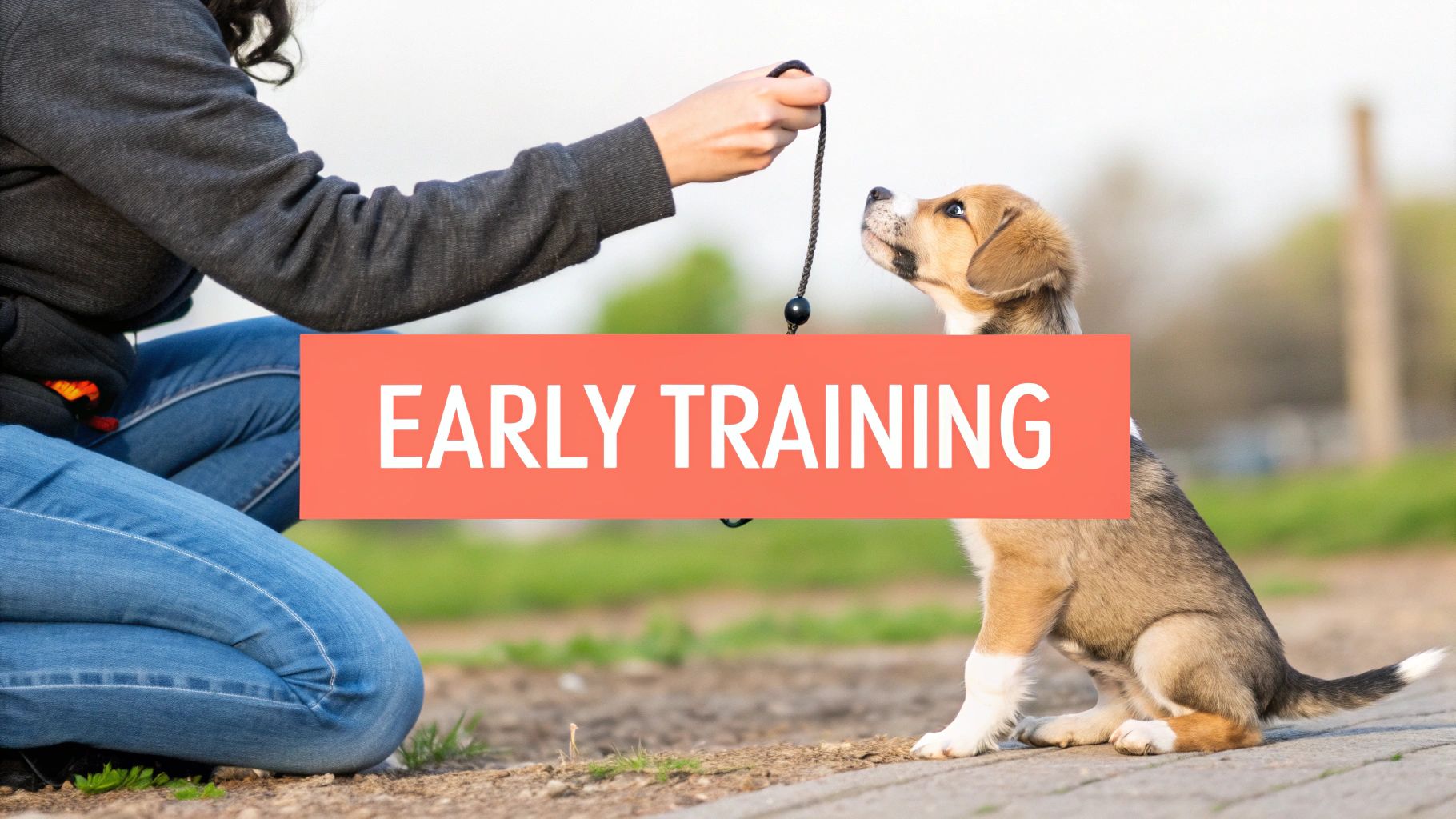
This is where you build the bond and establish the house rules that will define your relationship for the next decade or more.
The Critical Socialization Window
If there's one thing to get right, it's this. You need to understand the socialization window, which is a ridiculously short period between 3 and 16 weeks of age. During this brief time, a puppy’s brain is like a sponge, uniquely wired to accept new sights, sounds, and experiences without fear. What they learn—or don't learn—now will literally shape their adult personality.
"A common mistake is failing to prioritize early socialization. Many new owners wait until all vaccinations are complete, but this misses the crucial 3-16 week window where a puppy's brain is wired to accept new things. A lack of positive exposure during this time can lead to lifelong fear and anxiety."
Your goal is to create positive associations with as many things as you can. This doesn't mean throwing them into a busy dog park and hoping for the best. Think about controlled, positive introductions instead.
- New People: Introduce them to friends of all ages, shapes, and sizes. Let them meet someone in a hat or carrying an umbrella.
- Different Surfaces: Let them walk on grass, pavement, carpet, and even a wobbly cushion to build confidence.
- Everyday Sounds: Let them hear the vacuum cleaner, a blender, and traffic from a safe, comfortable distance. Give them a treat while the noise is happening.
- Safe Dogs: Arrange short, supervised playdates with calm, vaccinated adult dogs you know and trust.
Mastering House-Training and Basic Commands
For house-training, consistency is everything. A puppy’s bladder is tiny, so you’ll need to take them out constantly—first thing in the morning, last thing at night, and after every single nap, meal, and play session. It feels relentless, but it works.
When accidents happen (and they absolutely will), never punish your puppy. Just clean it up with an enzymatic cleaner, which eliminates the odors that attract them back to the same spot. When they finally go potty outside, throw a party! Reward them with enthusiastic praise and a super high-value treat. This positive reinforcement is how you teach them that good things happen when they go in the right place.
The same idea applies to basic commands like "sit" and "stay." Keep your training sessions short, fun, and packed with rewards. You’ll be amazed at how quickly they learn when they’re excited about the outcome.
Tackling Common Puppy Challenges
Get ready for the puppy piranha stage. Two of the most frustrating behaviors are nipping and chewing. Just remember, puppies explore the world with their mouths. It’s your job to teach them what they can and can't sink their teeth into.
If your puppy nips you during play, let out a sharp, loud "Ouch!" and briefly pull your attention away. This mimics how their littermates would teach them they bit too hard. Then, immediately redirect their mouth onto an appropriate chew toy.
A huge part of these early months is just managing the constant cleanup. You’ll be outside for potty breaks more times than you can count, day and night. Having the right tools makes a world of difference. An efficient pooper scooper like Potomo’s, which clips right onto your leash, makes clean-up quick and hygienic. It streamlines a repetitive chore, freeing up your energy for the more joyful parts of puppyhood. For more tips, check out our guide on the best way to pick up dog poop.
Frequently Asked Questions
1. How do I know if I’m really ready for a puppy? True readiness is about an honest look at your life over the next 10-15 years. Ask yourself: Do I have the daily time for walks and training? Is my budget ready for unexpected vet bills? Do I have the patience for the chewing, accidents, and energy? If you can honestly answer "yes" to the long-term commitment, you're in a great position.
2. What are the must-have supplies before a puppy comes home? Start with the essentials: a properly sized crate, food and water bowls, high-quality puppy food, a collar with an ID tag, a leash, a few safe chew toys, and an enzymatic cleaner for accidents. This foundation will get you through the first few weeks successfully.
3. Is crate training cruel? Not at all! When introduced positively, a crate becomes a safe, den-like space for your puppy. It's an invaluable tool for house-training, preventing destructive behavior, and giving your pup a secure spot to relax. Never use it for punishment.
4. How soon should I start training my puppy? Training begins the moment you bring your puppy home! Start with simple things like house-training and getting them used to their name. You can begin short, fun sessions for basic commands like "sit" right away. Early, positive training builds a strong foundation for a well-behaved adult dog.
A huge part of being a puppy parent is handling the daily, not-so-glamorous tasks—like the constant poop scooping. PoTomo makes this chore worlds easier with a hands-free, clip-on pooper scooper that keeps your walks clean and simple.
Ready to make your life as a new puppy parent a little less messy? Check out the PoTomo scooper and see how it works.