

Potty training a puppy can feel like a daunting challenge, but having a clear, age-specific schedule can make the process smoother and less stressful for both you and your furry friend. Puppies have small bladders and developing routines, which means timing, consistency, and understanding their needs are key to successful house training. With the right guidance, you can turn accidents into learning opportunities and help your puppy develop good habits from the very start.
This ultimate potty training schedule breaks down what to expect at each stage of your puppy’s growth, providing practical tips, realistic timelines, and strategies tailored to different ages. Whether you have a tiny teacup breed or a larger pup with more frequent needs, this guide will help you structure potty breaks, recognize signs, and build a consistent routine that sets your puppy up for long-term success.
Laying The Foundation For Potty Training Success
Bringing a new puppy home is pure joy, but let's be honest, the reality of house training can feel a little daunting. A successful schedule isn't just about watching the clock; it’s about consistency, a whole lot of positive reinforcement, and understanding your puppy's tiny, developing body.
Think of this guide as your roadmap. We'll break down a practical puppy potty training schedule by age, from the constant supervision needed for an 8-week-old fluffball to the more predictable rhythm of a 6-month-old pup. The goal is to give you a plan that cuts down on stress and sets you both up for a win.
Key Principles of Potty Training
Before we jump into a daily schedule, let's get a few core ideas straight. These are the "why" behind every potty break and will be your best friend when things don't go exactly as planned.
- Consistency is Everything: A predictable routine helps your puppy learn what’s expected and when. A friend of mine once joked that her puppy's schedule was more reliable than her own, but it worked! Consistency builds trust and makes the whole learning process go so much faster.
- Positive Reinforcement Works Wonders: Forget scolding after an accident. Lavish praise, an excited "Good potty!" in your happy voice, and a high-value treat given the second they finish their business outside are way more powerful.
- Prevention Beats Correction: It is always, always easier to prevent an accident than to deal with one. In those first few weeks, constant supervision isn't just a suggestion—it's your secret weapon.
Understanding Your Puppy's Limits
On average, you can expect puppy potty training to take somewhere between 4 to 6 months to really stick, though every puppy is different. The biggest thing you're working against is biology. A good rule of thumb is that puppies can hold their bladder for about one hour for every month of age. An 8-week-old (two months) can hold it for maybe two to three hours, max. This simple formula is what dictates your entire schedule.
The timeline below shows how your puppy's needs will change, moving from constant attention at 8 weeks to a much more manageable schedule by the time they hit 6 months.
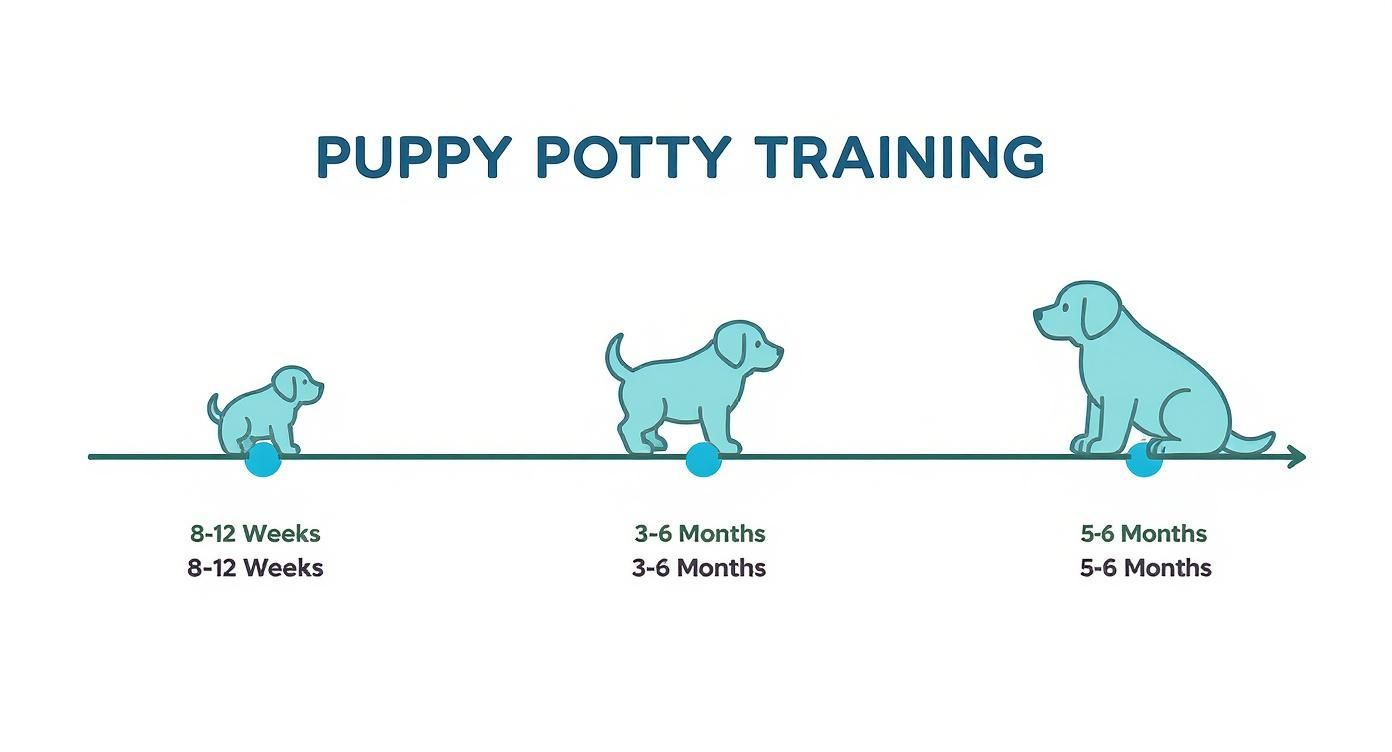
As you can see, your role shifts from being an intense, hands-on manager in the beginning to more of a coach who reinforces good habits as your puppy gets older and gains more physical control.
With all those trips outside, you'll want to make cleanup as painless as possible. Having a tool like Potomo’s pooper scooper ready to go makes cleanup instant and totally hygienic. That way, you can focus on praising your puppy for their success, not fumbling around with a bag. Prompt, sanitary cleanup is also a huge deal for your family’s health—you can learn all about the unseen dangers in dog poop in our detailed guide.
Quick-Look Puppy Potty Training Schedule
To make things even clearer, here’s a quick-reference table that summarizes what to expect at each stage of your puppy's development.
| Puppy Age | Maximum Time Between Breaks | Primary Focus |
|---|---|---|
| 8–12 Weeks | 2–3 Hours | Constant supervision, establishing a designated potty spot, and crate training. |
| 3–4 Months | 3–4 Hours | Expanding time between breaks, recognizing their "gotta go" signals. |
| 4–6 Months | 4–5 Hours | Building reliability, generalizing training to new environments, fewer accidents. |
Think of this table as your cheat sheet. It helps you stay on track and reminds you of the main goal for each phase, keeping the training process moving forward smoothly.
The 8 to 12 Week Puppy Potty Schedule
Welcome to the whirlwind! The first few weeks with your tiny 8-to-12-week-old puppy are a beautiful, chaotic mix of cuddles, play, and… a whole lot of cleanup. Don't worry, this is also your golden opportunity to build a rock-solid foundation for a lifetime of good potty habits.
At this tender age, a puppy’s bladder is incredibly small and their control is minimal. The key to success is all about one word: prevention. Your mission is to prevent accidents by creating a routine so frequent and predictable that your puppy barely has a chance to make a mistake indoors. This means you’ll be heading outside with them roughly every 30 to 60 minutes while they’re awake.
The Non-Negotiable Potty Breaks
Your life is about to revolve around the clock, but certain moments are absolutely non-negotiable for a potty break. These are the times your puppy is almost guaranteed to need to go.
- First Thing in the Morning: The very second they wake up, before any cuddles or play.
- Last Thing at Night: Make this the absolute final activity before you both go to bed.
- Immediately After Naps: Waking up gets the system moving, so a trip outside is essential.
- Within 5-15 Minutes of Every Meal: Food and water start the digestive process, making a potty break predictable.
- After Every Play Session: All that excitement and activity can make them need to go unexpectedly.
Think of these as the pillars of your schedule. Building your day around these moments will drastically cut down on the number of indoor accidents.
A Sample Hour-by-Hour Schedule
To put this into practice, here’s what a typical morning might look like. Remember, this is just a template—your puppy’s unique needs and your own daily routine will shape the exact timing.
7:00 AM: Wake up and immediately take the puppy out to their potty spot. The moment they go, shower them with praise and a special high-value treat.
7:15 AM: Breakfast time!
7:30 AM: Back outside to the potty spot.
8:00 AM - 9:00 AM: Supervised playtime. Keep a hawk-eye on them for any sniffing or circling, and hustle them out immediately if you see these signs. It's a good idea to take them out for a quick potty break around the 30-minute mark anyway.
9:00 AM: Naptime in the crate.
10:00 AM: As soon as they wake up, you know the drill—straight outside for a potty break.
This pattern of wake, potty, play, potty, nap, potty will be the rhythm of your day. It sounds intense because it is, but this rigid consistency is exactly what teaches your puppy where the bathroom is from day one.
Quick Fact: The reward has to be instant. The second your puppy finishes their business outside, give them that treat and praise. Don't wait until you're back inside. They need to connect the action (pottying outside) with the immediate reward.
Crate Training: Your Secret Weapon
The crate isn't a cage; it's your single most effective tool for preventing overnight accidents and teaching bladder control. Dogs have a natural instinct not to soil their den, and a properly sized crate taps right into this.
For nighttime, your schedule is just as crucial. A young puppy simply can't hold it for a full eight hours. You’ll need to set an alarm for one or two middle-of-the-night potty breaks. It’s tough, but it’s temporary. When you take them out at night, keep it all business—no playtime, minimal talking. This teaches them that nighttime is for sleeping, not for parties.
With all these trips outside, especially the urgent ones, cleanup needs to be fast and painless. Having a convenient tool like the Potomo Clip-On Pooper Scooper attached right to your leash means you’re always prepared. You can scoop and bag waste in one quick, touch-free motion, letting you get right back to praising your puppy and reinforcing their good habits without any fuss. It turns a chore into a seamless part of your positive training routine.
The 3 to 4 Month Puppy Potty Schedule
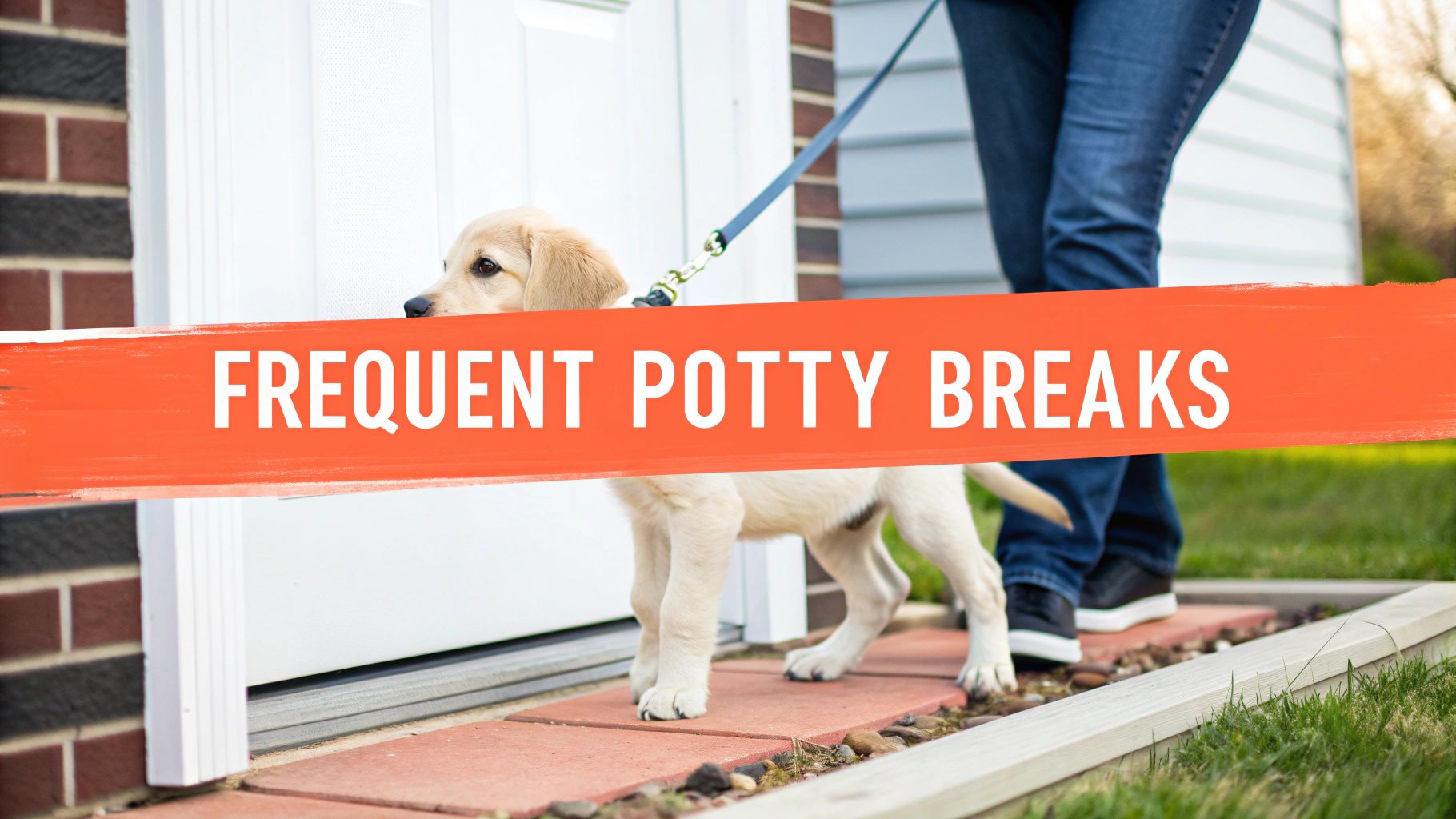 Once your puppy hits the 3-to-4-month mark, you can finally breathe a little. Their bladder control is getting noticeably better, and they can hold it for longer stretches. This is a great stage because you can start shifting from a schedule that feels purely preventative to one that's more responsive to your pup's actual needs.
Your job now changes from constant, hawk-like supervision to learning your puppy’s unique language. You’re graduating from taking them out every hour “just in case” to confidently recognizing their specific signals. This is a huge milestone in your puppy potty training schedule.
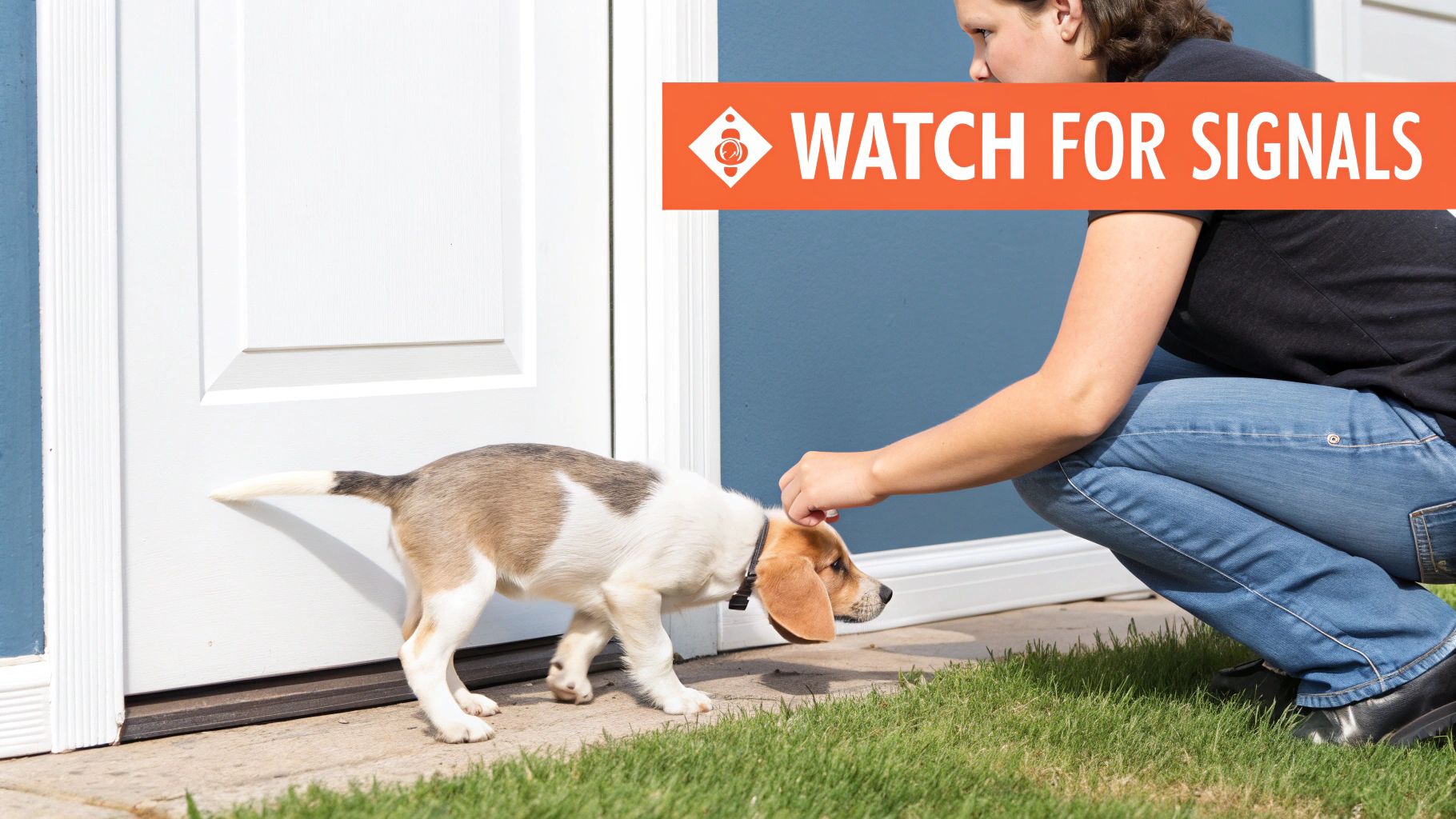
Recognizing Your Puppy’s Potty Signals
At this age, puppies start giving much clearer signs that they need a bathroom break. Learning these signals is like cracking a secret code that will dramatically cut down on indoor accidents.
Keep an eye out for these classic "gotta go" behaviors:
- Intense Sniffing: They suddenly put their nose to the ground and start sniffing with serious intent.
- Circling: Pacing in a tight circle is a dead giveaway they're looking for the right spot.
- Whining or Pawing at the Door: They’re starting to connect the dots—the door leads to their potty spot.
- Sudden Restlessness: If they abruptly stop playing and look anxious, it’s probably time for a trip outside.
The moment you spot one of these signals, calmly but quickly get them to their designated potty area. Your fast response teaches them that you understand what they're trying to tell you.
A Revised Daily Schedule for Growing Pups
With better bladder control comes more freedom. You can gradually start extending the time between potty breaks to about every 2 to 3 hours. Your daily schedule will feel less frantic and more structured, which means longer, more meaningful playtime and naps.
Here’s what a sample schedule for a 4-month-old might look like:
- 7:00 AM: Wake up and go straight outside for a potty break.
- 7:30 AM: Breakfast, followed immediately by another potty break.
- 8:00 AM - 10:00 AM: Supervised play and training, with a potty break somewhere in the middle.
- 10:00 AM - 12:00 PM: Crate time or a quiet nap.
- 12:00 PM: Potty break the second they come out of the crate.
- 12:30 PM: Lunch, then right back outside for a potty break.
This pattern continues all day. You’re gently pushing them to hold it longer while still giving them plenty of chances to succeed.
Troubleshooting Common Setbacks
Even with the best schedule, you'll probably hit a few bumps in the road. This age is famous for a couple of specific challenges, but don't worry—they're completely normal and manageable.
One common issue is excitement-induced urination. This often happens when you get home from work or when new people visit. It's an involuntary physical reaction, not a sign of bad training. The trick is to keep all greetings low-key and calm until your puppy has had a chance to go outside and empty their bladder first.
Another hurdle you might face is potty training regression, where a puppy who was doing great suddenly starts having accidents again. This can be triggered by stress, a change in their routine, or just a classic case of a puppy "testing the rules."
Anecdote: My own puppy, Cooper, was a potty training superstar until he hit four months. Suddenly, he started having accidents again. I realized our evening routine had changed slightly. By simply going back to a stricter schedule for one week, he was back on track. Don't panic during a regression! It's usually a temporary setback, not a permanent failure.
Throughout this entire process, making cleanup fast and hygienic is key to keeping your own sanity. When you're heading out for one of your now slightly less frequent potty breaks, having a tool like the PoTomo Clip-On Pooper Scooper on the leash is a game-changer. You can handle the cleanup instantly without any mess or fumbling, which allows you to immediately give that all-important praise and treat the second they finish. This seamless process keeps the focus purely on positive reinforcement.
The 5 to 6 Month Puppy Potty Schedule
Welcome to the puppy "teenage" phase. Just when you think you’ve finally cracked the puppy potty training schedule, your 5-to-6-month-old might decide to test every single rule you’ve so carefully established. It's a totally normal part of their development, but it can be frustrating.
The good news? Their growing physical maturity is definitely on your side. At this age, most puppies can comfortably hold their bladder for a solid 4 to 6 hours. This is a huge milestone, and it makes life so much more manageable, especially if you work away from home. Your schedule can finally shift from constant, hawk-like supervision to maintaining a predictable routine that fits into a typical day.
Potty Training While You Work
Juggling a puppy's potty needs while you're at work is one of the biggest hurdles for any owner, but it gets a lot easier now. You no longer need to plan your life around two-hour potty sprints. Instead, you can build a sustainable plan.
Here are a few practical ways to manage their schedule during work hours:
- A Midday Dash Home: If you live close enough to your job, popping home on your lunch break for a potty trip and a quick game of fetch is the gold standard.
- Call in the Pros: Hiring a professional dog walker is an amazing option. They provide that crucial midday break, giving your pup a chance to go potty and burn off some of that adolescent energy.
- Enlist Your Village: Don't be shy about asking for help. A trusted neighbor, friend, or family member might be more than happy to pop in once a day to let your pup out.
This is a big step toward a more normal routine for both of you. The goal is simply to make sure they aren’t left alone for longer than they can physically handle, which prevents accidents and keeps all that good training on track.
Navigating Potty Training Regression
One of the most common—and maddening—challenges with adolescent pups is potty training regression. This is when your previously well-behaved puppy suddenly starts having accidents in the house again. It can feel like a massive step backward, but it's almost never a sign of defiance.
Regression can be triggered by almost anything: teething discomfort, a small change in their routine, or just their newfound teenage independence making them test boundaries. The absolute key is to respond with patience, not punishment.
When you're hit with regression, the best strategy is to go right back to basics. Temporarily increase the frequency of potty breaks, just like when they were younger. Re-establish a strict schedule and reward every single outdoor success with over-the-top praise and high-value treats.
This approach reinforces the core lessons without creating fear or anxiety around potty time. Think of it as a quick refresher course to get them back on the right path. With consistency, this phase usually passes quickly.
With longer walks and more time between potty breaks, your routine is definitely more relaxed, but cleanup is still a daily reality. Having a reliable tool makes a world of difference. The PoTomo Clip-On Pooper Scooper stays conveniently attached right to your leash, so you’re never caught unprepared. It ensures a quick, hygienic cleanup without any fuss, letting you keep the focus on positive reinforcement as your puppy matures.
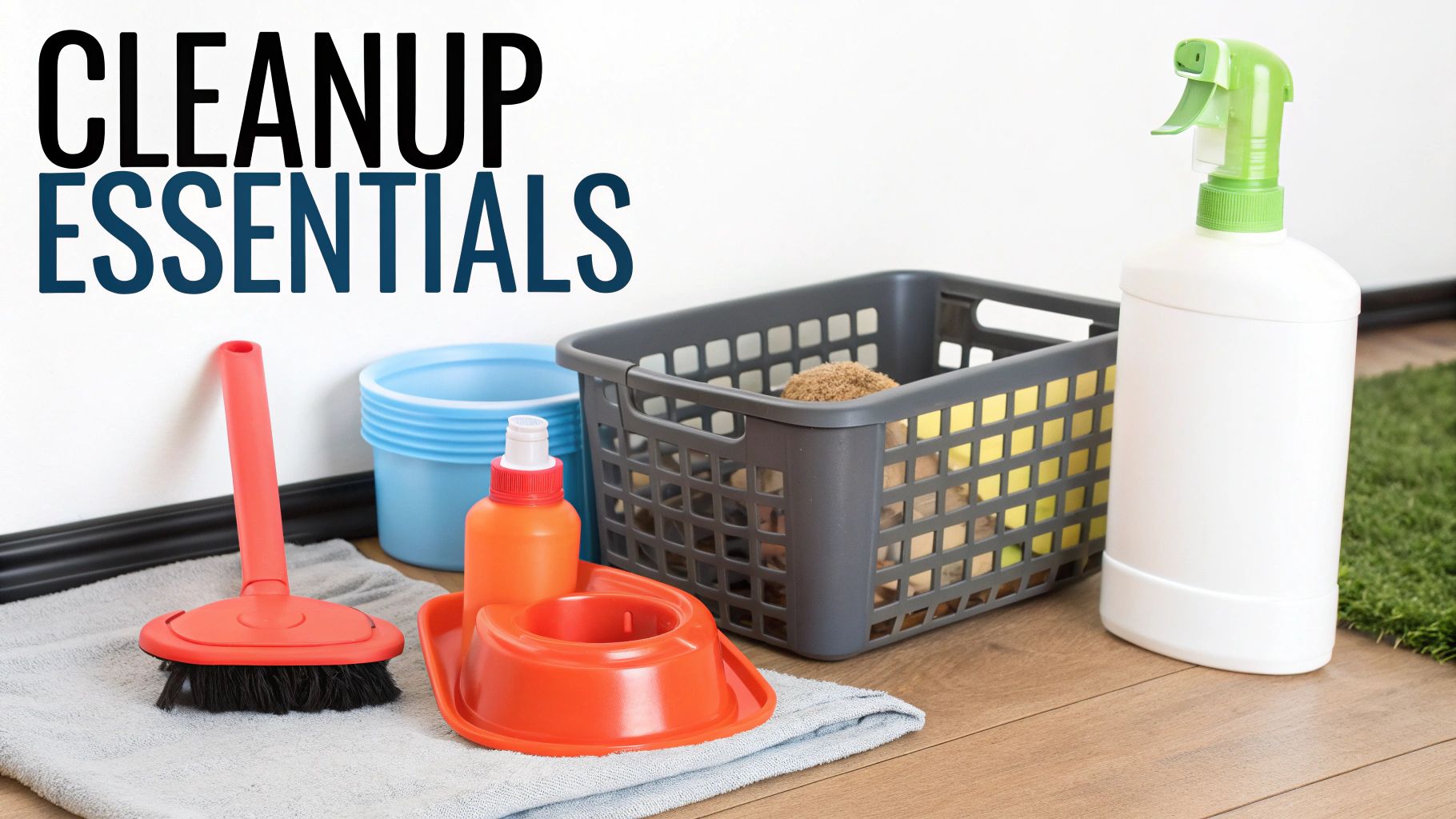
Essential Tools for a Hassle-Free Cleanup
While a rock-solid puppy potty training schedule is your roadmap, the right gear can make the journey so much smoother and less messy. Having the proper tools on hand lets you focus less on damage control and more on celebrating your puppy's successes. Think of these as your support system, working together to create a clean, positive environment where your pup can learn and thrive.
It’s not about buying every gadget you see. It's about being strategic. From managing your pup when you can't watch them like a hawk to dealing with the inevitable accident, the right equipment is a total game-changer.
The Crate: Your Puppy's Safe Space
A crate is hands-down the most valuable tool in your potty training arsenal. It's not a jail. It's a safe, den-like space that works with your puppy's natural instinct to keep their sleeping area clean.
When you get the size right—just big enough for them to stand up and turn around—they're highly motivated not to soil it. This makes the crate absolutely essential for overnight training and for those moments when you can't provide 100% supervision. It’s the single best way to teach bladder control and give yourself a little peace of mind.
Enzymatic Cleaners: The Accident Erasers
Look, accidents are going to happen. It's a guarantee. But how you clean them up makes all the difference. Your regular household cleaner just won’t do the trick. It might look and smell clean to you, but to your puppy's powerful nose, it leaves behind odor molecules that act like a giant, invisible "potty here again!" sign.
This is where enzymatic cleaners are non-negotiable. These amazing formulas use active enzymes to break down and completely destroy the uric acid in pet urine, eliminating the scent for good.
- Stops the Cycle: By truly neutralizing the odor, you remove the cue that draws your puppy back to the scene of the crime.
- Saves Your Floors: They are safe for most carpets and upholstery and are your best defense against permanent stains and lingering smells.
Think of it like hitting the reset button on a mistake, giving both of you a clean slate.
Potty Training Attractants: A Nudge in the Right Direction
Sometimes a puppy just needs a little extra hint to understand where you want them to go. Potty training attractant sprays use a specific scent that essentially tells your puppy, "This is the spot!" This can be especially useful if you're trying to establish a designated potty area in your yard.
You're not alone if you're considering this kind of aid. The market for these sprays is already around $500 million USD and is on track to hit $750 million USD by 2028. That explosive growth shows just how many owners are looking for an extra edge in their training.
A Quick Tip: A little goes a long way. Use attractants sparingly to reinforce the location you've chosen. The real goal is to build a habit that sticks long after you've put the bottle away.
Seamless Cleanup for Every Walk
A young puppy means you’ll be heading outside a lot—often more than ten times a day. Juggling a leash, poop bags, and treats while trying to praise your pup at the perfect moment is a recipe for frustration. A clunky cleanup process can totally ruin the positive vibe you're trying to build.
This is where a tool like the PoTomo Clip-On Pooper Scooper feels like a lifesaver. It clips right onto your leash, so it's always ready to go. You can scoop and bag waste in one quick, touch-free motion. That means:
- No More Fumbling: Keep a secure grip on the leash and your pup with one hand while you take care of business with the other.
- Instant Reward: Cleanup is so fast you can deliver that all-important treat and praise the instant your puppy finishes. Timing is everything.
- Clean and Convenient: The whole process is hygienic and hands-free, which is a huge win whether you're in your own yard or at the park.
When waste disposal is this easy, you can keep your full attention on reinforcing the good behavior you want to see. For more ideas on managing pet waste, check out our guide on doggie waste disposal options.
Looking at the Bigger Picture of Pet Care
When you’re in the thick of potty training, it’s easy to feel like you’re on an island. But your journey is actually part of a massive, supportive ecosystem. The global pet care industry has exploded, and that growth is fueling incredible innovation in the training products and resources available to you.
Just how big is it? The global pet care market was valued at a staggering $232.3 billion in 2020 and is on track to hit $358.6 billion by 2027. This isn't just a random statistic; it’s a direct reflection of millions of pet owners, just like you, seeking better and more effective solutions for their furry family members.
Why This Matters for Your Training
This booming market has a real, tangible impact on your day-to-day routine with your puppy. As more of us live in cities and suburbs, the demand for efficient training schedules and compact, effective cleanup tools has skyrocketed. This has pushed companies to create smarter products designed for convenience and, most importantly, hygiene.
Think about it: those constant potty breaks feel a lot less like a chore when cleanup is instant and mess-free. A tool like the PoTomo Clip-On Pooper Scooper, which clips right onto your leash, makes picking up waste quick and completely hands-free. This lets you focus on what really matters—immediately rewarding your puppy for a job well done, reinforcing that good habit without fumbling around with clumsy bags.
You're not just training a puppy; you're part of a global community of pet lovers who are navigating the same challenges with more support and better tools than ever before.
Keeping this perspective in mind can make all the difference. It helps you see that the hurdles of a puppy potty training schedule are shared experiences. Every product, from enzymatic cleaners that erase accidents to clever gadgets for cleanup, was born from a need that millions of other owners have faced.
If you're looking for more ways to make your cleanup routine a breeze, take a look at our guide on the best way to pick up dog poop.
Frequently Asked Questions (FAQ)
1. How long does it actually take to potty train a puppy?
Every puppy is different, but most can be reliably potty trained in 4 to 6 months. The single biggest factor is consistency. Sticking to a strict schedule, especially in the first few weeks, dramatically speeds up the process. Even after they seem trained, don't be surprised by an occasional accident for up to a year.
2. What should I do if I catch my puppy having an accident inside?
Stay calm and never punish them. Scolding or rubbing their nose in it only creates fear, which hinders training. If you catch them in the act, make a sharp but not scary noise (like a clap or "Oops!") to interrupt them. Immediately take them outside to their designated potty spot. If they finish there, praise them enthusiastically!
3. Why does my puppy pee inside right after we were outside?
This is incredibly common and frustrating! It usually means your puppy was too distracted outside by all the exciting smells and sounds to fully empty their bladder. The solution is to make your potty breaks a little longer and more boring. Keep them on a leash in their potty spot until they go, and then reward them instantly.
4. Is it okay to use puppy pads?
Puppy pads can be useful, especially for apartment dwellers or puppies who aren't fully vaccinated. However, they can sometimes teach your puppy that it's okay to go indoors. If you use them, keep them in one consistent spot and work on a plan to gradually move the pad closer to the door and eventually outside to transition them to their permanent potty spot.
Keeping up with a demanding training schedule means being ready for every single potty break. With PoTomo, you can make cleanup instant and hygienic, so you can put all your focus where it belongs: on celebrating your pup's success. See how the PoTomo Clip-On Pooper Scooper can make your training routine a whole lot easier.