

A designated potty area isn't just a fancy term; it's your secret weapon for a cleaner, less chaotic life with your dog. It’s simply a specific, consistent spot you teach them to use every single time they need to go.
This one small change transforms your potty routine from a frustrating free-for-all into a predictable, stress-free system. Whether it's a patch in your backyard or a dedicated tray indoors, it's a total game-changer for house training, lawn care, and your home's overall hygiene.
The Secret to a Cleaner Home and a Happier Dog
Let's be real for a moment. Managing your dog's bathroom habits can be one of the most maddening parts of pet ownership. You're tired of dodging landmines in the yard, staring at yellow burn spots on your beautiful lawn, and dealing with those infuriating "surprise" accidents inside.
Creating a designated potty area gives your dog the structure and consistency they secretly crave. It makes life so much easier for both of you.
Think about it from their perspective for a second. A single, dedicated spot eliminates all the confusion. For a brand-new puppy or a rescue dog still learning the rules, that clarity is everything. They quickly learn exactly where you expect them to go, which dramatically cuts down on accidents and accelerates the whole house-training process.
It’s About More Than Just Your Lawn
Sure, protecting your grass is a huge plus, but the benefits of a potty station go way beyond that. You're actually creating a healthier environment for your whole family.
- Smart Containment: All the waste is kept in one easy-to-manage area. This stops bacteria from getting tracked all over your yard and, even worse, into your home on paws and shoes.
- Cleanup Made Simple: No more hunting around the yard, wondering if you missed a spot. You know exactly where to go, making the daily scoop a quick, efficient task instead of a frustrating treasure hunt.
- Serious Odor Control: When the mess is concentrated in one zone, you can focus your cleaning and deodorizing efforts right where they're needed most, keeping your whole yard smelling fresh.
I have a friend, Sarah, who was at her absolute wit's end with her Beagle, Cooper. He treated their entire backyard like his personal toilet, and she was constantly stressed about it. She finally set up a simple gravel-filled corner for him. The change was incredible. Within just two weeks, Cooper was using his spot exclusively. Sarah went from daily frustration to actually enjoying her clean, beautiful yard again.
A Growing Focus in Modern Pet Care
This idea of creating cleaner, more organized systems for our pets isn't just a trend; it's becoming a standard part of modern pet care. The proof is in the numbers. The global pet market is on track to blow past $500 billion by 2030, which just shows how much we're investing in our pets' health and happiness.
Even more telling, the market for dog poop scoopers alone was valued at roughly $1.2 billion in 2023. That highlights a major shift: waste management solutions, including designated potty areas, are no longer a novelty but an essential tool for today's dog owner. If you're curious, you can find more insights on the pet industry's incredible growth at dojobusiness.com.
Designing the Perfect Outdoor Potty Area
Creating a dedicated potty spot for your dog is a game-changer. It's one part landscape design, one part pet psychology. The goal is pretty simple: find a spot your dog actually wants to use, make it easy for you to clean, and keep your backyard from smelling like, well, a dog toilet.
The perfect location is usually a bit of a compromise. It needs to be easy for your dog to get to, even if it's pouring rain or you've just been hit with a blizzard. At the same time, you probably don't want it right next to your patio or under the kitchen window where smells can drift in.
One huge factor people often miss? Drainage. A low spot in your yard that turns into a puddle after it rains will become a stinky, muddy disaster in no time.
Here's a pro tip that costs you nothing: just watch your dog for a day or two. Before you buy a single bag of gravel or start digging, see where they naturally prefer to go. They’ll almost always pick a place that feels right to them, giving you the perfect blueprint to start with.
Choosing the Right Surface
The material you lay down—the substrate—is just as crucial as the location. Every option has its ups and downs, so what works best will really depend on your climate, your dog’s personal preferences, and just how much work you’re willing to put in.
Let’s break down the most popular choices:
- Natural Grass: It's what dogs know and love, so getting them to use it is a breeze. The big downside is the inevitable yellow "burn spots" from urine and the potential for it to turn into a mud pit.
- Artificial Turf: This is a super durable, low-maintenance choice that drains beautifully and is easy to hose down. Just make sure you get a high-quality, pet-safe turf, ideally one without infill, to keep bacteria and odors from building up.
- Pea Gravel or River Rocks: These offer fantastic drainage, so you'll never have to deal with puddles or mud. Scooping is easy, too. The only catch is that some dogs just don't like the feeling of the stones on their paws.
- Cedar Chips or Mulch: This is a budget-friendly, natural option that does a surprisingly good job of controlling odor. It does break down over time, though, so you'll have to top it off or replace it every so often.
This infographic lays out the core benefits you get from setting up a dedicated potty spot, no matter which surface you end up with.
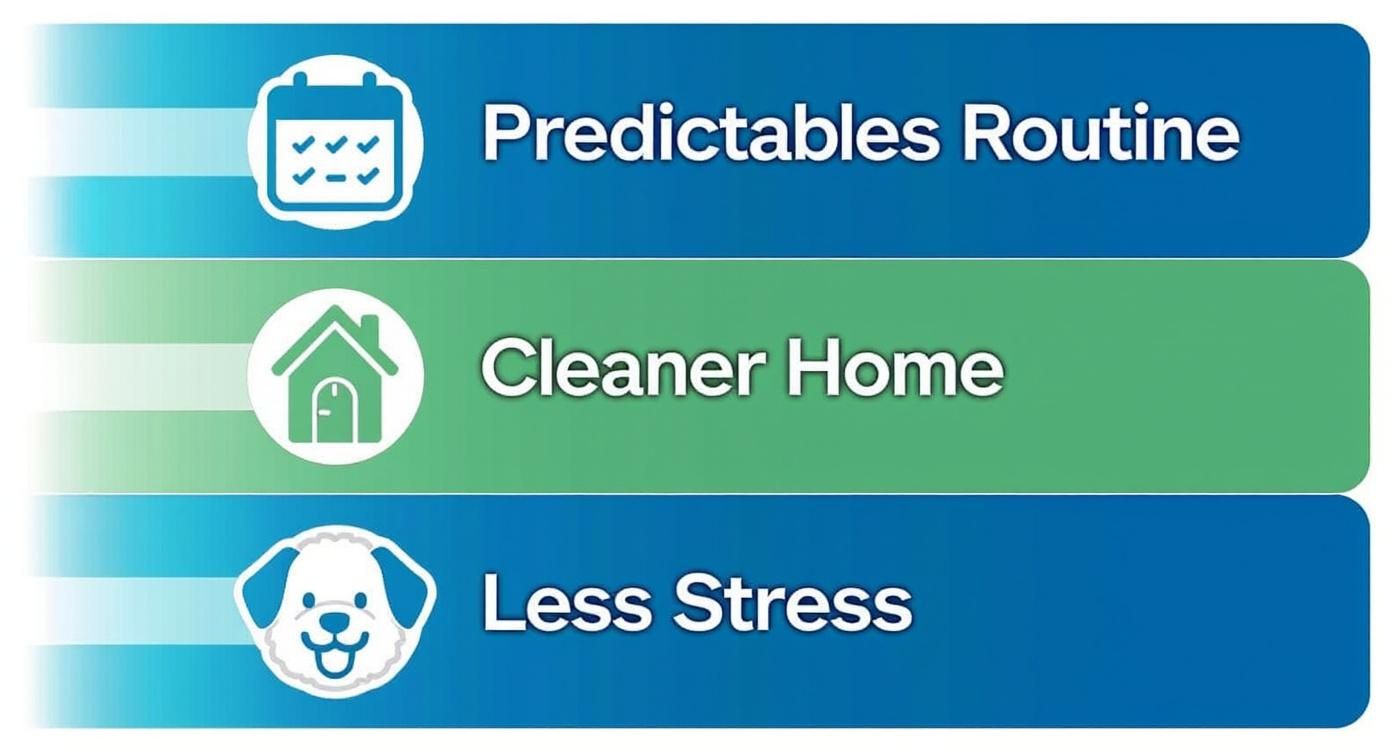
As you can see, just creating that designated area brings predictability to your routine, keeps your home cleaner, and cuts down on stress for both you and your dog.
To make the decision a little easier, I've put together a quick comparison of the most common materials.
Comparing Substrates for Your Outdoor Potty Area
This table breaks down the pros, cons, and best-use cases for each popular potty area surface.
| Substrate Type | Pros | Cons | Best For |
|---|---|---|---|
| Natural Grass | Familiar feel for dogs, aesthetically pleasing. | Prone to urine burns, can get muddy, requires regular mowing. | Owners who don't mind lawn maintenance and have good drainage. |
| Artificial Turf | Excellent drainage, easy to clean, always looks green. | Higher upfront cost, can get hot in direct sun. | Busy owners in any climate looking for a low-maintenance solution. |
| Pea Gravel | Superior drainage, easy to scoop, durable. | Some dogs dislike the texture, can be displaced over time. | Rainy climates and owners who prioritize easy daily cleanup. |
| Cedar Mulch | Natural odor control, affordable, soft on paws. | Needs to be replaced periodically, can be messy. | Budget-conscious owners in drier climates. |
Ultimately, the best choice is the one that fits your lifestyle and your dog's comfort.
Maintenance and Long-Term Success
Okay, so you've built the perfect potty spot. Now what? Consistent cleaning is everything if you want it to stay fresh and functional. No matter what surface you’ve chosen, you have to scoop solids daily. This isn't just about controlling smells; it’s about preventing the spread of nasty bacteria.
Making this daily chore as painless as possible is the secret to sticking with it. A tool like Potomo’s pooper scooper, which clips right onto the leash, means you’re always ready for action. You'll never have to go searching for a scooper again, and the cleanup is quick and totally hands-free.
For turf and gravel areas, a regular rinse with the hose will wash away urine residue and keep things from getting smelly. For a deeper clean, hit it with a pet-safe enzymatic cleaner once a week. This will break down the organic stuff that causes those really stubborn odors. A proper dog waste disposal system makes sure everything is handled hygienically from pickup to disposal.
Key Takeaway: The best potty area is one that is used consistently by your dog and maintained consistently by you. Simplicity in location, surface, and cleaning routine is the formula for a happy dog and a pristine backyard.
Creating a Stress-Free Indoor Potty Solution
For anyone living in an apartment, caring for a senior dog, or just dealing with crazy weather, an indoor potty area isn't a luxury—it's a total lifesaver. When you set one up the right way, you’re giving your dog a clean, convenient spot to go, all without compromising the freshness of your home.
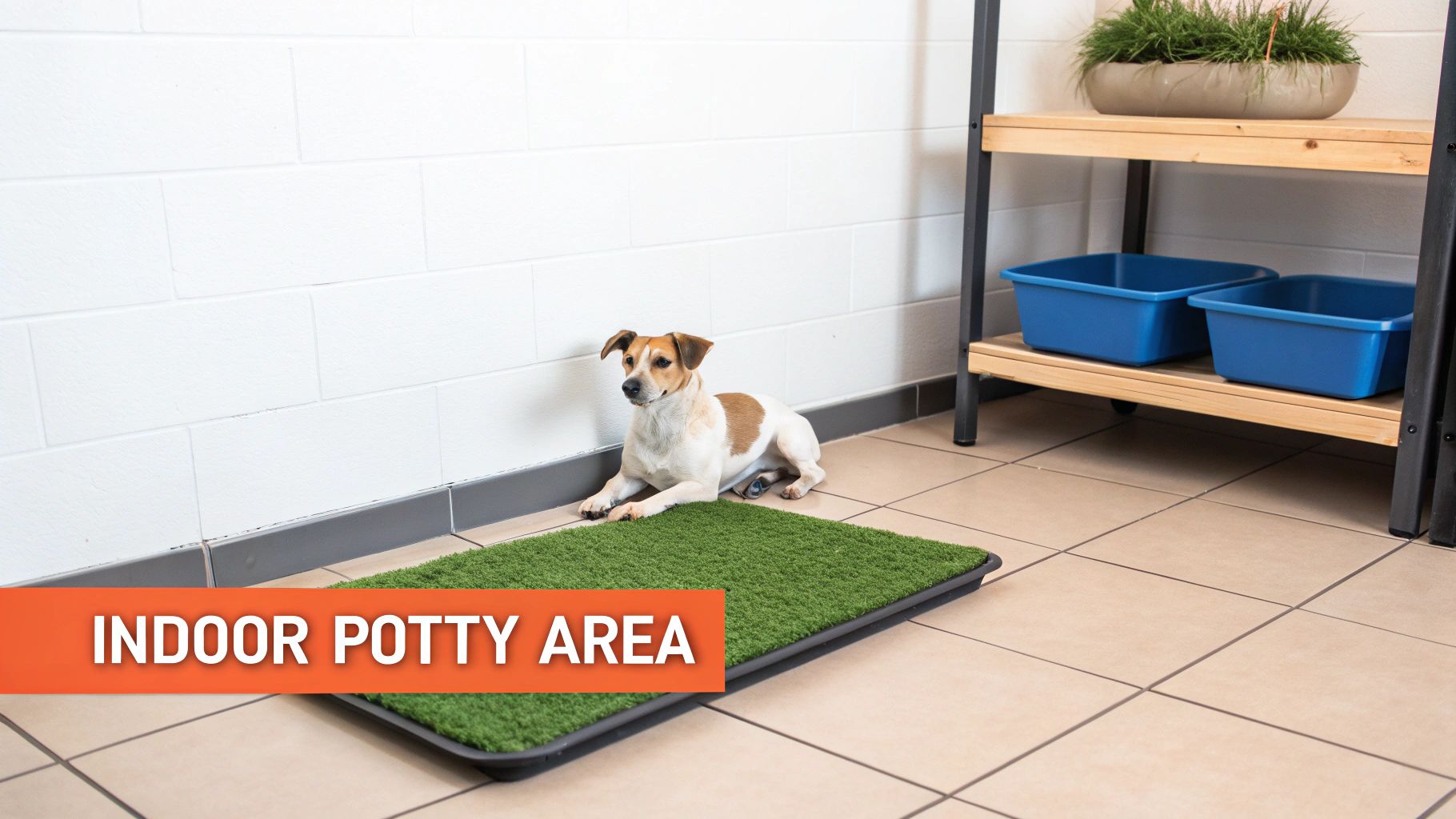
The first thing to figure out is the location. You have to think like a dog here: they naturally prefer a quiet, low-traffic spot where they won’t feel exposed or be disturbed. An unused corner in a utility room, a laundry room with tile floors, or even a spare bathroom are all fantastic choices.
On the flip side, you’ll want to avoid busy areas like main hallways or the middle of the living room. And a big one: keep it far away from their food and water bowls. Dogs have a strong instinct not to eliminate where they eat and drink.
Choosing Your Indoor System
Once you've scouted the perfect spot, it's time to pick the type of indoor potty that works for you. Each one caters to different needs, budgets, and lifestyles.
- Disposable Potty Pads: These are the classic, no-fuss option. They’re super absorbent and make cleanup a breeze—just toss and replace. The downside, of course, is the recurring cost and the environmental waste.
- Reusable Turf Trays: A small patch of artificial turf sitting in a tray gives a more natural, outdoor-like feel that can make training go a lot smoother. It's a one-time purchase, but it does require regular rinsing and deep cleaning to keep odors at bay.
- Real Grass Patches: You can actually get real patches of sod delivered through subscription services. Dogs usually take to these immediately, but the grass needs to be replaced every few weeks, making it a pricier option.
The demand for these convenient solutions is really taking off, especially as more of us live in cities. In fact, North America currently holds about 40% of the global market share for smart dog potties. This boom is fueled by smaller living spaces and new tech making these systems more effective. If you're curious, you can find more insights into the smart dog potty market trends.
Mastering Odor Control
Let's be real, the biggest fear with any indoor potty area is the smell. But with the right game plan, you can absolutely keep your home smelling fresh and clean. The secret isn't about masking odors; it's about wiping them out at the source.
Pro Tip: Invest in a high-quality enzymatic cleaner. These products use beneficial bacteria to literally break down and neutralize the organic compounds in urine that cause smells, rather than just covering them up with perfume.
A consistent cleaning schedule is non-negotiable. Disposable pads need to be changed right after use, or at the very least, once or twice a day. For turf and grass systems, solid waste has to be removed immediately—a clip-on scooper like Potomo’s makes this a quick, hygienic task. A regular rinse, plus a weekly deep-clean with that enzymatic spray, will stop odor buildup before it starts and keep the spot sanitary for your pup.
How to Train Your Dog to Use Their New Spot
Okay, you've built the perfect potty spot. Now for the fun part: convincing your dog that this new area is the place to be. This isn't about stern commands or strict obedience drills. It’s about making a positive, almost magical connection between your dog and their designated bathroom.
The goal is to make them think that using this new patch of grass (or gravel, or turf) was their idea all along—and the best one they've ever had. It really all boils down to three simple things.
Praise, Patience, and Persistence are your three best training tools.
Building a Positive Connection
First things first, you need to introduce the new potty area with a ton of excitement. Lead your dog over on their leash, even if it's just a few feet away in your own yard. Use a simple, happy cue you can stick with, like "Go potty!" or "Time to go!"
The second they start sniffing around and showing any interest, lay on the gentle praise. Let them explore the new surface and get their bearings. It’s absolutely crucial that this first introduction is completely free of pressure or frustration.
Now for the most important step: the reward. The instant they finish their business in the right spot, you need to deliver an immediate, high-value reward. I’m not talking about a standard dry biscuit. Think bigger. A tiny piece of chicken, a sliver of cheese, or that jerky they go wild for—something they only get for this one specific action. This creates a lightning-fast association: Going potty here means I get the good stuff!
Establishing a Predictable Routine
Dogs are creatures of habit, which is something you can totally use to your advantage here. A solid schedule is probably the most powerful tool in your training arsenal.
Make a point to take them to the spot at the most predictable times every single day:
- First thing when you wake up
- Right after they get up from a nap
- About 15-20 minutes after they eat
- Just before you both turn in for the night
Sticking to this routine dramatically increases the chances they'll actually need to go when you take them out, which gives you more opportunities to reward them for getting it right. If they don't go after a few minutes, no big deal. Just bring them back inside without making a fuss and try again in another 10 or 15 minutes.
Overcoming Common Hurdles
Don't be surprised if your dog, especially an older one, ignores the new spot at first. They're wired to follow their old habits. If an accident happens somewhere else, never, ever punish them. Just grab an enzymatic cleaner and clean it up thoroughly to completely erase any scent that might draw them back to the wrong spot.
When it comes to the daily cleanup of their new potty areas for dogs, having the right tool is a game-changer. An efficient pooper scooper like Potomo’s makes the daily chore fast and totally hygienic, which helps keep the area clean and inviting for your dog. A sanitary spot is key, as a dirty one can make them avoid it altogether. Plus, keeping it clean minimizes health risks; you can read more about the unseen dangers in dog poop in our guide.
Remember Sarah, the owner with the stubborn Beagle I mentioned? It took almost three solid weeks of consistent praise and high-value treats before he started using his new gravel patch exclusively. She stuck with it, stayed patient, and celebrated every single win. Her story is proof that even the most deeply ingrained habits can change with the right approach.
Keeping Your Dog’s Potty Area Clean and Fresh
You’ve gone to all the trouble of setting up the perfect potty area for your dog, but your work isn’t quite finished. A dedicated potty spot is only as good as its maintenance plan. Consistent cleaning is the real secret to keeping the area hygienic, odor-free, and a place your dog actually wants to use.
Letting the cleanup slide doesn't just create a stinky mess—it can actively discourage your dog from going there. Think of it like a public restroom. If it's gross, you’d rather hold it, and your dog feels the exact same way. All you need is a simple, sustainable plan to prevent the potty zone from ever becoming a problem.
Daily and Weekly Outdoor Maintenance
For outdoor potty areas, a simple two-part cleaning schedule is your best bet for success. It’s incredibly effective and only takes a few minutes out of your day.
Your Daily Task
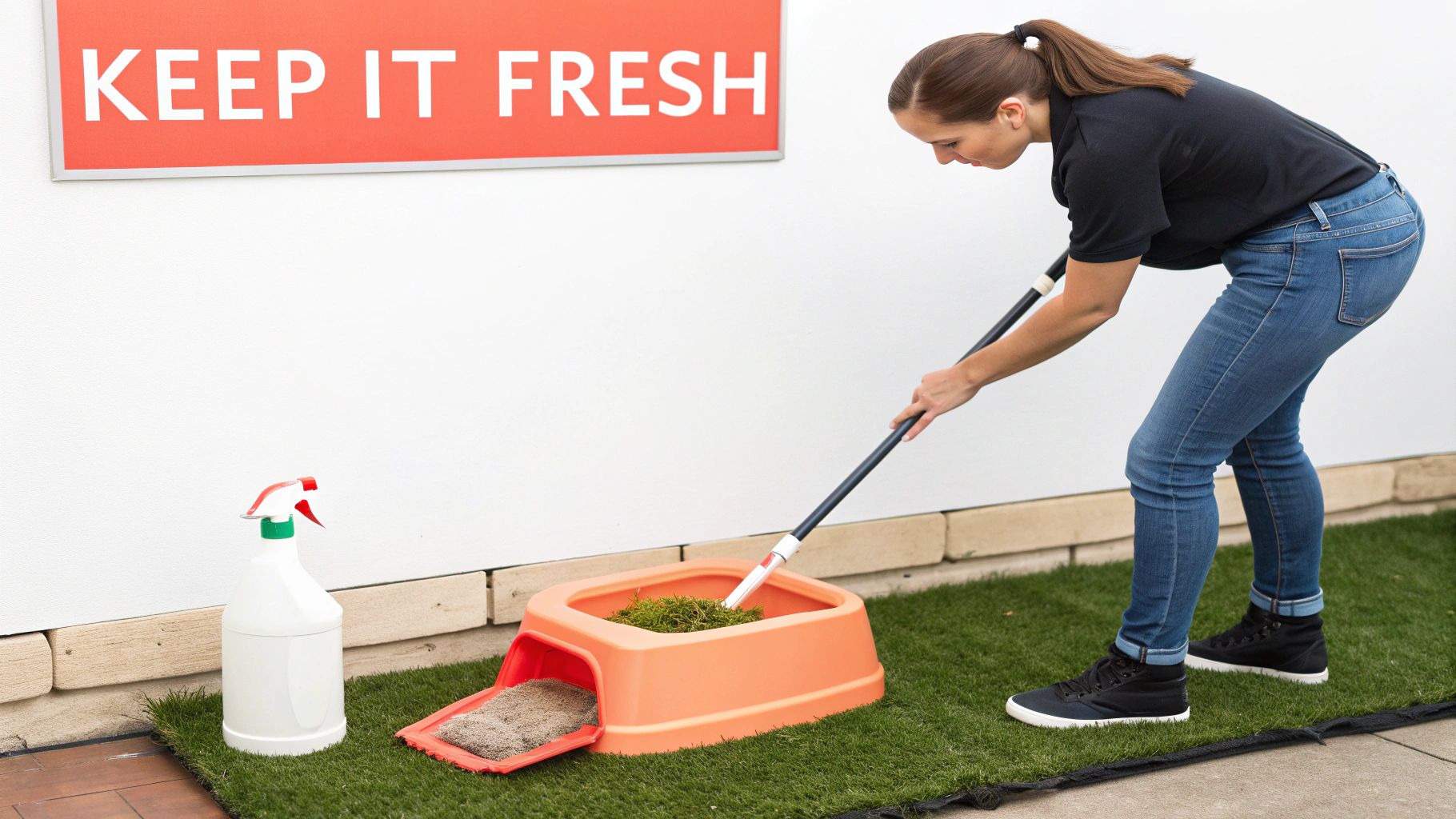
- Scoop Solid Waste: This one is non-negotiable. Getting rid of solids at least once a day is crucial for stopping bacteria from multiplying and preventing odors from setting in. This daily chore is where an ergonomic tool like Potomo’s pooper scooper makes a world of difference. Since it clips right onto the leash, it's always there when you need it, making pickup quick, comfortable, and totally hands-free.
Your Weekly Reset
- Rinse and Sanitize: Once a week, give the area a good rinse with a garden hose to wash away any urine residue. For surfaces like artificial turf or gravel, follow up with a pet-safe enzymatic cleaner. These cleaners use beneficial bacteria to break down the smelly organic compounds in urine, eliminating odors at their source instead of just covering them up.
Key Takeaway: The goal isn't just to clean, but to neutralize. Regular rinsing and enzymatic cleaners are your best defense against those stubborn smells that can make a potty area unpleasant for everyone.
Keeping Indoor Systems Fresh
Indoor potty stations need a bit more vigilance since they’re inside your living space. The key is to stay on top of the cleaning before odors even have a chance to get started.
- Pads and Trays: Disposable pads should be swapped out immediately after use, or at the very least, a few times per day. If you have a reusable tray with artificial turf, scoop solids right away and give the tray a quick daily rinse.
- Deep Cleaning: At least once a week, take the whole system apart for a deep clean. Scrub the tray with a pet-safe disinfectant or an enzymatic cleaner, and let the turf patch soak before rinsing it and letting it air-dry completely. This simple step prevents the buildup of ammonia and bacteria.
By sticking to a simple routine, you'll make sure your potty areas for dogs stay a clean and reliable solution. For a deeper look at making cleanup as efficient as possible, check out our guide on the best way to pick up dog poop.
FAQ: Common Questions About Potty Areas for Dogs
Setting up a potty area is one thing, but making it work long-term can bring up new questions. Here are answers to some of the most common issues pet parents face.
1. How do I get my dog to use the potty area in rain or snow?
Many dogs hate getting wet! The key is consistency. Lead them to the spot on a leash, even in bad weather, and keep the trip short and focused. Use an umbrella to shield them if it helps. The moment they finish, offer an extra-special treat and lots of praise. For snow, shovel a clear path to the spot so they don't have to trudge through deep drifts. This makes it accessible and less of a chore for them.
2. My potty area smells terrible. What am I doing wrong?
A persistent bad smell usually points to one of two things: inadequate cleaning frequency or poor drainage. For outdoor spots, you must scoop solids daily and rinse the area weekly with a pet-safe enzymatic cleaner to break down odor-causing urine compounds. If the area pools water, the substrate isn't draining properly, trapping waste. For indoor systems, you may need to change pads more often or deep-clean turf trays more thoroughly.
3. Is it possible to train an older dog to use a new potty spot?
Absolutely! While it can take a bit more patience, an old dog can definitely learn new tricks. The approach is the same as training a puppy: use lots of positive reinforcement, stick to a strict potty schedule, and reward every success with high-value treats. You can even transfer a bit of their scent (using a paper towel with a little urine) to the new spot to signal that it's an approved bathroom.
4. What's the best surface for a dog potty area?
The "best" surface depends on your climate, budget, and dog's preference.
- Artificial turf is low-maintenance and easy to clean.
- Pea gravel offers excellent drainage, ideal for rainy climates.
- Natural grass feels most familiar to dogs but requires upkeep.
- Cedar mulch is a budget-friendly option with natural odor control. Try letting your dog test a few surfaces if possible to see what they prefer.
A clean potty area is essential for success, and the right tool makes all the difference. The PoTomo Clip-On Pooper Scooper ensures you can handle daily cleanups instantly and hygienically, keeping your dog's designated spot fresh and inviting. Make maintenance the easiest part of your routine by visiting https://potomo.net today.