

Finding a secure, versatile space for your dog can feel like a real head-scratcher. What if you could find a single solution that works as a cozy den inside your home and a safe haven in the yard? That's where the indoor outdoor dog kennel comes in, giving your furry friend the best of both worlds: freedom and security.
This guide will walk you through everything you need to know to pick the perfect one.
Giving Your Dog a Safe Space, Inside and Out
An indoor outdoor dog kennel is so much more than just a crate. Think of it as your dog's personal room—a familiar, safe spot they can retreat to whether they're hanging out with the family or enjoying some fresh air. This incredible adaptability makes it one of the most useful pieces of gear for any modern pet owner.
My friend once told me she was worried her high-energy Border Collie would feel "jailed" in a kennel. A week after setting up a spacious outdoor run connected to an indoor crate, she found him napping there by choice. It became his spot!
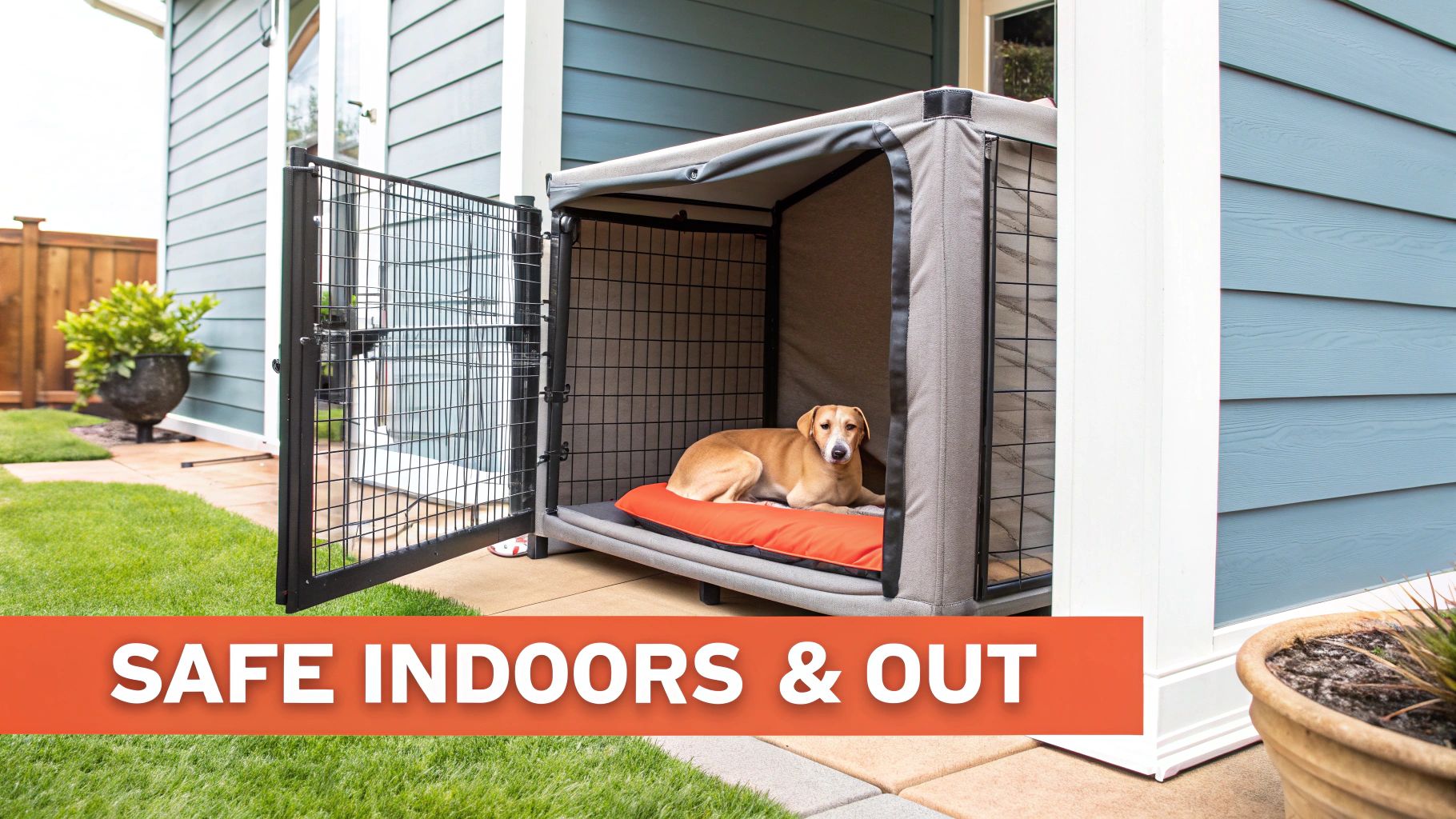
This isn't just a niche product; it's part of a bigger shift in how we view pet care. The demand for these kennels is booming. In fact, market analysis showed the global dog kennels market was valued at a whopping $3.5 billion in 2023 and is only expected to grow.
Why Every Dog Owner Should Consider One
The benefits go way beyond just keeping your dog in one place. When used correctly, a kennel becomes a cornerstone of their training and daily routine. It offers you peace of mind and gives your dog a stable, predictable environment.
Here’s a quick rundown of the perks:
- Safety and Security: It's simple, really. A good kennel keeps your dog away from household hazards indoors and safe from things like predators or traffic when outside.
- Training Aid: This is a game-changer for house training. It helps teach boundaries, manage behavior, and create a positive routine.
- Comfort and Denning Instinct: Dogs are natural den animals. A kennel taps into that instinct, giving them a comforting retreat where they can truly relax.
Quick Fact: A kennel should always be a sanctuary, never a punishment. Creating a positive association is key to helping your dog love their personal space.
Of course, keeping that space clean is non-negotiable for their health. A well-kept outdoor run prevents the spread of nasty bacteria, which is critical when you consider the unseen dangers in dog poop. A simple, hands-free tool like Potomo’s pooper scooper makes the daily cleanup fast and hygienic, ensuring their safe space actually stays safe.
Indoor vs. Outdoor: What Features Matter Where?
So, how does the function of a kennel change when you move it from the living room to the backyard? Here's a quick look at what you need to think about for each setting.
| Feature | Indoor Use Considerations | Outdoor Use Considerations |
|---|---|---|
| Flooring | Must protect your home's floors. Look for non-scratch feet or a solid base. | Needs to be durable, easy to clean, and provide good drainage. Concrete or pavers work well. |
| Material | Lighter materials like plastic or wire are fine. Aesthetics might be more important. | Must be rust-proof and weather-resistant. Galvanized steel or heavy-duty plastic is best. |
| Security | Focus is on containment. A simple latch is usually enough. | Needs to be secure against predators and escape artists. Strong locks are essential. |
| Cover/Roof | Not usually necessary, unless you want a cozier "den" feel. | Crucial for providing shade from the sun and shelter from rain or snow. |
| Size | Sized for comfort, but must fit within your home's layout. | Can be larger to allow for more room to play and move around. |
Ultimately, whether the kennel is inside or out, the goal is the same: to provide a safe, comfortable, and reliable space. The best kennels are designed with this dual purpose in mind.
How to Choose the Right Kennel Material and Style
Picking the right kennel is a bit like buying a new pair of shoes—what works for a casual walk isn't what you'd choose for a mountain hike. The material dictates a kennel's durability, portability, and overall purpose. Understanding these differences is the secret to finding a safe, comfortable spot that works for your dog and your life.
The options can feel overwhelming, but they mostly boil down to a few key categories. The market for kennels has blown up, with plastic and wood kennels making up about 70% of all sales. But don't count out steel and wire—they're incredibly popular for good reasons. You can dig deeper into these trends in reports on kennel manufacturing insights at archivemarketresearch.com.
Let's break down the most common materials.
Heavy-Duty Plastic Kennels
Think of a plastic kennel as the versatile SUV of the dog world. These are usually lightweight, making them perfect for travel or just moving from the house to the backyard. Their solid, enclosed design gives off a cozy, den-like vibe that many dogs love.
- Pros: They’re generally affordable, a breeze to clean, and they do a great job blocking wind.
- Cons: Some models don't have the best airflow, and they are not for a power chewer. A determined dog can absolutely destroy a plastic crate.
A plastic kennel is a fantastic choice for smaller dogs, puppies who are potty training, or for anyone who needs a go-to crate for vet visits.
Versatile Wire Crates
Wire crates are the open-concept homes of the kennel world. They offer awesome ventilation and visibility, so your dog feels like part of the family action while staying safely contained.
Most are collapsible, a huge bonus for storage or travel. The downside is their open design doesn’t offer much protection from the weather, making them better for indoor use or for temporary stints in a covered outdoor spot, like a porch.
Quick Tip: If you go with a wire crate, grab a fitted cover. It can instantly transform that open cage into a much cozier den, which can help calm an anxious dog.
Customizable Modular Panel Kennels
When you have a big, high-energy dog or need a permanent outdoor setup, modular panel kennels are the way to go. These are usually built from chain-link or heavy-duty welded steel, giving you top-of-the-line security.
- Materials Matter: Always look for powder-coated or galvanized steel. This is what stops rust, ensuring your investment stands up to years of sun and rain.
- Customization is Key: The best thing about these is their flexibility. You can buy individual panels and build a kennel to almost any size or shape you need.
Sure, they're the most expensive option, but a steel panel system offers unmatched peace of mind. It’s the ultimate setup for keeping a large dog safe. Keeping a space this large clean is vital, and having a solid tool like Potomo’s pooper scooper on hand makes that daily chore fast and hygienic, stopping odors and bacteria from taking over.
Getting the Perfect Fit and Essential Features
Picking out an indoor outdoor dog kennel is a lot like buying a car—get the fit and features right, and you're set for success. Get it wrong, and it’s a miserable experience for everyone. Size is, without a doubt, the most important piece of the puzzle.
If a kennel is too small, your dog will feel trapped. If it’s too big, it goes against their natural denning instinct and can complicate house-training, as they might pick a corner to use as a bathroom.
The sweet spot is a space where your dog can comfortably stand up, turn around in a full circle, and lie down completely stretched out. This gives them that secure, cozy den environment they crave.
Measuring Your Dog for the Perfect Kennel Size
Getting the right measurements is simple. You just need a flexible tape measure and maybe a few treats.
Follow these two steps:
- Get the Length: While your dog is standing, measure from the tip of their nose to the base of their tail (don't include the tail itself). Add 2 to 4 inches.
- Get the Height: Have your dog sit and measure from the floor to the top of their head or ears, whichever is higher. Add another 2 to 4 inches.
Those few extra inches provide just enough wiggle room to be comfortable without making the kennel feel like an empty warehouse.
This infographic shows how the material you choose often dictates the features and best use for the kennel.
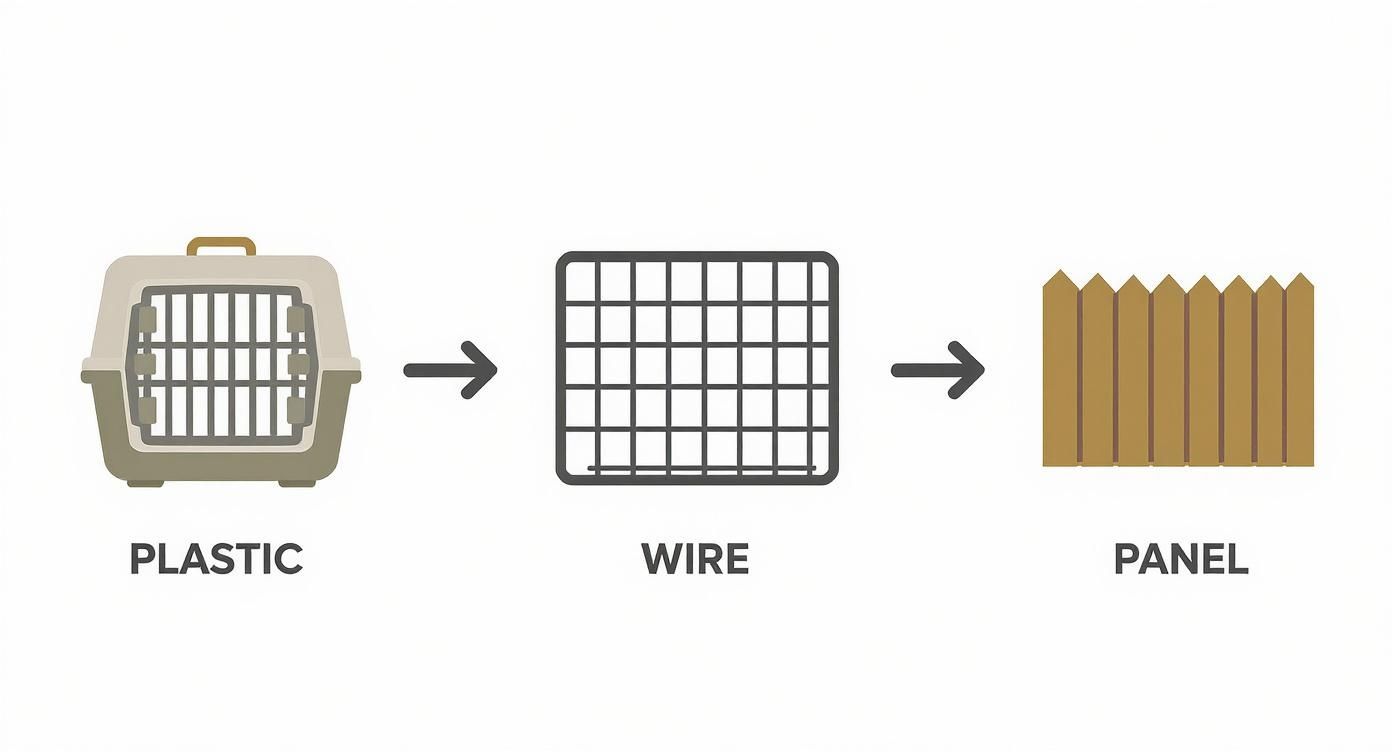
As you can see, the progression from portable plastic crates to heavy-duty panel kennels aligns with different needs, from quick trips to a permanent backyard setup.
Beyond Size: Must-Have Kennel Features
Once you’ve got the dimensions figured out, it’s time to zoom in on the details that make a kennel genuinely safe and convenient.
- Secure Locking Mechanisms: A flimsy latch is an open invitation for an escape artist. Look for heavy-duty slide-bolt latches, especially for a large dog.
- Durable, Weather-Resistant Finish: If the kennel is going outside, rust is your enemy. A powder-coated or galvanized steel finish is non-negotiable to protect it from the elements.
- Removable Floor Tray: For indoor use, this is a must. A leak-proof tray that slides out makes cleaning up accidents a quick, painless job.
- Portability and Assembly: If you plan to move the kennel often, look for models that are lightweight or can be collapsed without a toolbox.
Keeping the kennel and the area around it clean is crucial. For the outdoor half of an indoor-outdoor setup, waste management is a daily chore. An efficient tool like Potomo’s pooper scooper makes the job fast and hygienic, preventing bacteria from building up where your dog lives and plays.
Transforming the Kennel Into a Comfortable Den
An indoor outdoor dog kennel should be your dog's personal sanctuary, not just an enclosure. The goal is to make the space so inviting that your dog chooses to go there. This all comes down to a few key elements that tap into a dog’s natural instincts.
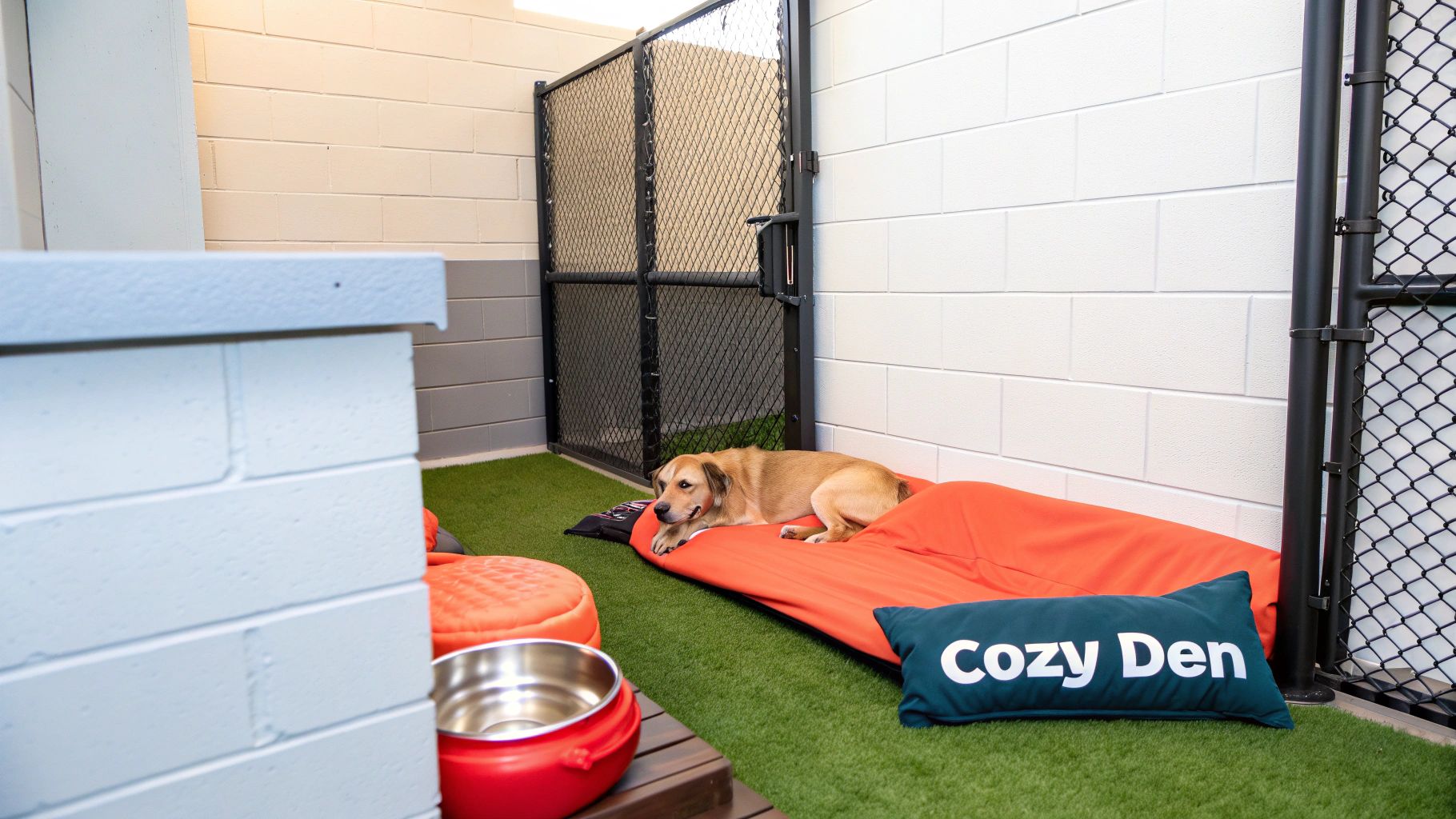
It all starts with making the space physically comfortable and mentally stimulating. When setting up the outdoor portion, make sure it’s on level ground—a shaky floor can make a dog feel insecure. Proper flooring, like smooth concrete or elevated decking, is also a must for protecting their paws and making cleanup a breeze.
Building a Positive Association
This is the most important step. You have to ensure your dog sees the kennel as a good place. That means you can never use it for punishment. Instead, make it the spot where all the best things happen.
- Feed Meals Inside: Place their food bowl inside the kennel with the door wide open. This forges a powerful, positive link.
- Use High-Value Treats: Randomly toss special treats into the kennel for them to find. This turns it into a place of wonderful surprises.
- Introduce It Slowly: Start by leaving the door open and letting them explore. Bit by bit, start closing the door for a few seconds, always rewarding calm behavior.
A dog’s willingness to use their kennel is a direct reflection of their experience with it. Positive reinforcement is the only way to build that foundation of trust and comfort.
Equipping the Den for Comfort and Safety
Once you've laid that positive groundwork, it's time to furnish their new space. Think durable, safe, and engaging.
- Durable Bedding: Go for chew-resistant, waterproof, or elevated beds. These hold up against the elements and provide comfortable support.
- Chew-Proof Toys: Boredom is the enemy. Provide tough, engaging toys like puzzle feeders or durable rubber chews to keep their mind busy.
- Secure Water Solutions: Spilled water is a constant headache. Look for spill-proof bowls or buckets that securely attach to the kennel walls.
For the outdoor run, daily cleanliness is non-negotiable. A well-designed tool like Potomo’s pooper scooper is perfect for this. Its hands-free design makes waste removal quick and hygienic, ensuring their outdoor space stays healthy. This simple routine is crucial for maintaining their personal den.
A Simple Routine for Kennel Maintenance
Getting the right indoor outdoor kennel is just the first step. Keeping it clean is what truly makes it a safe, comfortable space for your dog.
A consistent maintenance routine stops odors, keeps bacteria from taking hold, and ensures your dog’s haven stays healthy. Think of it less as a chore and more as a simple part of your daily rhythm.
Your Daily Checklist
These non-negotiables only take a few minutes but make a world of difference.
- Waste Removal: This is priority number one for any outdoor space. An ergonomic tool like Potomo’s pooper scooper makes this job quick, easy, and completely hands-free.
- Food and Water Refresh: Dump out old water, rinse the bowl, and refill it with fresh water. Clear away any leftover food so you don't attract critters.
- Quick Spot Clean: Spill? Accident? Wipe it up immediately with a pet-safe cleaner.
Weekly Deep Clean
Set aside about 20 minutes once a week to give the kennel a proper scrub-down. This is your best bet for long-term sanitation.
Quick Fact: A weekly deep clean is your best defense against the gradual buildup of grime and bacteria that daily spot-cleaning might miss.
Move your dog to a secure spot. Then, pull everything out—bedding, toys, bowls. Scrub all surfaces with a pet-safe disinfectant (a simple solution of one part vinegar to one part water is a great natural option). Rinse thoroughly and let it air-dry completely.
Seasonal Safety Inspections
As the seasons change, give your kennel a quick once-over.
- Check for Damage: Look for any signs of chewing, rust spots, or cracks.
- Inspect Latches and Locks: Jiggle the gates and doors. Do they close securely?
- Assess Bedding and Toys: Toss bedding in the wash and get rid of any toys that are starting to break apart.
Following this simple schedule makes it easy to maintain a pristine and safe environment. For more tips on handling the messy parts of dog ownership, check out our complete guide on creating a dog waste disposal system that works.
Frequently Asked Questions (FAQ)
Choosing an indoor outdoor kennel is a big decision. Here are answers to a few common questions to help you feel confident in your choice.
What's the best flooring for an outdoor kennel?
The ideal floor needs to be durable, easy to clean, non-porous, and comfortable for paws. A sealed concrete slab is often considered the gold standard for permanent kennels because it’s tough and easy to sanitize. Other great options include heavy-duty rubber mats, elevated composite decking for drainage, or even pea gravel over a proper drainage system.
How do I stop my dog from trying to escape the kennel?
An escape artist can be stressful! First, ensure the kennel is a happy place, never a punishment zone. If the behavior continues, it's time to investigate.
- Upgrade Security: You may need a kennel specifically designed with escape-proof locks.
- Address the Cause: Escape attempts often stem from boredom or separation anxiety. Increase exercise, provide engaging puzzle toys, and work on training to build their confidence when alone.
How long can my dog safely stay in a kennel?
This really depends on your dog's age, training, and temperament. For an indoor kennel, a few hours is a reasonable limit for an adult dog. For a well-equipped outdoor kennel with shelter, space, and water, they can stay longer. However, a kennel should never replace regular exercise, mental stimulation, and quality time with you. It's a safe, temporary den—not a permanent living space.
Can I connect an indoor crate to an outdoor run?
Absolutely! This is a fantastic setup. Many people install a dog door in a wall or door that leads directly from the indoor crate area into a secure outdoor run. This gives your dog the freedom to choose whether they want to be inside their cozy den or outside in the fresh air, providing the ultimate in comfort and flexibility. For more tips, check out this guide on the best way to pick up dog poop.
A clean, secure kennel is a cornerstone of responsible pet ownership. For the daily task of keeping your dog's outdoor area spotless, the PoTomo Clip-On Pooper Scooper offers a fast, hands-free, and hygienic solution. Learn more and make cleanup easier at https://potomo.net.