

Having a dog that frequently runs away can be stressful, dangerous, and frustrating for any pet owner. Whether it’s chasing squirrels, exploring new scents, or simply testing boundaries, dogs that dart off can put themselves in harm’s way. Fortunately, there are practical strategies you can implement to keep your furry friend safe and close by. In this article, we’ll share seven proven tips to help prevent your dog from running away and strengthen the bond between you and your pet.
Why Dogs Run: The Real Reasons Behind Escapes
It’s a heart-stopping moment: you open the back door and find an empty yard where your dog should be. It's easy to get frustrated, but before you can solve this problem, you have to understand what’s driving your dog to bolt in the first place.
An escape artist isn't a "bad dog." They're a dog with an unmet need or an overwhelming emotion.
The first step is to shift your mindset from frustration to curiosity. When you get inside your dog's head, you can stop just reacting to escapes and start proactively preventing them from ever happening again.
Instinctual and Emotional Triggers
Many escape attempts are wired deep into a dog's DNA or sparked by powerful emotions. These aren't conscious choices to disobey you; they're primal urges that are incredibly hard for a dog to ignore.
- Prey Drive: A squirrel darting across the fence, a rabbit in the bushes, or even just a leaf blowing in the wind can trigger an intense, instinctual chase. For breeds like terriers and hounds, this urge is off-the-charts powerful.
- Mating Instincts: An unneutered or unspayed dog can smell a potential mate from an astonishing distance. This biological imperative is one of the most common reasons for roaming.
- Fear and Anxiety: Loud noises are a huge trigger. The sudden crack of fireworks or the deep rumble of a thunderstorm can send a terrified dog into a blind panic, causing them to chew through a door or dig under a fence trying to find a safe place.
Some breeds are also just natural-born wanderers. One analysis of GPS-collared dogs found that Anatolian Shepherds were the most frequent escape artists, getting lost an average of 2.13 times per month. They were followed closely by Bloodhounds and Great Pyrenees, which really shows how much genetics can fuel that desire to roam. You can dive deeper into the breeds most likely to run away on Business Insider.
Boredom and Lack of Fulfillment
Sometimes, the reason for an escape is painfully simple: your dog is just bored out of their mind. Your yard might feel like a green prison if there’s nothing interesting to do in it.
Quick Fact: When a dog's environment lacks stimulation, they often create their own adventure—and that adventure is frequently on the other side of the fence. A fulfilled dog is a dog that stays put.
A dog left alone for hours with nothing to do will eventually find a job. That job might be digging, barking nonstop, or figuring out how to get loose and explore the exciting world beyond your property.
Even something as simple as keeping the yard clean makes it a more inviting place for play. When the space is clean, you're more likely to spend quality time out there together, building that crucial bond that makes your dog want to stick around. A quick cleanup with Potomo’s pooper scooper before a play session ensures the focus stays on fun.
Creating a Fort Knox Yard and Home
Training is a massive piece of the puzzle, but it's only half the battle. The other half is turning your home and yard into a safe zone, not an easy escape route. Think of it as building a loving fortress—one where your dog feels happily secure, not trapped.
This kind of proactive management makes it physically harder for your dog to ever pull off a successful escape. That buys you precious time to reinforce your training and get to the root cause of their wanderlust.
Conduct a Thorough Fence Audit
Your fence might look solid at a glance, but a determined dog sees it as a puzzle full of weak points. It’s time to get down on their level—literally—and give it a thorough inspection.
Walk the entire perimeter of your yard, looking for the subtle vulnerabilities they'd exploit.
- Under-Fence Gaps: Even a tiny gap can be pawed and dug into something much bigger. Look for signs of disturbed dirt or places where the ground has eroded away from the fence line.
- Loose Boards or Links: Get hands-on. Wiggle every board and check every link in a chain-link fence. A single weak point is an open invitation for a dog who's constantly testing their boundaries.
- Climbable Objects: Is that woodpile, the patio furniture, or a big planter sitting a little too close to the fence? Your dog might be seeing a staircase you never even noticed.
This simple audit can reveal the most likely escape routes before your dog has a chance to use them again.
Fortify Your Yard's Defenses
Once you've found the weak spots, it's time to reinforce them. You'd be surprised how many solutions are simple DIY fixes that can make a world of difference for a committed escape artist.
For the diggers, you can bury chicken wire or L-shaped footer brackets about a foot deep along the base of the fence. When your dog tries to dig, they'll hit the wire and usually give up. For the jumpers or climbers, look into fence-top rollers or coyote rollers. These spin and prevent them from ever getting a solid grip to pull themselves over.
Making your yard an engaging and secure place is one of the most effective ways to stop your dog from running away. A clean, safe space encourages positive outdoor time together, reinforcing the bond that makes them want to stay.
A well-maintained yard is also just more inviting for both of you. Keeping up with simple tasks like waste removal ensures the space stays pleasant. You can find some great tips on managing this in our guide to setting up a dog waste disposal system.
Secure the Inside of Your Home
The front door is the final boss for so many dog owners. The notorious "door dasher" can slip out in the split second it takes to grab a package or greet a guest.
Create an "airlock" system using baby gates. Place one gate a few feet inside the door, which creates a small, secure vestibule. This gives you a safe zone to enter and exit without your dog having a straight shot to freedom. It's a simple management tool that prevents countless heart-stopping moments.
The scale of this issue is huge. In the United States, an estimated 1.7 million pets go missing each year. The risk is highest in the summer, which accounts for about 45% of lost dog cases thanks to more open doors, unsecured gates, and startling events like fireworks. You can discover more insights about when pets go missing at PetsRadar.com.
Training That Makes Staying With You Irresistible
Physical barriers are great for management, but real, lasting security comes from a dog who chooses to stay with you. This is where the magic of training happens. We're not just aiming for obedience; the goal is to convince your dog that being near you is the most rewarding, fun, and safe place on Earth.
Good training builds a powerful bond that acts like an invisible leash. It shifts your relationship from one of simply managing an animal to one of true partnership.
Build a Bulletproof Recall Command
A reliable "come" command is, without a doubt, the most important skill you can teach your dog. It’s a literal lifesaver. The secret to a truly bulletproof recall is starting small and making it an overwhelmingly positive party every single time.
Start in a place with zero distractions, like your living room. Call your dog’s name in a happy, excited tone, followed by your recall word (e.g., "Fido, come!"). The second they get to you, throw a party. We're talking high-value treats like little pieces of chicken or cheese, over-the-top praise, and lots of affection.
The Golden Rule of Recall: Never, ever punish your dog for coming back to you, no matter how long it took or what mischief they got into. You need them to associate returning to you with hitting the jackpot, not with fear or punishment.
Once they've got it down inside, gradually up the difficulty. Try it in the backyard, then on a long leash at a quiet park. The key is to always set them up for success and build a long history of positive reinforcement.
A secure yard is the perfect training ground for practicing these skills, which is why checking your fences first is so critical. This visual guide shows a simple flow for escape-proofing your space.
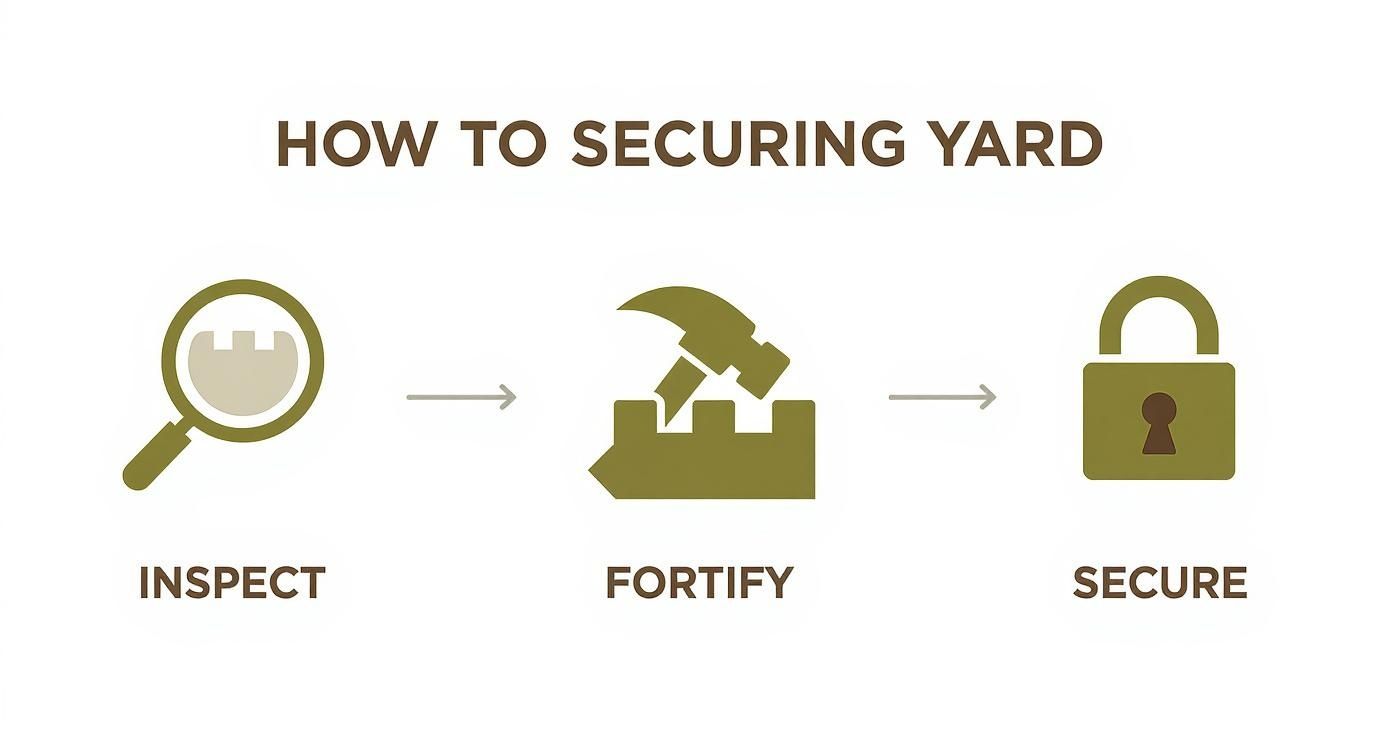
This process shows just how inspecting, fortifying, and securing those potential escape routes creates the perfect controlled environment for effective training to take place.
To help you structure this process, here's a simple progression plan. The idea is to master each phase before moving on to the next, more distracting environment.
Recall Training Progression Plan
| Phase | Location | Key Action | Reward Level |
|---|---|---|---|
| 1: Foundation | Quiet room indoors | Call your dog from a short distance with zero distractions. | Jackpot! (Highest value treats) |
| 2: Adding Distance | Large room or hallway | Increase the distance, calling them from another room. | High (Cheese, chicken, etc.) |
| 3: Minor Distractions | Fenced backyard (on leash) | Practice with mild distractions like ambient noise or smells. | High |
| 4: Controlled Outdoors | Quiet park (on a long line) | Introduce new sights and sounds in a controlled setting. | Jackpot! |
| 5: Proofing | busier park (on a long line) | Practice around other people or dogs at a safe distance. | Jackpot! |
Remember, if your dog fails at a certain phase, don't get frustrated! Just take a step back to the previous, easier phase and build their confidence back up before trying again.
Master Essential Boundary Training
Beyond recall, teaching your dog about boundaries helps stop escapes before they even begin. These commands create invisible barriers that put an end to that dashing behavior right at the source.
- Wait at Doorways: This is a big one. Teach your dog to automatically wait at any open door—front door, back door, even car door—until you give a release cue like "Okay!". Start with the door just barely cracked open, rewarding them for staying put, and slowly open it wider as they get the hang of it.
- Stay Command: A solid "stay" is invaluable for impulse control. Practice in short, successful bursts, gradually making the distance and duration longer over time. This teaches them to control their excitement in tempting situations.
These skills aren't just for the house; they're crucial on walks, too. Practicing good leash manners and respecting boundaries in public reinforces all the training you do at home. For more on that, check out our guide on the unspoken rules of dog walking etiquette.
Of course, keeping your yard clean with a simple tool like Potomo’s pooper scooper makes it a much more pleasant "classroom" for your training sessions. A clean, inviting space encourages you both to spend more quality time outside, which helps turn training into a fun bonding activity instead of a chore.
Enrichment That Cures Wanderlust
A bored dog is a creative dog, and their creativity often leads them straight over the fence.
Think of it this way: when a dog's basic needs aren't being met, they’ll find their own job to do. And unfortunately, that "job" often involves digging under the fence, figuring out the gate latch, or taking a solo tour of the neighborhood. The impulse to run away often starts with a simple lack of stimulation right at home.
The real secret to stopping your dog from running away is often preventing the desire before it even starts. By channeling their energy in a productive way, you can cure their wanderlust and make your home the most interesting place on the block.
Go Beyond the Basic Walk
A daily walk is essential, but for many dogs, it’s just scratching the surface. Real enrichment challenges their minds and taps into their natural instincts, leaving them tired and fulfilled in a way a simple leash walk can't.
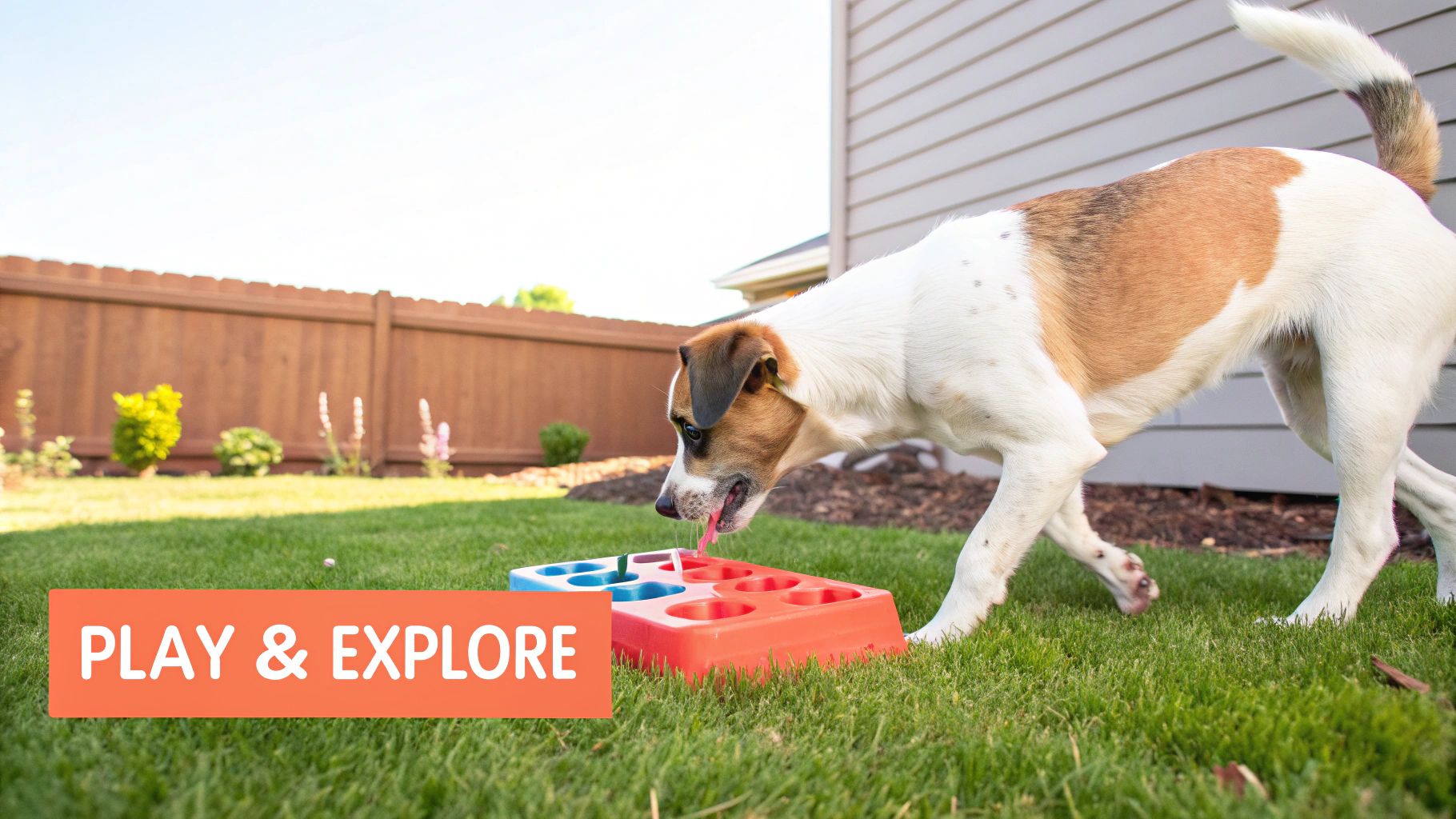
- Puzzle Toys: These are my absolute go-to for mental stimulation. Instead of just dumping their dinner in a bowl, make them work for it with a food puzzle or a snuffle mat. This turns a five-minute meal into a 20-minute brain game.
- Scent Work Games: A dog’s nose is an incredible tool. Hide some high-value treats around a room or your yard and encourage them to "find it." This super simple game satisfies their deep-seated need to forage and hunt. It’s a game-changer.
- Structured Play: Games like fetch or tug-of-war are more than just fun. They're structured activities that build your bond and burn off steam in a controlled, positive way.
Personal Anecdote: My beagle, Cooper, used to be a notorious fence-digger. I started hiding his breakfast in a snuffle mat and playing "find it" in the yard for 10 minutes every morning. The digging stopped almost overnight. He was just bored!
Create an Engaging Canine Paradise
Your yard shouldn't just be a place for a quick bathroom break; it can be an extension of your enrichment efforts. With just a few small additions, you can transform a boring patch of grass into a stimulating environment that keeps your dog happily occupied.
Consider adding a small sandbox for digging, a few durable outdoor toys, or even a designated "sniffing spot" with interesting, dog-safe plants. The more engaging their own space is, the less appealing the world beyond the fence becomes.
Of course, a key part of making your yard an inviting paradise is keeping it clean. Nobody wants to play in a minefield of dog waste. Using a simple tool like Potomo’s pooper scooper makes the daily cleanup quick and totally hygienic. This small act of maintenance ensures the yard remains a pleasant, safe space where you both genuinely want to spend quality time, further strengthening the bond that keeps them close.
What To Do When Your Dog Actually Escapes
Even with the most secure yard and diligent training, it can happen. That heart-stopping moment when you realize your dog is out and running free. Your first instinct is to panic and run after them.
The first rule—and it feels completely wrong in the moment—is this: do not chase your dog.
Chasing almost always makes things worse. For many dogs, it triggers their prey drive and turns into a super fun game of keep-away, encouraging them to bolt even faster. If your dog is already scared, seeing you running at them just confirms their panic, making it impossible for them to listen or even recognize you.
Your Immediate Action Plan
Instead of giving chase, your job is to break their focus and make them want to come back to you. You have to snap them out of whatever has their attention and remind them that you are their safe space.
Here’s what to do the second you see them running:
- Stop and Drop. Seriously. Stop dead in your tracks. Then, get low to the ground by crouching or even lying down. This sudden, strange behavior makes you non-threatening and can spark their curiosity enough to make them pause.
- Use Your Happy Voice. Start calling their name in a high-pitched, wildly enthusiastic voice. Think party time! Use familiar, fun phrases like "Wanna go for a ride?" or "Who's a good boy?!"
- Run the Other Way. This is the ultimate Jedi mind trick for dogs. Once you have their attention, turn and run excitedly away from them, back toward your house. This flips the script and can trigger their instinct to chase you.
Understanding the Lost Dog Mindset
If your dog has been gone for a while, they might not react like the pet you know and love. A lost dog can enter a panicked "survival mode," a phenomenon sometimes called 'Lost Dog Syndrome' (LDS).
In this state of severe mistrust and avoidance, they may run away from everyone—even you. A rescue study has documented this behavior, which can last for days or months. Understanding that your dog might be operating on pure fear is crucial to how you search for them. You can learn more about this fascinating canine behavior from Wellbeing International.
Pro Tip: A clean, welcoming yard reinforces that home is their ultimate safe zone. Keeping the space tidy with a tool like Potomo’s pooper scooper helps build a positive association with their turf, making it the one place they'll always want to return to.
Frequently Asked Questions (FAQ)
1. Will neutering or spaying my dog stop them from running away?
It can certainly help, especially if the escapes are driven by mating instincts. Neutering a male dog can dramatically reduce their urge to roam in search of a mate. However, it's not a magic cure-all. If your dog runs away due to boredom, fear, or a high prey drive, the surgery won't change that underlying behavior. It's a key part of a comprehensive solution, but not the only one.
2. Is an electric or invisible fence a good solution?
While they work for some dogs, many professional trainers advise against them. An invisible fence doesn't stop other animals from entering your yard, which can be dangerous. More importantly, for a dog with high motivation (like a strong prey drive), the shock may not be enough to stop them from running through the barrier. Once they are out, they often won't want to re-enter because they'll get shocked again. Physical fences combined with positive training are a much safer and more reliable option.
3. My dog only runs away from the pet sitter. What should I do?
This is a common and stressful problem! The key is preparation. Have the pet sitter visit several times before you leave for short, fun "get to know you" sessions filled with high-value treats and play. This builds a positive association. You should also give the sitter a detailed tour of your escape-proofing system and a cheat sheet with your dog's specific recall commands and emergency contacts. The more comfortable your dog is and the more prepared the sitter is, the lower the risk of an escape. For more general tips you can share, check out our comprehensive FAQ page.
4. Will my dog eventually stop running away on their own?
It's highly unlikely. Running away is what trainers call a "self-rewarding behavior." Every time your dog gets loose, they experience new smells, sights, and the thrill of the chase. This adventure is its own reward, reinforcing the desire to do it again. A dog won't simply "grow out of it." The solution lies in making your home and your presence more rewarding than any adventure on the other side of the fence.
A clean, safe yard is the foundation for preventing escapes. PoTomo makes it simple to maintain that secure space. The hands-free Clip-On Pooper Scooper helps you keep the yard pristine, making it a place you and your dog want to be. Check it out at https://potomo.net.