

Potty training an older dog can feel daunting, especially if they’ve spent years developing habits in your home or previous environment. Unlike puppies, older dogs may have ingrained routines or past experiences that make learning new bathroom habits more challenging—but it’s far from impossible. With patience, consistency, and the right approach, you can help your furry friend understand where and when it’s appropriate to go.
Understanding your dog’s behavior, cues, and needs is the first step toward successful training. Older dogs may have physical limitations, health considerations, or simply require more time to adjust to new routines. This guide will walk you through practical strategies, helpful tips, and troubleshooting advice to make potty training a positive and stress-free experience for both you and your dog.
Why Potty Training an Older Dog Is Different
A puppy is a blank slate. An adult dog, on the other hand, comes with a history that shapes their behaviors. Figuring out the "why" behind their accidents is the first real step toward a solution.

Unlearning Old Habits
Many rescue dogs simply never learned the rules of living indoors. They might have been kept outside, lived in a shelter kennel, or been in a home where no one ever taught them where to go. You aren't just teaching a new skill; you're helping them overwrite a lifetime of old programming.
A few common reasons for accidents include:
- No Prior Training: It's a common misconception that all adult dogs are house-trained. Many simply never had the opportunity to learn.
- Big Environmental Changes: A new home is stressful! That anxiety can easily trigger marking or accidents as your dog tries to figure out this new, unfamiliar space.
- Hidden Medical Issues: This is a big one. Underlying health problems are a frequent cause of house soiling in adult dogs, which is why a vet visit is non-negotiable before you start any training program.
The key to success is shifting your mindset. You're not a disciplinarian correcting bad behavior. You're a patient teacher helping a student who just happens to speak a different language.
Building a Foundation for Success
Getting this right hinges on a few core ideas. First, a predictable routine minimizes any chance for mistakes. Next, positive reinforcement makes going outside the absolute best choice they can make. Finally, smartly managing their indoor space keeps them from practicing bad habits.
When accidents happen, quick cleanup is your best friend. Having a tool like Potomo’s pooper scooper ready to go makes managing messes less stressful. Its hands-free design is perfect for immediate cleanup, indoors or out, so you can focus on the training plan without the extra hassle.
But before we dive into schedules and rewards, we have to tackle the most critical first step.
Rule Out Health Issues First—Your Dog Might Be Trying to Tell You Something
Before you create a potty schedule or buy fancy treats, your first stop needs to be the vet's office. When an older dog starts having accidents, it's often a symptom, not just a behavioral quirk. A thorough checkup can save you and your dog a world of stress.
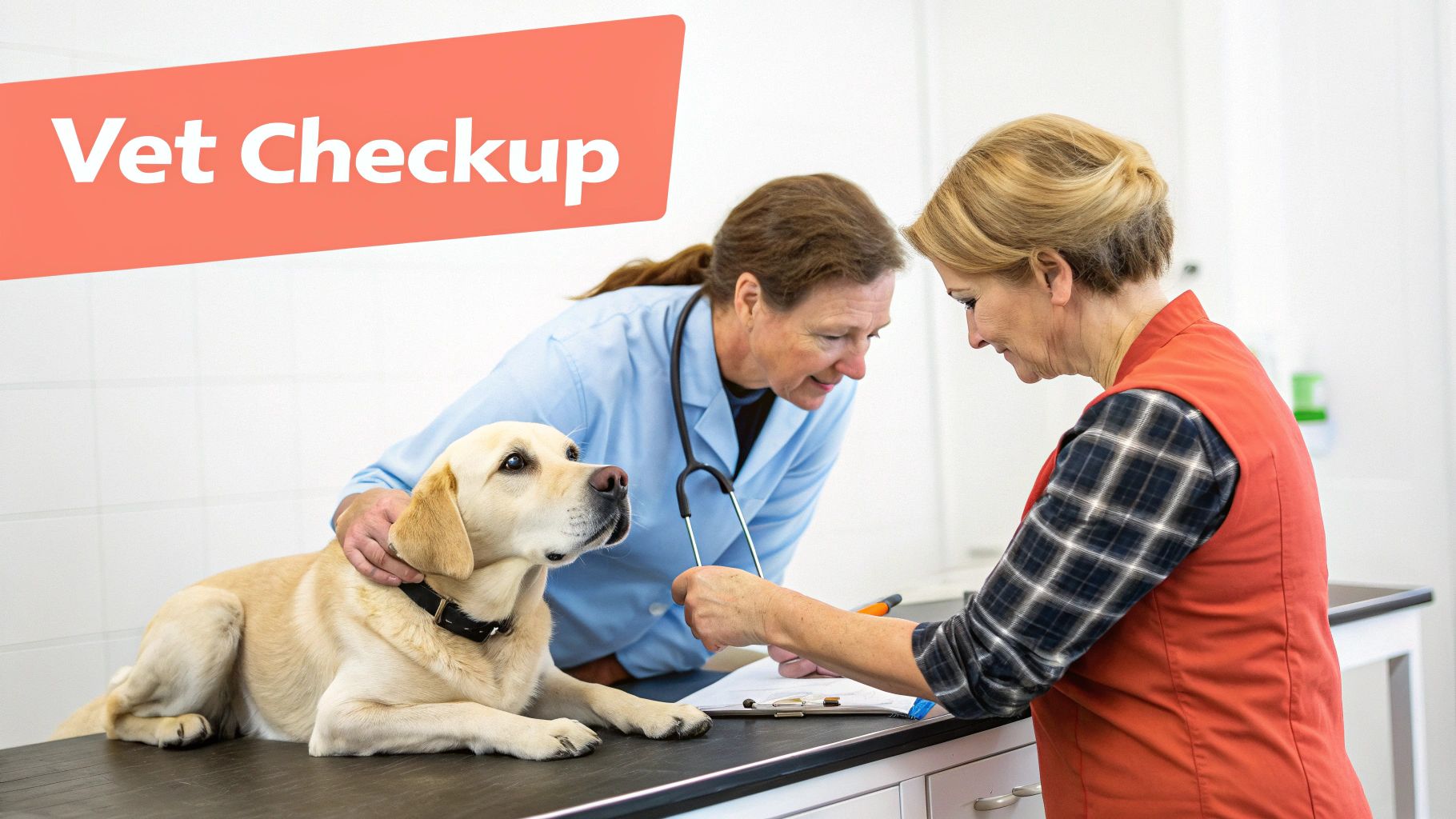
Many people who adopt older dogs are shocked to find out that a stubborn training issue is actually medical. You might be up against a condition that makes "holding it" painful or even impossible.
Common Medical Culprits Behind House Soiling
A number of health problems can show up as potty accidents. Knowing what they are can help you have a more productive conversation with your vet.
Be sure to ask about these key issues:
- Urinary Tract Infections (UTIs): A UTI creates a powerful, frequent urge to pee, making it almost impossible for a dog to wait.
- Kidney Disease: When a dog's kidneys aren't working right, they often drink more water and have to urinate more often.
- Diabetes: One of the classic signs of diabetes is excessive thirst and urination, a combination that almost guarantees accidents.
- Cognitive Dysfunction Syndrome (CDS): Think of it like dementia for dogs. CDS can cause confusion, leading a dog to simply forget their house-training rules.
Remember, your dog isn’t having accidents out of spite. They might be trying to tell you something is wrong in the only way they can. Ruling out a medical problem is the most compassionate first step.
A Closer Look at Urinary Incontinence
One of the most frequent offenders is urinary incontinence, which is when a dog leaks urine without even knowing it’s happening. This is not a behavioral accident.
This condition is surprisingly common, especially in senior dogs.
- Quick Fact: Studies show that up to 20% of spayed female dogs may develop incontinence in their lifetime.
Incontinence requires medical management, not just a training plan. When accidents do happen, cleaning them up quickly is crucial. Lingering smells will only encourage your dog to use the same spot again. This is where a tool like the Potomo pooper scooper becomes a lifesaver, not just for walks but for managing solid messes inside without ever having to touch them.
And don't forget the health risks. We break down the unseen dangers in dog poop in another guide, but the takeaway is simple: a clean home and a healthy dog go hand-in-hand.
Building a Predictable Potty Routine
Once you've got a clean bill of health from the vet, your most powerful training tool is consistency. Older dogs, especially ones settling into a new home, thrive on predictability. A solid potty schedule is the very foundation of your entire plan.
Think of it from their perspective: they know they have to go, but they have no idea when or where is acceptable. Your job is to make those moments so predictable that they don't even have to guess.
Structuring Their Day For Success
The name of the game is anticipation. You want to get ahead of their needs, taking them out before they even realize they have to go. This proactive approach prevents accidents from happening.
Your starting goal is to take them out frequently—think every 1-2 hours. This floods them with opportunities to get it right. Build your schedule around these critical moments:
- The Second They Wake Up: Straight from their bed to the backyard.
- The Very Last Thing at Night: Make this the final step in your bedtime routine.
- Right After Meals: Plan for a trip outside within 15-30 minutes of them finishing their food.
- After Every Nap: Waking up often triggers the urge to pee.
- Immediately After Playtime: All that excitement can speed up their system.
This schedule might feel intense at first, but it’s a temporary blitz designed to build a rock-solid habit. As your dog gets the hang of it, you can slowly stretch the time between breaks.
A predictable routine does more than just stop accidents. It builds a deep sense of trust and security, showing your dog that you understand their needs. For a rescue dog, that feeling is priceless.
To help you visualize it, here’s a sample schedule you can adapt.
Sample Daily Potty Training Schedule for an Older Dog
This template is a great starting point. Feel free to adjust the times to fit your own routine.
| Time | Activity | Key Action |
|---|---|---|
| 7:00 AM | Wake Up | Immediate potty break. |
| 7:15 AM | Breakfast | Feed your dog. |
| 7:45 AM | Post-Meal Break | Take them out again. |
| 9:00 AM | Scheduled Break | Potty trip. |
| 10:30 AM | Playtime/Walk | Fun and exercise. |
| 11:15 AM | Post-Play Break | Take them out immediately after. |
| 12:30 PM | Nap Time | Crate time or quiet time. |
| 2:00 PM | Post-Nap Break | Take them out as soon as they wake. |
| 3:30 PM | Scheduled Break | Potty trip. |
| 5:00 PM | Dinner | Feed your dog. |
| 5:30 PM | Post-Meal Break | Take them out again. |
| 7:30 PM | Scheduled Break | Potty trip. |
| 9:30 PM | Last Call | Final potty break before bed. |
Establishing a Dedicated Potty Spot
Always take your dog to the exact same spot in your yard on a leash. This is a business trip, not a leisurely stroll. Stand there and be boring. By using the same patch of grass over and over, their own scent will build up, creating a powerful trigger that tells their brain, "This is the bathroom."
Keeping this spot clean is crucial. A good dog waste disposal system makes it easy to maintain their designated area.
Crate Training as a Management Tool
You can't watch your dog 24/7. For those times, a crate is your best friend. It’s a management tool that taps into a dog's natural instinct to keep their "den" clean. Introduce the crate as a safe, cozy space. This stops them from sneaking off to have an accident when you're busy.
Using Positive Reinforcement That Actually Works
Forget everything you’ve heard about scolding a dog for an accident. Punishment only creates fear and damages the trust you're working so hard to build. The fastest, most effective way to teach an older dog where to potty is through enthusiastic positive reinforcement. Your goal is simple: make going to the bathroom outside the best thing they do all day.
The very second they finish their business outside, it’s party time. Use a happy, high-pitched voice and shower them with praise like, “Yes! Good potty!” Immediately follow up with a high-value treat, like tiny pieces of chicken or cheese, that they only get for successful potty breaks.
Timing and Cues Are Everything
The secret sauce is timing. The praise and treat must happen the instant they finish, not after you’ve walked back inside. This connects the reward directly to the action of eliminating outside.
Once your dog starts to get the hang of it, you can introduce a verbal cue. When you see them start the classic sniff-and-circle routine, say a simple phrase like “Go Potty.” When they go, launch into your usual celebration.
Potty training an older dog is a process of unlearning old habits. Studies show that dogs trained with positive reinforcement experience higher success rates, though the timeline can range from weeks to months. Find more research on PetMD.com.
Handling Real-World Scenarios
Not every trip outside will be a win. Here’s how to handle it:
- If they go right away: Perfect! Lavish them with praise and treats.
- If they just sniff around: Give them about five minutes. If nothing happens, take them back inside. Keep them on a leash by your side or pop them in their crate for 10-15 minutes, then try again.
- If an accident happens: Don't scold them. Interrupt with a calm but firm sound (like a single clap) and immediately hustle them outside to their spot.
When you do have to clean up, a good scooper makes a world of difference. Having a tool like Potomo’s pooper scooper ready means you can handle accidents quickly and hygienically without adding more stress to the situation. Its convenient clip-on design means it's always there when you need it, helping you maintain a clean and encouraging training environment.
Managing Accidents and Preventing Setbacks
Accidents are going to happen. Setbacks aren’t a sign of failure—they're just part of the learning curve. How you react is what really matters.
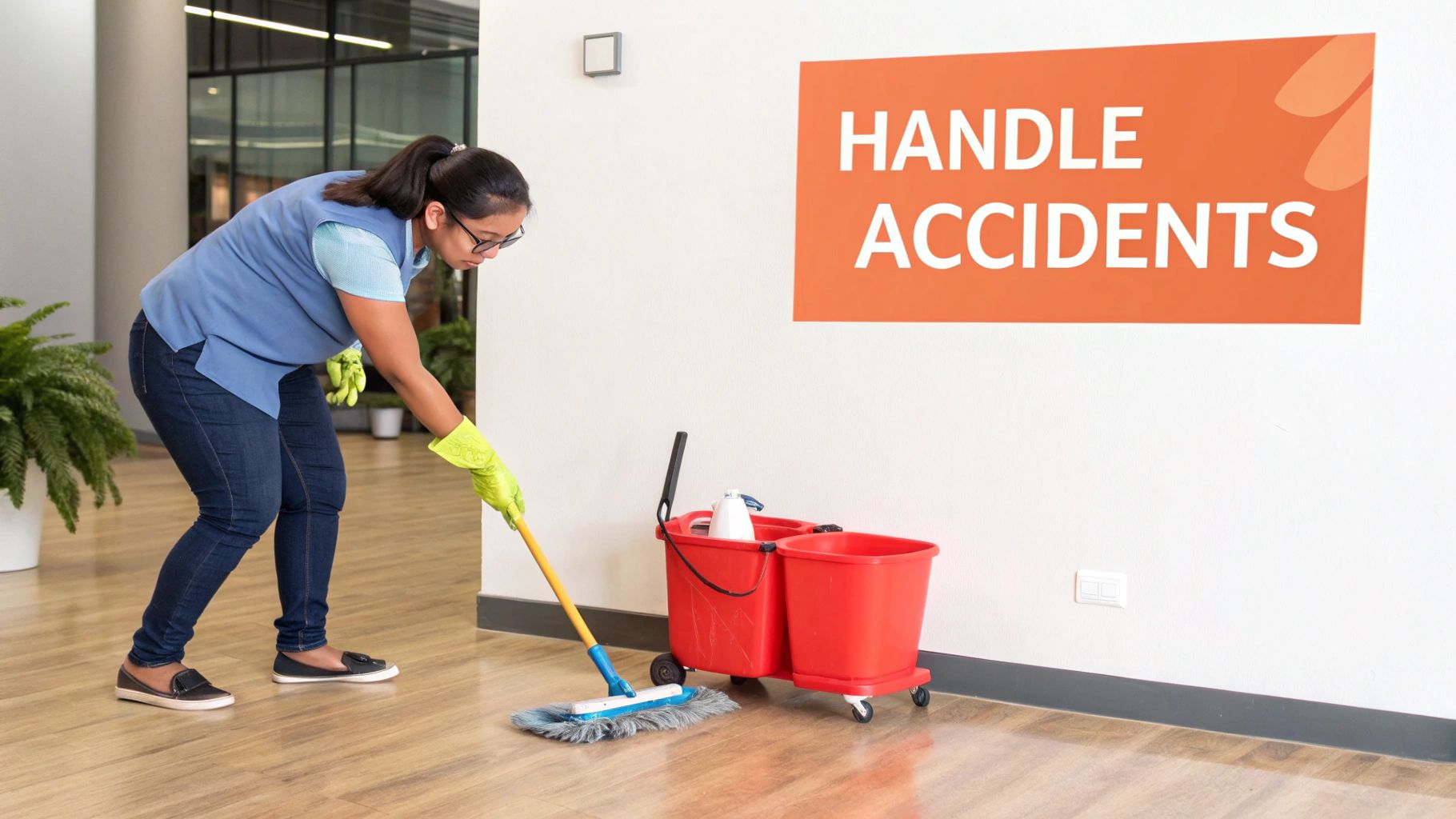
The number one rule: never scold, punish, or rub your dog's nose in their mess. This old-school advice is cruel and counterproductive. It only teaches your dog that you’re unpredictable and scary.
What to Do When an Accident Happens
If you catch your dog mid-act, make a calm noise to interrupt them—a single clap usually does the trick. Immediately hustle them outside to their designated potty spot. If they finish out there, praise them like crazy.
Found the mess after the fact? Just clean it up. Your dog won't connect your frustration to something they did hours ago.
An accident is a training opportunity, not a character flaw. It’s a signal that you might need to tweak their schedule or supervise them more closely.
The Power of a Proper Cleanup
Cleaning up correctly is everything. Any lingering scent from a past accident is like a giant sign that says, "This is a bathroom!"
You must use an enzymatic cleaner. Your regular household spray won’t do it. An enzymatic cleaner actually breaks down and destroys urine proteins, completely wiping out the scent trigger.
For solid messes, a fast cleanup is just as crucial. Potomo’s pooper scooper is great for this, allowing you to handle indoor accidents without any mess or direct contact. You can get the waste disposed of quickly, treat the spot, and get right back to your training plan. For more tips on keeping things sanitary, read about the best way to pick up dog poop.
Troubleshooting and Moving Forward
After every accident, ask yourself a few key questions:
- Did I wait too long? Maybe your schedule needs shorter intervals.
- Did I miss the signs? Was there any pacing, whining, or sniffing you didn't catch?
- Was I distracted? Did they wander off unsupervised for a few minutes?
By figuring out the why, you can make small adjustments that create big wins down the road.
Frequently Asked Questions About Training an Older Dog
Even the best training plan can hit a few snags. Here are answers to the most common questions that pop up.
How long will it take to potty train my older dog?
The honest answer is: it depends! Some dogs get the hang of it in a few weeks, while others with deeply ingrained habits might take a few months. Focus on progress, not a specific timeline. Celebrate every accident-free day and don't get discouraged by setbacks. Your patience is the key ingredient.
Why does my dog keep peeing in the same spot inside?
This is likely due to a lingering scent trigger. Your dog's powerful nose can detect old accidents even when you can't. First, clean the area thoroughly with an enzymatic cleaner to completely eliminate the odor. Then, change the association with that spot—try feeding your dog or playing with them there. If possible, block access to the area temporarily.
What if my senior dog physically can’t make it outside in time?
This is a common and valid concern for dogs with arthritis or mobility issues. In these cases, providing an indoor potty solution like potty pads or an artificial grass patch is a compassionate choice. It allows your dog to relieve themselves comfortably without stress. The American Kennel Club has excellent resources on this; learn more about senior dog care on AKC.org.
Is crate training absolutely necessary?
While not mandatory, crate training is an incredibly effective management tool. It taps into a dog's natural instinct to keep their "den" clean, preventing accidents when you can't supervise them. The golden rule is to make the crate a safe, positive space with comfy bedding and special toys—never use it for punishment.
Managing messes is just part of the deal, but it doesn’t have to be a dreaded chore. The Potomo Clip-On Pooper Scooper makes cleanup fast and totally hands-free, so you can focus on the good stuff—celebrating your dog's success. Shop now and make your routine a whole lot easier at potomo.net.