

Training your dog to relieve itself outside is a common challenge for new pet owners, but with patience and consistency, it’s completely achievable. Understanding your dog’s natural habits and creating a routine can make the process smoother for both you and your furry friend. Whether you have a puppy or an adult dog, the right strategies can help prevent indoor accidents and encourage good bathroom behavior.
Successful outdoor potty training combines timing, positive reinforcement, and a little bit of observation. By learning the signs that your dog needs to go and establishing a consistent schedule, you can guide them to the right spot and reward them for doing it correctly. Over time, your dog will develop a reliable habit, making life easier and more enjoyable for everyone in your household.
Why Your Dog Poops Inside
If you're constantly asking, "Why won't my dog poop outside?" you're probably dealing with a communication gap, not a defiant pet. The reasons behind indoor accidents are often deeper than they seem, and understanding them is your first step toward solving the problem for good.
A huge factor is anxiety, especially for new rescues or puppies still figuring out the world. A busy street with loud trucks and strange smells can be incredibly overwhelming. It makes your dog feel too vulnerable to do their business, so they just hold it until they’re back in the safety of your home—and boom, an accident on the rug.
Unclear Routines and Old Habits
Dogs are creatures of habit. They absolutely thrive on predictability. If their potty breaks are all over the place, they have no idea when their next chance to go outside is coming. That confusion means they’ll just go whenever the urge hits.
You also have to consider their history. Some dogs, particularly those who were trained on puppy pads, have literally learned that it's okay to go potty indoors. They genuinely don't understand that the grass or sidewalk is their new designated spot. This isn't disobedience; you're just trying to un-teach an old habit.
The core issue is often a lack of a clear, positive association. Your dog hasn't connected "pooping outside" with a good outcome yet. Our job is to build that connection with consistency and plenty of rewards.
Underlying Medical Concerns
Before you dive into full-on training mode, it's always smart to rule out any health issues. A sudden change in your dog’s bathroom habits can be a red flag for an underlying medical problem.
A few common culprits include:
- Gastrointestinal Distress: Things like constipation or diarrhea can make going to the bathroom painful or unpredictable.
- Mobility Problems: For older dogs, arthritis can make squatting really uncomfortable, causing them to avoid it.
- Cognitive Decline: Sometimes, senior dogs can simply forget their house-training rules.
A quick trip to the vet can tell you if you're dealing with a medical issue or a behavioral one. And remember, indoor accidents aren't just a mess to clean up; they can carry health risks, too. For a closer look at this, you can learn more about the unseen dangers in dog poop and see why proper cleanup is so important for everyone.
Building a Consistent Potty Training Routine
When it comes to potty training, predictability is everything. It’s not just helpful—it’s the entire foundation for success. Dogs thrive on routine, and a consistent schedule works with their natural body rhythms, not against them.
By taking them out at key moments throughout the day, you're not just reacting to accidents. You’re proactively getting ahead of them, making outdoor success feel almost inevitable. Think of your dog’s bladder and bowels as being on a clock; certain activities reliably trigger the need to go. Your job is to anticipate those moments.
Pinpointing Critical Potty Break Times
There are a few non-negotiable times when your dog absolutely needs a trip outside. Missing these windows is probably the number one reason accidents happen indoors. It’s not about them being naughty; it’s about their body telling them it’s time to go.
Make sure you're taking your dog out at these key moments:
- First Thing in the Morning: They’ve been holding it all night. This is often the most urgent and predictable potty break of the entire day.
- 15-30 Minutes After Meals: Food gets the digestive system moving. A quick trip outside after breakfast and dinner is a must.
- Immediately After Naps: Just like us, waking up often triggers the urge to pee. As soon as they stir and stretch, it's time to head for the door.
- Following Playtime: All that running and excitement can stimulate the bladder and bowels. A cool-down potty break is always a smart move.
- Right Before Bedtime: A final chance to empty out ensures a clean crate and a comfortable night for everyone.
Sticking to this rhythm teaches your dog that there are plenty of appropriate opportunities to relieve themselves, which helps reduce their anxiety and the likelihood of accidents.
Sample Daily Potty Break Schedule
Adapt this sample schedule to fit your dog's age and your daily routine. Consistency is more important than the exact times.
| Time of Day | Activity | Reason for Potty Break |
|---|---|---|
| 7:00 AM | Wake Up | First morning relief after holding it all night. |
| 7:30 AM | After Breakfast | Digestion has started, prompting the need to go. |
| 12:00 PM | Mid-Day Break | Regular relief, especially important for puppies. |
| 3:00 PM | After Nap/Play | Waking up or post-activity stimulation. |
| 6:00 PM | After Dinner | Another post-meal break is essential. |
| 10:00 PM | Before Bed | Final chance to empty out for the night. |
Consistency is your best friend here. The more you stick to a schedule, the more your dog learns to anticipate these breaks and hold it in between.
Establishing a Designated Potty Spot
Timing is only one half of the equation. Where they go is just as important. Instead of letting your dog wander aimlessly, choose one specific area to be their official "potty spot."
Every single time you go out, lead them directly to this spot on a leash. This taps into your dog's powerful sense of smell. As they use the same spot over and over, the lingering scent becomes a powerful trigger, signaling to their brain, "This is the bathroom."
Quick Tip: A designated potty spot minimizes distractions and creates a strong scent association. The goal is to make the location so familiar that it automatically triggers their instinct to go.
Of course, you have to keep this spot clean. Most dogs won't want to use an area that’s heavily soiled. A quick daily cleanup makes it an inviting place for them to return to. Using a tool like Potomo’s pooper scooper makes this job fast and hygienic, ensuring the potty spot stays effective. Its convenient clip-on design means it's always with you on the leash, ready for action.
And remember, good habits extend beyond your own yard. Proper cleanup on walks is a must, and if you need a refresher, check out this guide on the unspoken rules of dog poop etiquette.
Using Positive Reinforcement and Cue Words
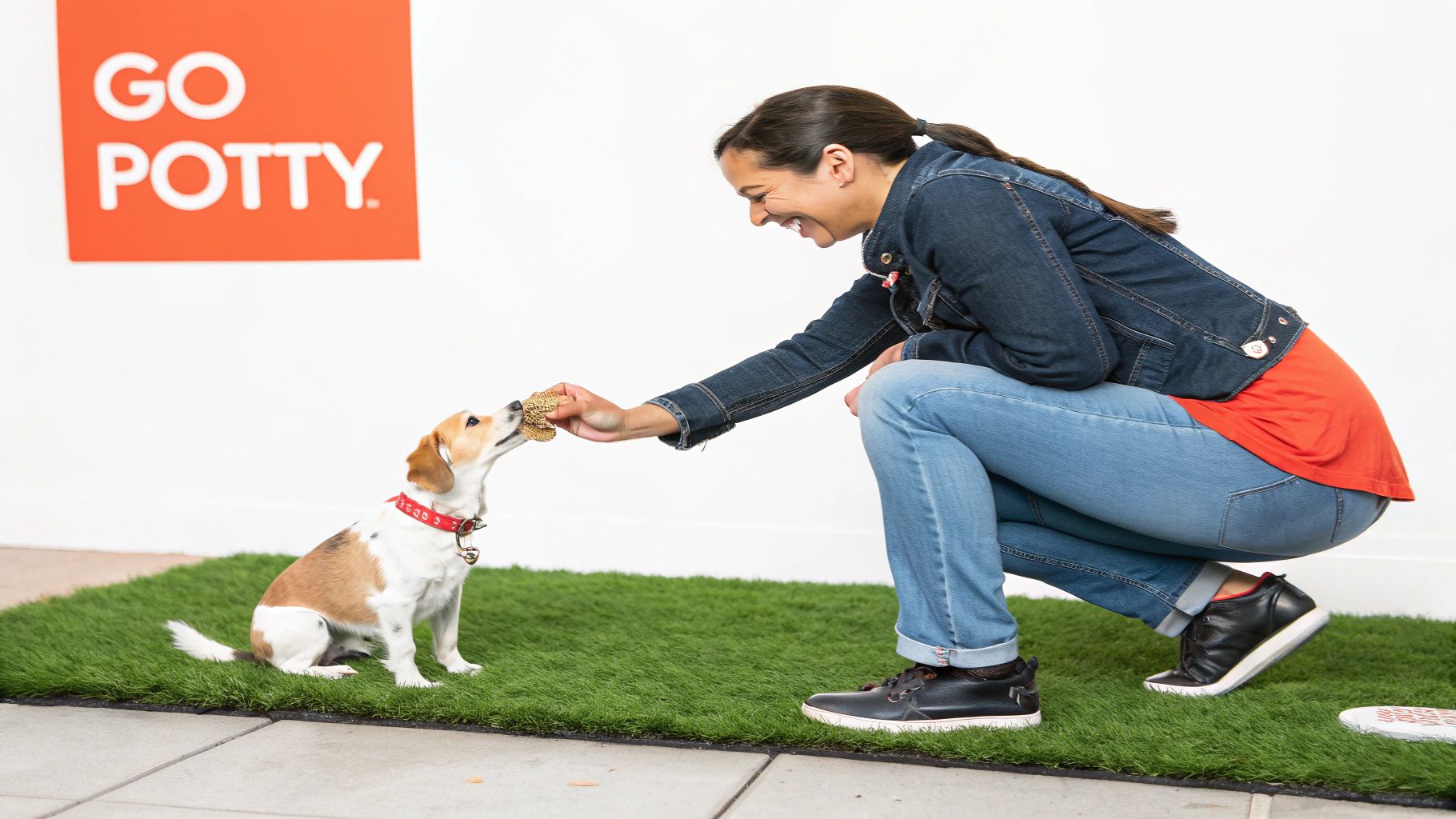
Let's get one thing straight: successful potty training is never about punishment. It’s all about celebrating the wins. Positive reinforcement is the most powerful tool you have for showing your dog exactly what you want them to do. It turns a frustrating chore into a fun, rewarding game.
The secret is making the reward immediate and exciting. The second your dog finishes pooping outside, they need to know they just won the lottery. A half-hearted "good dog" isn't going to cut it.
This is where high-value treats come into play. I'm not talking about their everyday kibble. You need something special that they only get for a successful potty trip.
- Small pieces of cooked chicken or turkey
- Tiny cubes of low-fat cheese
- That one store-bought treat they go absolutely nuts for
Pair that amazing treat with tons of happy, enthusiastic praise. Your goal is to forge an immediate, powerful connection in their mind: pooping outside equals something fantastic happening.
Introducing a Potty Cue Word
Once you've got the reward system down, you can layer in another powerful tool: a verbal cue. This is just a short, consistent phrase you'll use to signal that it's time to get down to business. Trust me, this is a lifesaver when you're in a hurry or traveling.
Pick a simple phrase like "Go Potty," "Do Your Business," or "Be Quick." Teaching it is all about timing.
As you see your dog starting to get into position to poop, say your cue word in a calm, encouraging tone. Just say it once as they begin. The moment they're finished, immediately deliver that high-value treat and lay on the praise. By pairing the word with the action they're already doing, their brain starts to connect the two.
Key Takeaway: The cue word doesn't magically make the dog go; it marks the behavior. But after enough repetition, the word itself can help trigger the urge because your dog starts anticipating that awesome reward.
This isn't just some trick—it's the foundation of modern, effective dog training. In fact, the dog training services market is expected to hit USD 5.54 billion by 2030, largely because people see their dogs as family and want to build good habits the right way. You can read more about the growth of the dog training industry to see just how big this trend is.
Troubleshooting Common Potty Training Problems
Even with the best schedule and the most irresistible treats, sometimes potty training just hits a wall. It’s completely normal, so don't get discouraged. The real trick is figuring out why it's happening and adjusting your plan with a dose of patience.
One of the most frustrating moments is when your dog enjoys a long, sniff-filled walk, only to come right back inside and poop on the rug. This isn't your dog being defiant. It's usually a classic case of sensory overload. The outside world is so stimulating—squirrels to chase, new smells, blowing leaves—that they completely forget why they're out there.
The Overly Distracted Dog
If your dog seems more interested in exploring than eliminating, you need to dial down the excitement. The key is to make potty breaks boring until the job is done.
Here’s what that looks like in practice:
- Shorten the Leash: Use a standard, non-retractable leash and keep your dog close.
- Be a Statue: Take them directly to their potty spot and just stand there. No talking, no playing. You are now the most boring person on the planet.
- Wait Them Out: Give them about five minutes. If nothing happens, bring them back inside. Supervise them like a hawk (or use their crate) for 10-15 minutes, then head back outside to repeat the boring routine.
The moment they finally go, erupt with praise and break out the high-value treats! This teaches them a critical lesson: doing their business is the key that unlocks the fun part of the walk.
Quick Fact: Never punish a dog for an accident indoors. It doesn’t work. It only creates fear, which can make them afraid to go potty in front of you at all—even outside.
Dealing with Indoor Accidents Correctly
How you react to an accident is everything. Yelling or scolding your dog after you find a mess is pointless. They live in the moment and won’t connect your anger to something they did minutes ago. Your focus should be on calm cleanup and preventing it from happening again.
If you catch them in the act, make a sharp noise—like a loud clap—to interrupt them. Then, hustle them outside to their potty spot. If they finish out there, reward them.
If you find the mess later, just clean it up. The most crucial part of cleanup is using an enzymatic cleaner. Regular soap won't cut it. These special cleaners break down the specific odor molecules that act like a flashing neon sign telling your dog, "This is a great place to pee again!"
Sudden Potty Training Regression
What about the dog who was perfectly house-trained but suddenly starts having accidents again? This is called regression, and it’s almost always triggered by something specific.
- Stress: Big life changes like a move, a new baby, or a shift in your work schedule can cause anxiety that leads to accidents.
- Medical Issues: A urinary tract infection or other health problem could be the culprit. Always rule this out with your vet first.
- Incomplete Training: Sometimes, we declare victory too soon. The initial training might not have been as solid as we thought.
If your dog starts backsliding, don't panic. Just go back to Potty Training 101. Re-establish a strict schedule and go back to using high-value rewards for every single success outside. A little patient reinforcement is usually all it takes to get them back on track.
Essential Tools for Managing Accidents
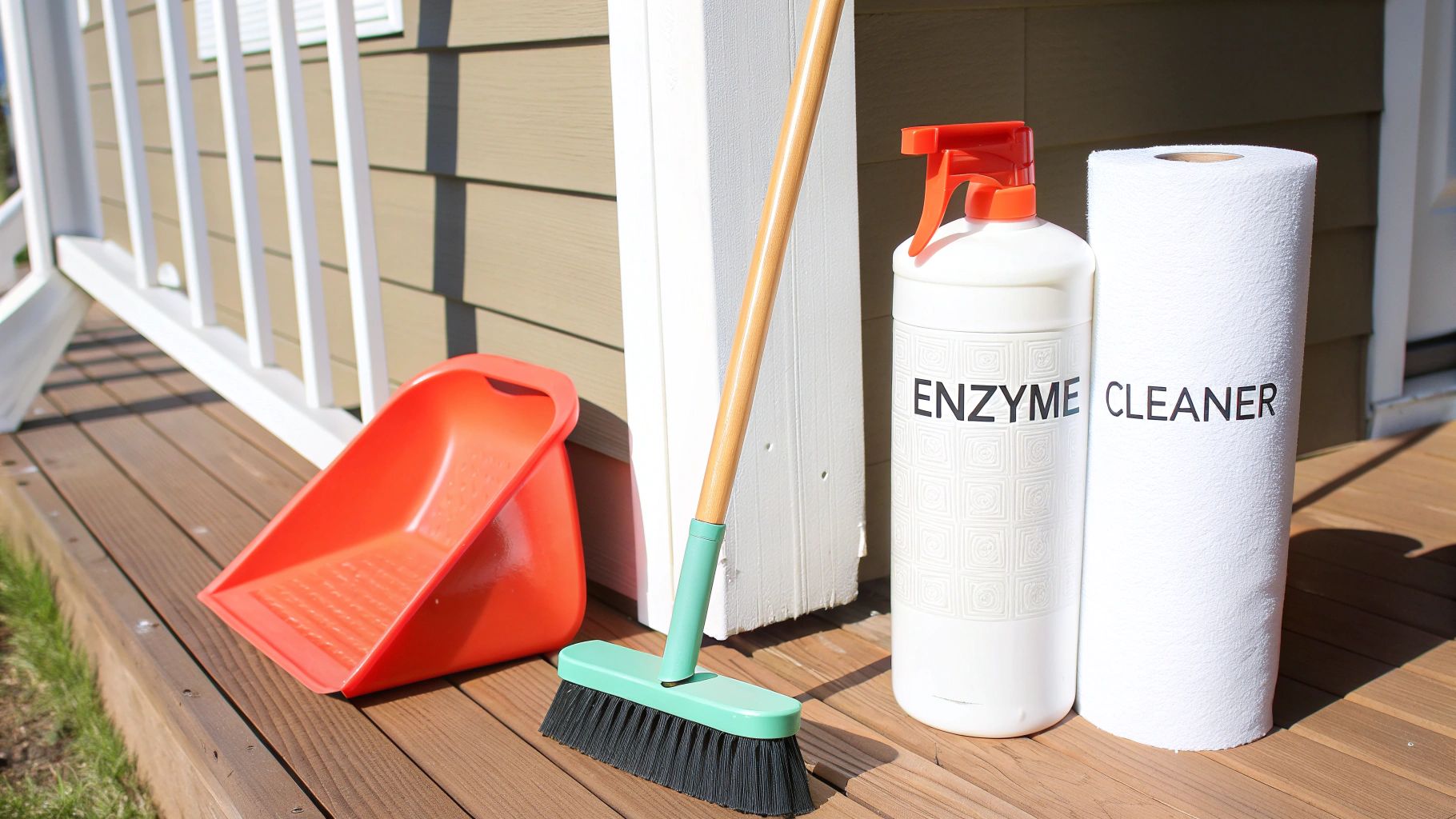 Having the right gear can make or break your potty training journey. The proper tools aren’t just for managing setbacks; they actively support your training by creating a clean, consistent, and positive environment.
When accidents happen—and they will—your cleanup method is what really matters. You need specific tools designed to tackle the root of the problem and make your daily routine easier.
The Non-Negotiable Enzymatic Cleaner
If you only buy one thing, make it an enzymatic cleaner. Standard household sprays might mask odors from our noses, but they don't fool a dog's powerful sense of smell. These specialized cleaners contain enzymes that physically break down the odor-causing proteins in urine and feces.
Without them, those lingering scent molecules act like a beacon, telling your dog, "This spot is a pre-approved bathroom!"
Using an enzymatic cleaner isn’t just about cleaning. It’s about erasing the invisible scent map that encourages your dog to make the same mistake again. It's a crucial part of teaching them that the only acceptable toilet is outside.
Keeping the Outdoor Potty Spot Pristine
Maintaining a clean designated potty area outside is key to reinforcing your training. Most dogs are naturally clean animals and will try to avoid going in an area that’s already heavily soiled. If their special spot is a mess, they might start looking for "fresher" alternatives.
This is where a high-quality pooper scooper becomes essential.
- Reinforces Training: A clean spot is inviting and helps solidify the "this is the bathroom" association.
- Promotes Hygiene: Scooping regularly reduces the risk of spreading bacteria and parasites.
- Improves Your Yard: It makes your outdoor space much more pleasant for everyone.
A convenient tool like Potomo’s clip-on pooper scooper simplifies this task by attaching directly to the leash, so it's always there when you need it. This simple habit makes it easy to stick to a consistent cleanup schedule. To get a better handle on cleanup, you can check out our guide on the best way to pick up dog poop.
Interestingly, research shows that 62.5% of dog owners train their dogs themselves, which highlights the need for good information and the right tools from the start. Learn more about these dog training trends.
Frequently Asked Questions (FAQ)
Potty training is a journey, not a straight line. Here are some quick answers to common roadblocks to help get you back on track.
Why does my dog pee outside but poop inside?
This is a classic! It almost always boils down to a feeling of vulnerability. Pooping is a more involved process than a quick pee, leaving a dog feeling exposed. After your dog pees, don't rush back inside. Calmly walk them around their potty spot for another 5 to 10 minutes. The moment they finally poop, throw a party with treats and praise to show them it's safe and rewarding.
How long does it take to get a dog to poop outside?
It varies greatly! A young puppy might take 4 to 6 months to be fully reliable, but some learn in a few weeks. For an adult dog learning new rules, it can also take several weeks of consistent effort. The key factors are your dog's age, past experiences, and your consistency with the routine. Patience is your best friend.
What do I do if my dog has an accident in the house?
First, never punish your dog. If you catch them in the act, make a sharp noise (like a clap) to interrupt them and immediately take them outside. If they finish outdoors, praise them. If you find the mess later, just clean it thoroughly with an enzymatic cleaner. This type of cleaner is crucial because it destroys the odor molecules that attract your dog back to the same spot.
Should I use puppy pads?
While they seem convenient, puppy pads can often send a mixed message: "It's okay to go potty inside." For the clearest and fastest training, it’s best to skip them entirely and focus 100% on rewarding your dog for going outside. This avoids confusion and helps them learn the real rules much faster.
Managing potty training is all about consistency, both in your daily routine and your cleanup. Having a tool like the one from PoTomo makes the daily cleanup effortless, helping you keep the designated potty spot pristine and reinforcing all your hard training work. You can keep things on track by checking out their practical solutions.