

It’s a moment every dog owner dreads. You turn the corner and find it—a messy, smelly, liquid accident. My first time dealing with this on a new rug, I completely panicked! But discovering your dog has had a bout of diarrhea is never pleasant, and how you handle it in the first few minutes makes all the difference.
The key to cleaning up dog diarrhea effectively is to act fast. You need to remove the solid waste without smearing it further, then immediately treat the stain with an enzymatic cleaner to break down the organic material and kill the odor. Getting this right prevents permanent stains and keeps your home hygienic.
Your Immediate Diarrhea Cleanup Action Plan
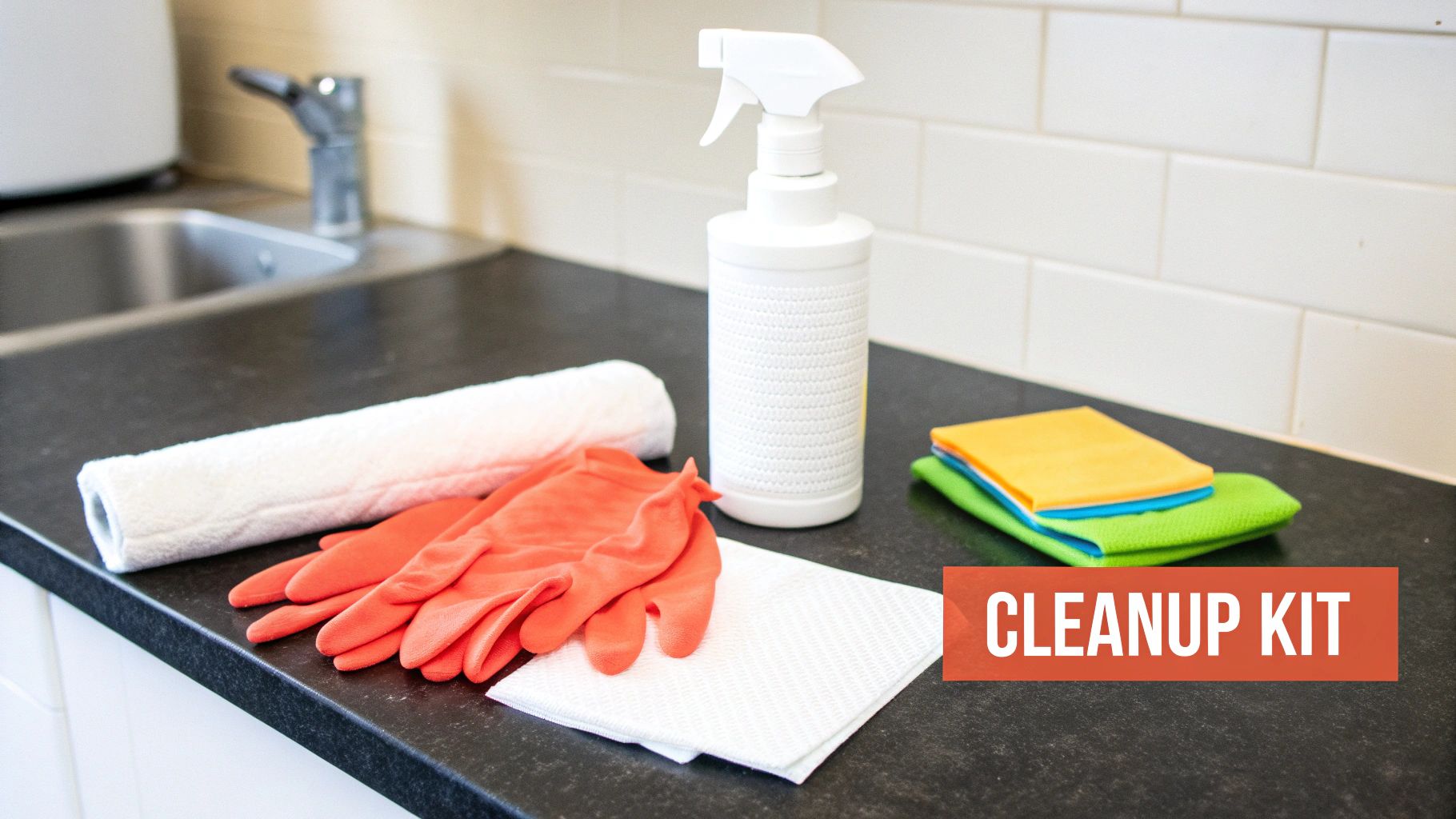
It's easy to panic, but a calm, methodical approach will make the cleanup quicker and far less gross. Before you even think about touching anything, take a deep breath and gather your supplies. Think of it like cleanup triage—you need to contain the mess and protect yourself before you can start the deep clean.
Your Diarrhea Cleanup Emergency Kit
Having the right gear ready to go is half the battle. The last thing you want is to be scrambling through cabinets for supplies while the mess soaks deeper into your carpet or seeps between your floorboards. Here’s a quick look at what should be in your emergency kit.
- Disposable Gloves: This is a non-negotiable. It creates a crucial barrier between you and potentially harmful bacteria.
- Paper Towels or Spatula: Helps you lift the bulk of the mess without smearing it and making things worse.
- Plastic Bag: You need a way to seal and contain the waste right away to control odors and germs.
- Enzymatic Cleaner: Breaks down the organic proteins in the waste, completely removing stains and smells.
- Old Towels or Rags: Critical for absorbing excess cleaner and moisture from carpets or upholstery.
Once you have your gear assembled, you can tackle the cleanup with confidence, knowing you have everything you need to do the job right.
Quick Fact: If you only have one thing in your arsenal, make it an enzymatic cleaner. Unlike regular soap, it uses enzymes to destroy the specific molecules that cause stains and lingering smells. This also discourages your dog from re-soiling the same spot.
When the mess is outdoors, the challenge is a little different. A standard poop bag just won't cut it for loose stool. This is where a specialized tool becomes invaluable. For more tips on handling outdoor messes, check out our guide on the best way to pick up dog poop. A tool like the Potomo pooper scooper gives you a completely contact-free way to manage even the messiest situations, turning a nasty job into a much cleaner one.
What to Check Before You Start Cleaning
Before you reach for the paper towels and cleaning spray, take a deep breath and play detective for a moment. I know it's the last thing you want to do, but that mess on the floor can actually tell you a lot about what’s going on with your dog’s health. It’s the first step in figuring out if this is just a case of "ate something weird" or a sign you need to call the vet.
First, take a look at the color and consistency. A one-off, soft brown accident is usually no cause for panic. But other colors can be a red flag. Is it black and tarry? That can signal internal bleeding. Yellow or greenish? That might point to liver or gallbladder issues. Also, notice if it's just soft or completely watery—the details matter.
Assess Your Dog's Condition
Once you've sized up the mess, turn your attention to your dog. How they're acting is just as important as the evidence on the floor. A dog who has an accident but is still bouncing around and begging for a treat is a very different story from one who is hiding in a corner and refusing to eat.
Run through a quick mental checklist:
- Is my dog acting unusually tired or weak?
- Have they thrown up, or are they turning their nose up at food and water?
- Do they seem like they’re in pain? A hunched back or whining can be a big clue.
If you're answering "yes" to any of these, especially if the poop looked off-color, it’s time to switch gears. Cleaning can wait; calling the vet can't.
When to Be Concerned About Blood
Seeing blood in your dog's diarrhea is instantly alarming, but it doesn't always mean the worst-case scenario. Bright red streaks often come from irritation in the lower part of the digestive tract, which can easily happen with a bad bout of diarrhea. It’s definitely something to watch, but a tiny amount might clear up on its own. Dark, tarry-looking blood, however, is much more serious and warrants an immediate vet visit.
Acute diarrhea is incredibly common in dogs—about 1 in 12 are diagnosed with it each year in the UK alone. Interestingly, the presence of blood often changes how vets approach treatment. One study revealed that antibiotics were prescribed in 59% of bloody diarrhea cases, but only 30% of non-bloody ones. You can read more about how vets approach this common condition.
Important Takeaway: The goal here is to get the full story. The immediate job is cleaning up the mess, but understanding why it happened is crucial for your dog’s health. And remember, that waste can be packed with invisible germs, so always handle it carefully. You can learn more about the unseen dangers in dog poop from CDC health experts to understand just how important safe cleanup really is.
Removing Diarrhea Stains from Carpets and Rugs
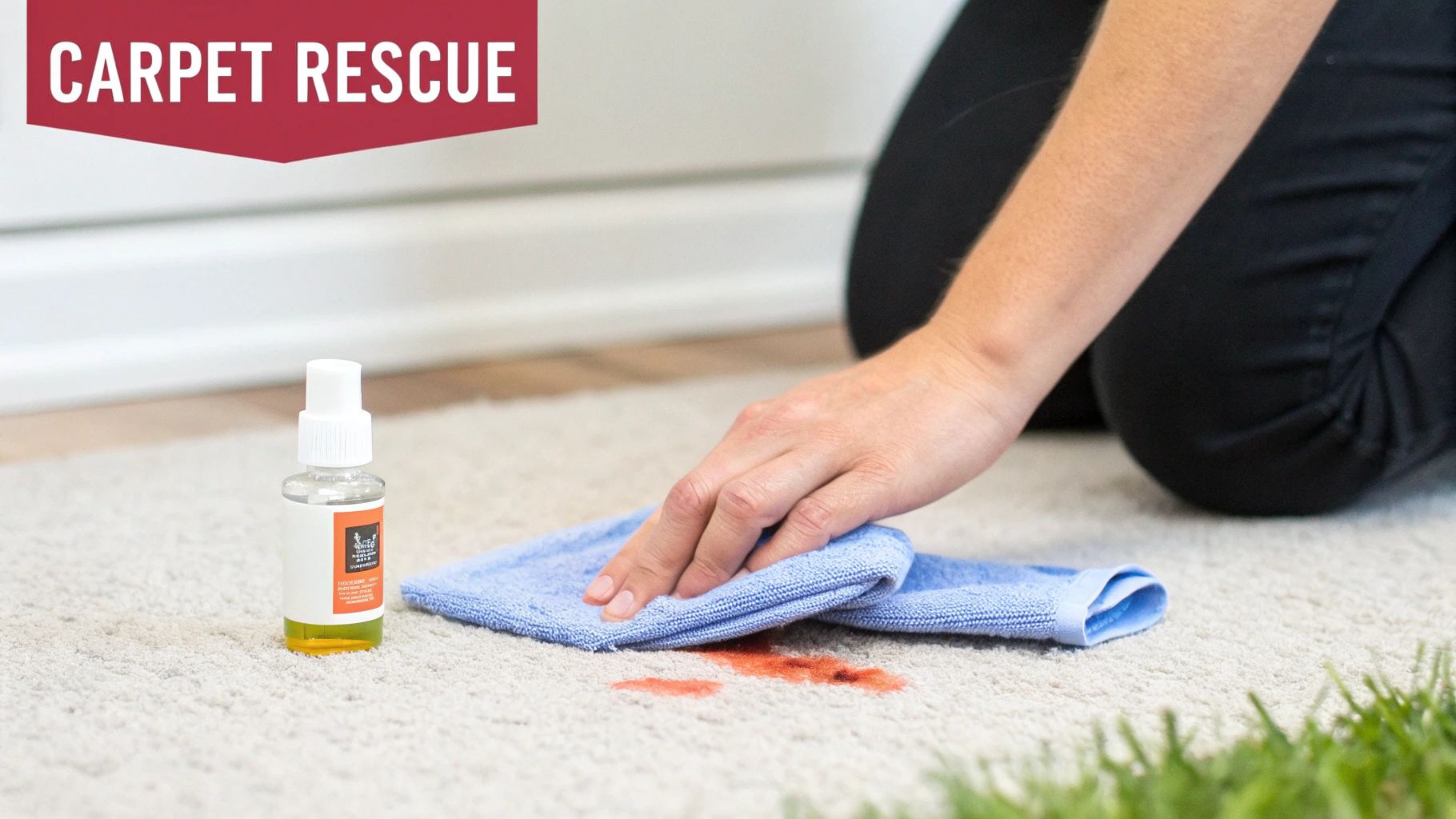
It’s the accident every pet owner dreads. When diarrhea hits, the carpet often takes the worst of it. Those absorbent fibers are practically designed to trap stains and odors, which means a fast, smart response is everything.
The number one rule here is to resist the urge to scrub. Don't press down. All that does is drive the mess deeper into the carpet pile, turning a surface problem into a deep-fiber nightmare.
Your first move is to get any solid or semi-solid stuff off the surface. A paper plate slid carefully underneath can work wonders, and so can a spatula or a couple of spoons. The goal is a clean lift-off with as little smearing as possible.
Even with a perfect pickup, you'll be left with a liquid stain. This is where your real strategy begins. It's tempting to grab the nearest soap and douse the spot, but that's a huge mistake. Many common household cleaners will actually set the protein-based stain, locking it into the fibers permanently.
Creating a DIY Cleaning Solution
For a fresh stain, you can often get surprisingly good results with a simple homemade solution. It’s gentle on most carpets and uses stuff you probably already have.
- Mix Your Potion: Get a spray bottle and combine one part white vinegar with one part cool water. The vinegar's acidity is great for breaking down the organic compounds in the stain without harsh chemicals.
- Blot, Don't Rub: Lightly mist the stained area—you want it damp, not soaking wet. Take a clean, white cloth and blot the stain, working from the outside edge inward. This keeps the stain from spreading.
- Bring in the Baking Soda: After you've blotted up as much of the mess as you can, sprinkle a thick layer of baking soda over the whole area. Baking soda is a natural deodorizer and will pull the remaining moisture and smell right out of the carpet fibers.
- Vacuum It All Up: Now, you wait. Let the baking soda sit until it's completely dry and crusty. This might take a few hours, or you may need to leave it overnight. Once it's dry, just vacuum it all up.
This little trick is fantastic for minor, fresh accidents. But for a more serious mess or a stain that's had time to set, you'll need to bring in the big guns.
Expert Tip: Always, always test any cleaning solution on a hidden spot first. Dab a little inside a closet or under the sofa to make sure it won’t discolor your carpet.
The Power of Enzymatic Cleaners
When you’re learning how to clean up dog diarrhea from a carpet for good, enzymatic cleaners are your absolute best friend. These aren't just soaps in a fancy bottle. They contain special enzymes that work like microscopic Pac-Men, literally devouring the organic proteins left behind by pet waste.
Think of it this way: regular soap might make the stain look like it's gone, but it leaves behind microscopic particles. Your dog, with its super-powered nose, can easily smell those leftovers, which often leads them to mark the same spot again. An enzymatic cleaner destroys the stain and the odor on a molecular level. It erases the evidence completely.
The secret to using these products is patience. You have to really saturate the stain and the surrounding area, then let the cleaner sit for the time recommended on the bottle—often several hours. This gives the enzymes time to get in there and do their job. Once the time is up, all you need to do is blot the area dry. No harsh scrubbing required, which is another reason these cleaners are so great for your carpet.
Cleaning Hard Surfaces Like Wood and Tile
This screenshot from the American Kennel Club gets straight to the point: diarrhea is incredibly common and can stem from anything—from a simple case of "dietary indiscretion" to more serious health problems. It’s a good reminder that cleaning the mess is only half the battle; paying attention to the cause is just as important.
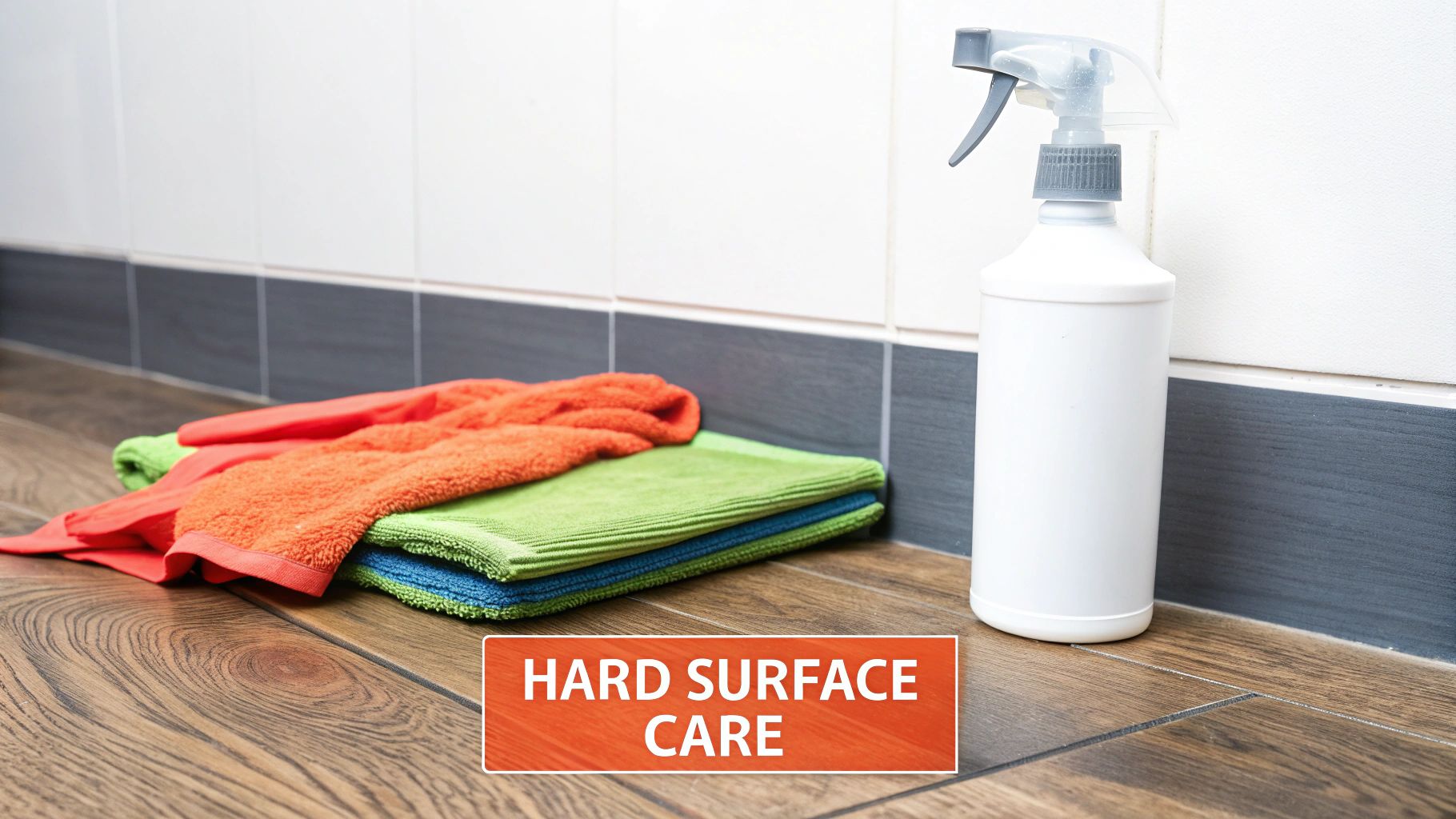
When your dog has an accident on tile, laminate, or sealed hardwood, it’s easy to breathe a small sigh of relief. It’s not the carpet, right? But hold on. Cleaning hard surfaces comes with its own set of traps. The wrong chemical can easily strip the finish off your beautiful wood floors, and just a little too much moisture can make laminate bubble and warp in an instant.
The game plan here is a simple but crucial two-step process: clean first, then disinfect. This ensures you’re not just wiping away the stain but also getting rid of any nasty bacteria left behind.
For that initial pickup, grab a few paper towels or even a stiff spatula to lift the bulk of the mess. The key is to lift, not smear. Smearing is your enemy, especially on floors with texture or grout lines where residue can get hopelessly stuck.
Tackling Different Hard Floors
Every hard floor is a little different, and using the wrong technique can mean trading a poop stain for permanent water damage. Let's break it down.
-
Sealed Hardwood: Moisture is the ultimate villain here. It wants to seep into the wood and cause lasting damage. After you’ve removed the solid waste, use a barely damp cloth with a pH-neutral cleaner. A simple solution of water with a splash of vinegar also works wonders. Whatever you do, dry the area completely with a clean cloth right away.
-
Laminate Flooring: Laminate absolutely hates water, especially along its seams. This is where you need to be surgical with your cleaning liquids. Use a spray bottle to apply a gentle cleaner so you can control exactly how much moisture you're using. And just like with hardwood, dry it immediately and thoroughly.
-
Tile and Grout: The tile itself is a breeze to clean since it's non-porous. The grout, however, is a whole different story. That stuff is porous, meaning it will soak up bacteria and odors like a sponge. Once the tile is clean, you’ll likely need to scrub the grout lines. A paste made of baking soda and water applied with a small brush is perfect for pulling out any absorbed gunk.
Crucial Tip: Never, ever use a steam mop on an organic pet mess like diarrhea, especially on hardwood or laminate. The intense heat can literally cook the protein-based stain into the floor's finish, setting it permanently. Worse, it can force moisture deep into the seams, causing irreversible swelling and damage.
Disinfecting Safely and Effectively
Okay, the visible mess is gone. You're not done yet.
Now it's time to disinfect the area to kill any lingering pathogens. But before you reach for the bleach, remember that harsh chemical disinfectants can be toxic to your pets and can ruin your floors.
Instead, look for a good pet-safe disinfectant or grab that water-and-vinegar solution again. Vinegar's natural acidity makes it a surprisingly effective disinfectant for everyday household use.
Lightly spritz the area, let it sit for five minutes to do its job, and then wipe it all up with a fresh, damp cloth. This final step is what takes your floor from looking clean to being hygienically safe for everyone in your family, both two-legged and four-legged.
Managing Cleanup in Your Yard or on Walks
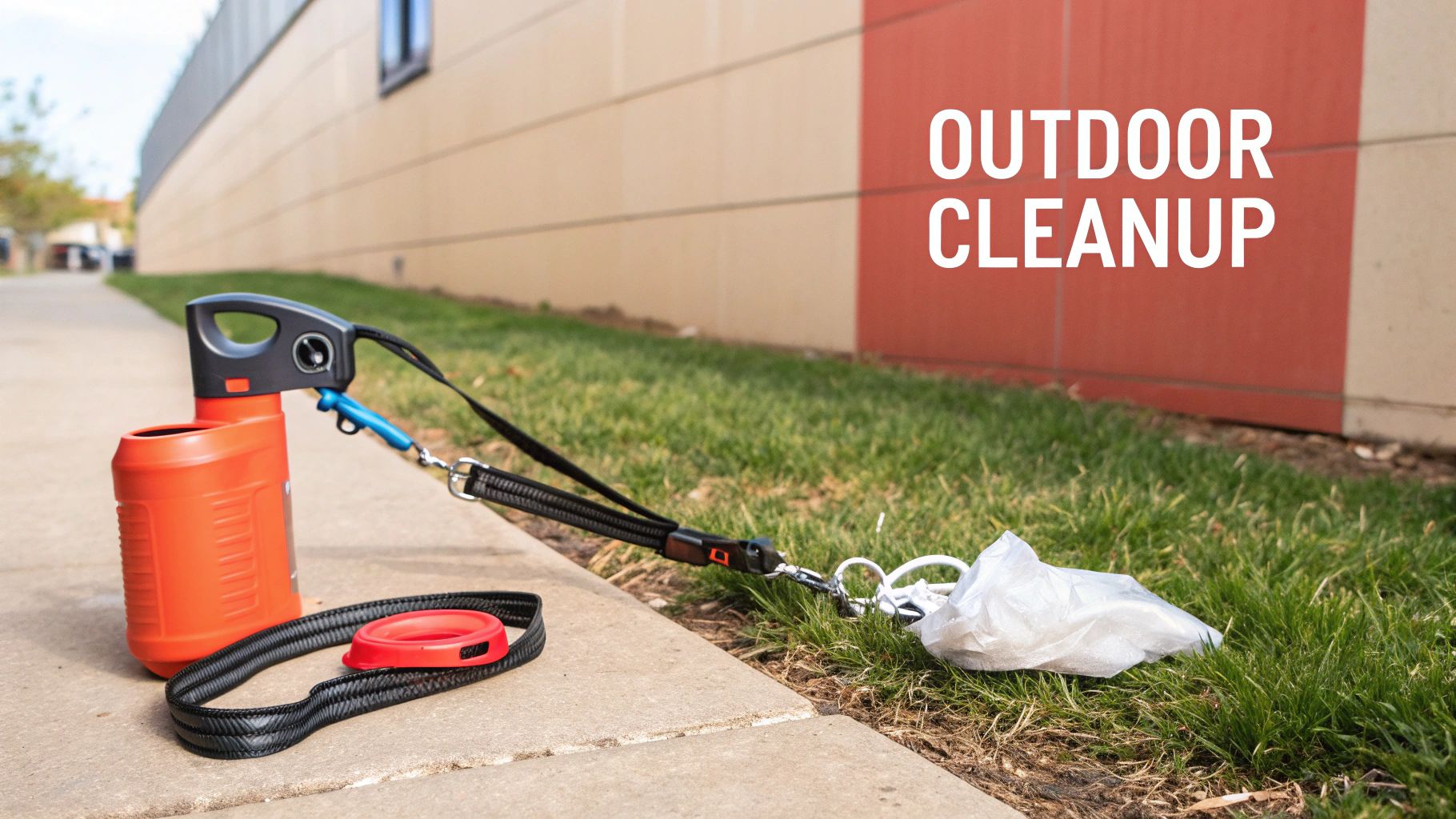
An upset stomach never waits for a convenient time or place. When diarrhea strikes in your backyard or, even worse, during a walk, the cleanup challenge gets a lot trickier. But the need for a quick, hygienic response is just as critical.
Leaving that mess behind isn't just inconsiderate; it's a genuine health risk. Dog waste can harbor nasty parasites like Giardia and worms, not to mention harmful bacteria. When left on the grass, these pathogens can survive for weeks or even months, posing a threat to other pets and even people who use that space.
Prompt and thorough cleanup is your best defense against turning your yard or a public park into a contamination zone.
Tackling Diarrhea on Grass
Let's be real: cleaning loose stool from grass can feel like an impossible task. Trying to use a standard bag usually just smears the mess around, pushing the waste deeper into the soil instead of picking it up. It’s a frustrating experience.
-
Scrape and Lift: Your best bet is to grab a flat-edged tool, like a dustpan or even a sturdy, disposable paper plate. Gently scrape the bulk of the mess off the top of the grass. The whole idea is to lift it without grinding it in.
-
Dilute the Residue: Once you've removed what you can, hit the area with a good spray from a garden hose. This helps wash away what’s left, preventing the high nitrogen content from burning your lawn and creating those dreaded yellow spots.
This process helps protect your lawn, but it doesn't solve the core problem—it’s still a messy, hands-on cleanup. And it’s completely impractical when you're on a public walk without a hose in sight.
A Smarter Solution for Walks
We’ve all been there. Trying to scoop up diarrhea with a flimsy plastic bag on a busy sidewalk is a dog owner’s nightmare scenario. It’s messy, it's smelly, and it’s nearly impossible to do without getting some on your hands.
This is exactly where having the right tool makes all the difference.
A better tool isn't just about convenience; it's about hygiene. A well-designed scooper creates a crucial barrier between you and the mess, making a stressful situation far more manageable and sanitary.
This is where a product like Potomo’s pooper scooper becomes a true lifesaver. Its design is perfect for handling the loose, watery stools that a bag alone simply can't contain. You can cleanly scoop up the entire mess without ever having to touch it, bagging it directly for a quick, contact-free disposal. The best part? It clips right to your leash, so you're always prepared for the unexpected.
For more information on handling all types of waste, our guide on doggie waste disposal offers even more tips for keeping your walks clean and stress-free. Properly managing cleanup on the go is a cornerstone of responsible pet ownership.
When to Call the Vet
As a dog owner, you know that cleaning up after your pet is just part of the deal. But when it's diarrhea, the cleanup can feel a lot more urgent—and it's often a signal you need to pay closer attention to your dog's health.
This guide is all about the "how-to" of cleaning up the mess, but it’s just as important to know when that mess is a red flag for a bigger problem.
A single, isolated bout of diarrhea in an otherwise happy, energetic dog usually isn't cause for panic. It happens. However, some situations mean you should put down the cleaning supplies and pick up the phone to call your vet.
If your dog is a puppy, a senior, or has a pre-existing health condition, any instance of diarrhea is worth a quick call. Their immune systems are more fragile, and things like dehydration can escalate quickly. For healthy adult dogs, the key is to look for other symptoms that might be tagging along with the tummy trouble.
Red Flags to Watch For
Keep a close eye on your dog's overall behavior. If the diarrhea is paired with vomiting, lethargy, a loss of appetite, or signs of pain (like a hunched-over posture), it's time to get professional medical advice.
Other serious warning signs include:
- It's not stopping: The diarrhea continues for more than 48 hours.
- You see blood: This could look like bright red streaks or dark, tarry-looking stools. Either one is a sign to call the vet.
- You find something weird: You notice bits of a toy, plastic, fabric, or other non-food items in their stool.
In straightforward cases, many vets are moving away from immediately prescribing medication. Instead, they often recommend supportive care, like a simple bland diet, to let the gut heal on its own without disrupting its natural microbiome.
This approach isn't just a hunch; it's backed by solid research. A 2019 UK study, for instance, found that antibiotics offered no real clinical benefit for dogs with simple, acute diarrhea. The recovery times were so similar that the difference was statistically insignificant. You can learn more about these findings on antibiotic use in dogs.
At the end of the day, trust your gut. You know your dog better than anyone. If something just feels off, a conversation with your vet is always the right move.
FAQ: Your Dog Diarrhea Cleanup Questions Answered
Even with the best instructions, it's normal to have a few more questions when you're staring down a mess like this. Let's tackle some of the most common things pet owners ask.
How do you clean up dog diarrhea without it smelling?
The key is a two-step process: remove the waste, then eliminate the odor molecules. After picking up the solids, use an enzymatic cleaner. Unlike regular soap, it breaks down the specific proteins that cause lingering smells. For a DIY approach, a vinegar and water solution can neutralize odors, followed by a sprinkle of baking soda on the damp spot to absorb any remaining scent as it dries.
What is the fastest way to clean dog diarrhea from a carpet?
Act quickly! 1) Scrape up as much solid material as possible without pushing it deeper into the fibers. 2) Liberally spray an enzymatic cleaner on the stain. 3) Let it sit for at least 15-20 minutes (or as directed) to allow the enzymes to work. 4) Blot the area firmly with a clean, dry cloth until all moisture is absorbed. Avoid scrubbing, which can damage carpet fibers and spread the stain.
Is it better to let diarrhea dry on the carpet before cleaning?
No, never let it dry. A fresh, wet stain is significantly easier to remove. Once it dries, the waste bonds to the carpet fibers, making it much harder to lift the stain and eliminate the odor completely. Tackle the mess immediately for the best results.
My dog has diarrhea but is acting totally normal. Should I worry?
Usually, a single bout of diarrhea in a dog that's otherwise happy, eating, and playing isn't a red flag. More often than not, it's just a sign they ate something that didn't quite agree with them. Switch to a bland diet (like boiled chicken and rice) for a day and monitor them. If the diarrhea lasts more than 48 hours or other symptoms appear, it's time to call the vet.
Dealing with unexpected messes, especially when you're not at home, is just part of being a pet parent. But having the right tools can make all the difference. For a truly hands-free and hygienic way to handle any mess, Potomo makes cleanup fast, simple, and sanitary. Discover a better way to handle waste on your walks at https://potomo.net.