

It’s a frustrating sight for any dog owner: you love your furry friend, but you also love your green lawn, and the two don't always seem to get along. Those yellow, scorched-looking patches are a dead giveaway that your dog has a favorite potty spot.
So, what's really going on when your lawn starts looking like a patchwork quilt? It's all about chemistry—and quick fixes.
Why Dog Urine Is So Tough on Grass
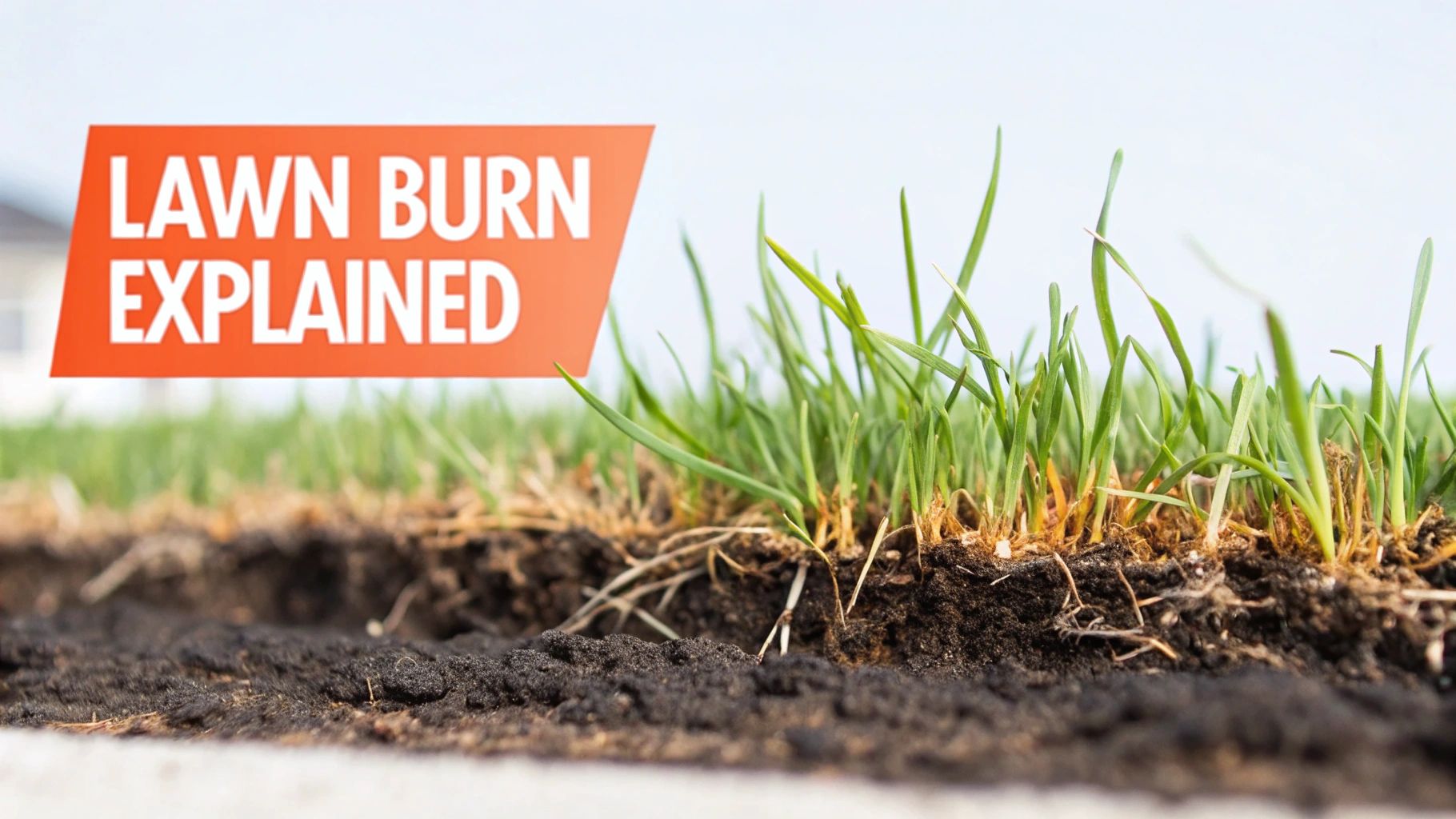
The issue is a classic case of "too much of a good thing." The main problem is the high concentration of nitrogen in your dog’s urine, a natural result of protein digestion. While nitrogen is a key fertilizer ingredient, your dog’s dose is far too concentrated for one small area. It scorches grass blades and roots—just like dumping a full fertilizer scoop on a single spot.
At the same time, dog urine contains salts that pull moisture out of the grass, dehydrating it from the inside out. This double-threat makes recovery almost impossible without intervention.
Quick Fact: A single teaspoon of dog urine can contain over 2,000 mg of nitrogen—enough to burn a 6-inch patch of grass.
Key Takeaway: It’s not acidity doing the damage; it’s nitrogen overload and salt-induced dehydration.
While you’re tackling urine spots, remember solid waste carries risks too. Learn more about the unseen dangers in dog poop to stay ahead of all pet cleanup tasks.
Your First Response to Fresh Urine Spots
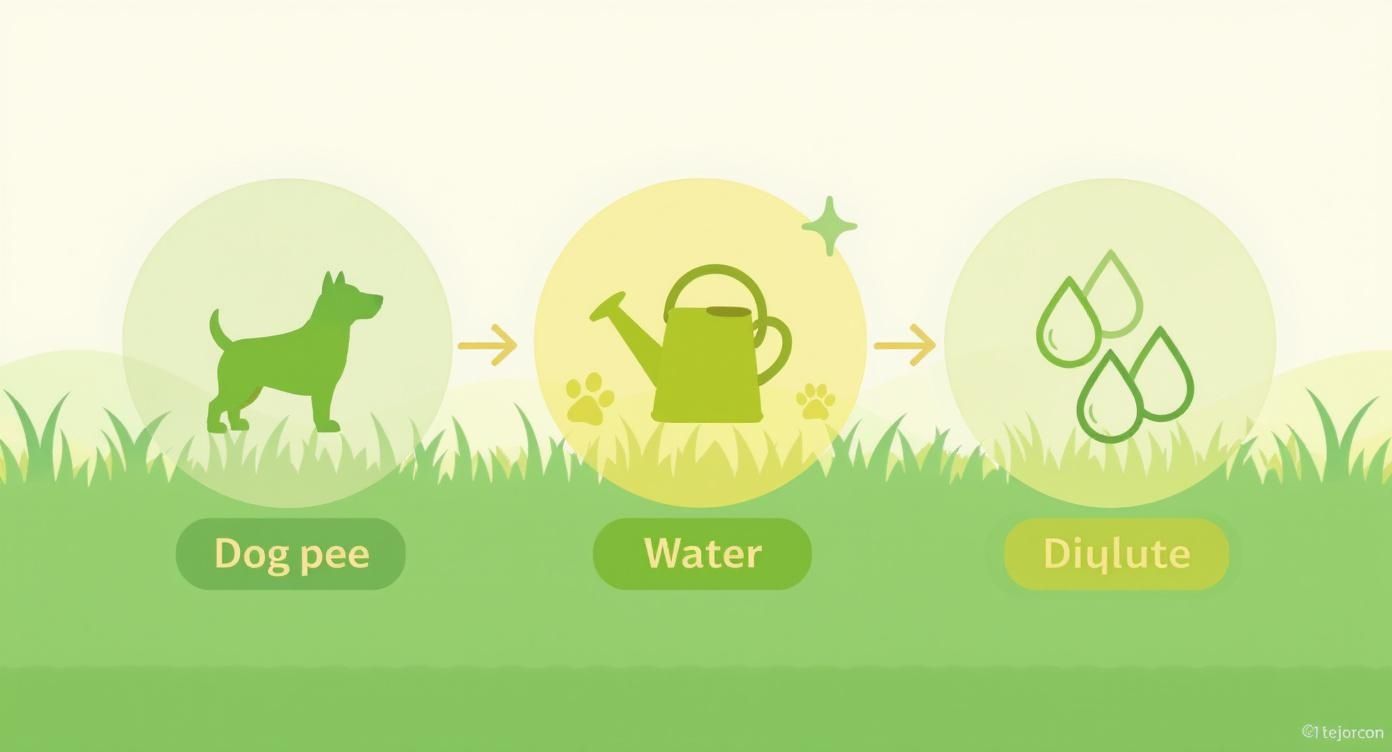
When you catch your dog in the act, the clock starts ticking. The best dog urine lawn treatment isn't a fancy spray—it’s immediate action: dilution.
Think of it like a red wine spill on a white sofa. The faster you act, the less chance the stain sets.
How to Dilute the Spot
Your best weapon is probably just a garden hose or watering can.
- Soak the Area: Flood the spot until water seeps a few inches deep.
- Flush It Through: Let the water carry urine away from the roots rather than just pooling on top.
Plain water is free, safe for pets and plants, and works like a charm—if you act within minutes.
Anecdote: I once watched a neighbor save a prized patch of fescue simply by scheduling hose drills every time his pup went in the same spot. Green grass returned in days.
While you’re out there, don’t forget solid waste. Check out our guide on the best way to pick up dog poop for easy, hygienic cleanup ideas.
Reviving Dead Grass and Repairing Burn Spots
Don’t give up on those yellow patches. A little elbow grease goes a long way.
- Clear the Patch: Use a stiff rake to remove dead grass and thatch down to bare soil.
- Leach Residual Salts: Water deeply and slowly to wash salts away from the root zone.
Reseeding for a Strong Comeback
Choosing the right seed makes all the difference in a dog-friendly yard:
- Choose Wisely: Fescue and Perennial Ryegrass hold up best against frequent urine spots.
- Prep the Soil: Loosen topsoil and mix in compost or topsoil for nutrients.
- Scatter & Protect: Evenly spread seeds, gently rake in, and cover with a light layer of straw or peat moss.
Pro Tip: Keep new grass moist (not soaked) for two weeks. A small temporary fence can keep curious pups at bay.
While you’re nurturing new grass, don’t overlook solid waste. A tool like Potomo’s pooper scooper—which clips right onto your leash—makes quick pickups part of your daily routine, ensuring every effort to revive your lawn isn’t undone by missed waste.
Grass Seed Resistance to Dog Urine Damage
| Grass Type | Resistance Level | Best Climate | Notes |
|---|---|---|---|
| Fescue | High | Cool/Transitional | Durable and quick to recover. |
| Perennial Ryegrass | High | Cool/Transitional | Fast germination; holds color well. |
| Bermuda Grass | Medium | Warm | Self-repairs but still shows burn marks. |
| Zoysia Grass | Medium | Warm/Transitional | Dense turf; slow to recover. |
| Kentucky Bluegrass | Low | Cool | Very sensitive to nitrogen burn. |
Playing the Long Game: How to Prevent Urine Spots for Good
Tired of patch repairs? Let’s build lasting defenses.
Create a Designated Potty Area
- Potty Zone: Edge a small section and fill it with mulch, pea gravel, or artificial turf.
- Add a Marker: Dogs instinctively mark vertical objects—use a post or rock.
- Positive Training: Lead your dog on a leash, reward instantly when they go in the zone.
Make Your Lawn More Resilient
- Mow Higher: Taller blades encourage deeper roots.
- Deep, Infrequent Watering: Strengthens root systems for better stress tolerance.
Key Insight: A vibrant, healthy lawn is your best defense against urine damage.
Always keep solid waste cleared too. Discover the ideal dog waste disposal system to complement your lawn care strategy.
Choosing Pet-Safe Lawn Care Products
Your lawn care routine should protect your pup, not harm them. Chemicals like 2,4-D, glyphosate, or disulfoton can pose real risks—studies link them to bladder cancer in dogs. For details, see how lawn chemicals can impact pet health.
What to Look for and What to Avoid
Ingredients to Avoid:
- Disulfoton
- Metaldehyde
- 2,4-D and glyphosate
Pet-Safe Alternatives:
- Corn gluten meal (natural pre-emergent)
- Iron-based herbicides
- Organic, balanced fertilizers
Caution: Even pet-safe products need time to dry. Keep pets off treated areas until fully settled.
Pair pet-safe lawn care with easy waste cleanup. Potomo’s pooper scooper clips to your leash for hands-free pickup, making everyday maintenance a breeze. Learn more at https://potomo.net.
Frequently Asked Questions
1. How quickly should I act on new urine spots?
Dilute within 5 minutes. The sooner you flush the spot, the less lasting damage. Water deeply—don’t just mist the area.
2. Will changing my dog’s diet prevent lawn burn?
Diet can influence urine concentration, but supplements aren’t a magic fix. Instead, encourage your dog to drink more water and focus on lawn treatments.
3. Can gypsum or baking soda repair old burn patches?
No. Gypsum addresses salt damage from de-icing, not nitrogen overload. Baking soda only masks odor. For repairs, remove dead grass, leach with water, and reseed.
4. Are some grass types better for high-traffic, pet-friendly lawns?
Yes. Fescue and Perennial Ryegrass are top picks for resistance to urine burn. They recover quickly and maintain color.
5. Is Potomo’s pooper scooper really worth it?
Absolutely. Clipping to your leash ensures no missed spots, keeps your hands clean, and turns waste pickup into a quick, daily habit.