

When your dog struggles with intestinal issues, choosing the right food can make all the difference in their comfort and overall health. Digestive problems not only affect their appetite and energy but can also lead to more serious complications if left unaddressed. In this expert guide, we’ll explore the best dog foods formulated specifically to support sensitive stomachs, promote healthy digestion, and keep your furry friend feeling their best.
Understanding Your Dog's Digestive Distress

It's tough seeing your best friend struggle with an upset stomach. A dog’s digestive system is a finely tuned ecosystem, and even tiny disruptions can lead to diarrhea, vomiting, and gas. Think of it like a carefully tended garden—the wrong fertilizer can throw the whole thing into chaos.
Our goal is to figure out the common culprits behind their discomfort. Once you know what you're up against, you can turn that worry into confident action and get your dog back on the path to feeling great.
Common Causes of Intestinal Issues
A few usual suspects are often responsible for throwing your dog's gut out of whack. Pinpointing the likely cause is your first step toward finding a real solution.
- Sudden Diet Changes: Switching foods too quickly is a classic mistake that can shock their system. A slow, gradual transition over a week or more is always the best approach.
- Food Sensitivities or Allergies: Just like us, dogs can react poorly to certain ingredients. The most frequent offenders are common proteins like beef, chicken, or dairy.
- Dietary Indiscretion: This is the polite term for when your dog eats something they absolutely shouldn't have, whether it’s greasy table scraps or a mysterious "treasure" from the backyard. Quick anecdote: My own Golden Retriever once ate an entire stick of butter off the counter. The resulting mess was a lesson in just how sensitive their systems can be!
- Underlying Health Conditions: If the gut trouble just won't go away, it could be a sign of something more serious like colitis, pancreatitis, or inflammatory bowel disease (IBD).
Monitoring Your Dog’s Health
One of the most reliable windows into your dog's digestive health is their poop. It’s not a glamorous job, but checking their stool for changes in color, firmness, or frequency gives you critical clues about what's going on inside.
Keeping a close eye on their output is essential for managing their condition. A clean and efficient waste management tool, like Potomo’s pooper scooper, makes this daily health check much easier and more hygienic. It lets you quickly assess their stool without the mess, helping you track their progress toward a happy gut.
If you want to dive deeper, you can also learn more about the unseen dangers in dog poop and what it might be telling you.
A Growing Trend: You're not alone. As more of us see our dogs as true family members, the demand for diets that target specific health needs has skyrocketed. The pet food market is on track to hit a staggering $256.28 billion by 2034, and a huge slice of that growth is driven by health-focused formulas just like the ones we're talking about. You can find more insights about the expanding pet food market on towardsfnb.com.
Decoding Ingredients for a Healthy Gut
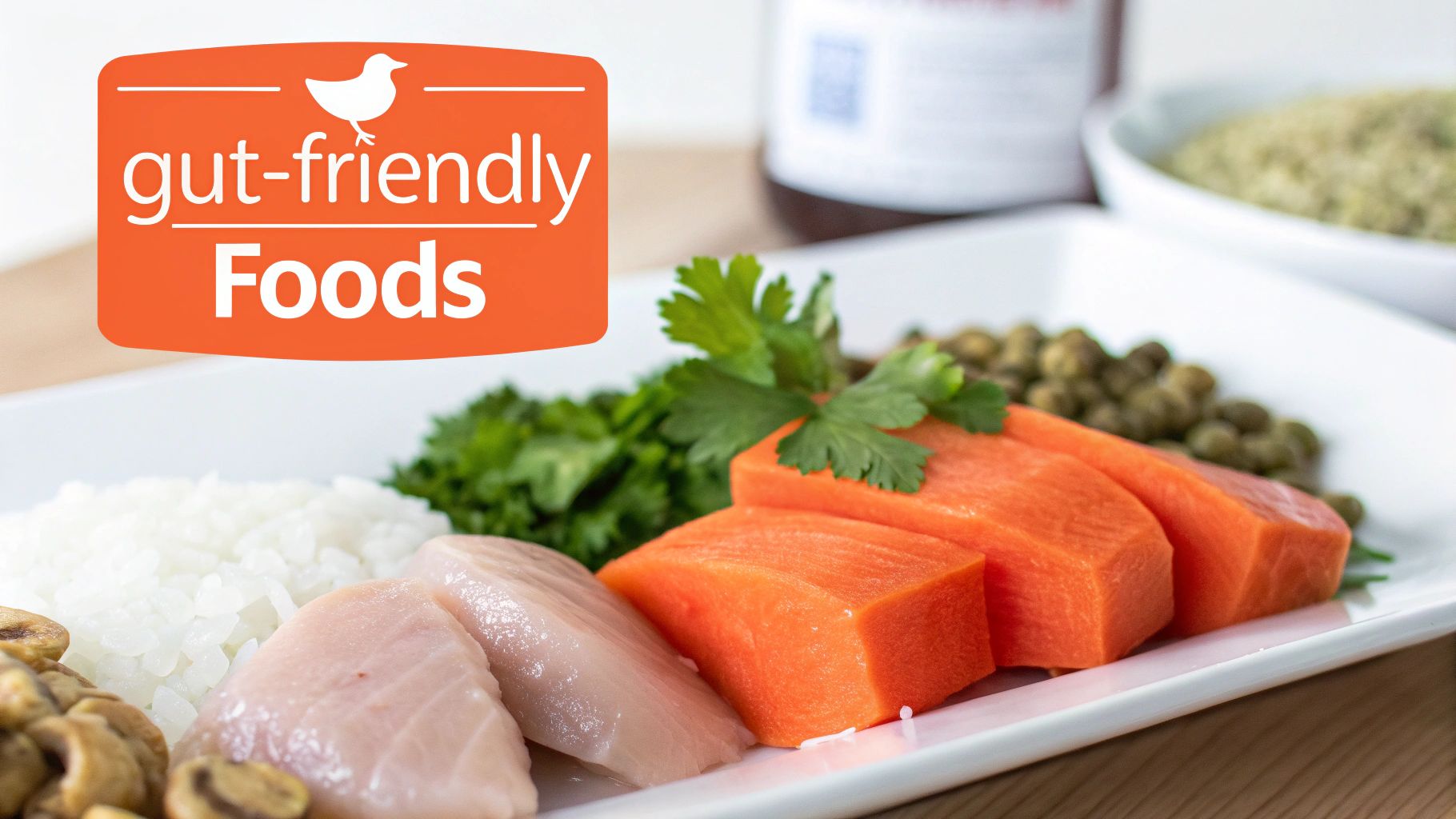
Staring at the back of a dog food bag can feel like trying to decipher a secret code. When you're on the hunt for the right dog food for intestinal problems, knowing what to look for—and what to run from—is everything. The mission is simple: find ingredients that are easy on the stomach, packed with nutrients, and help keep your dog’s gut calm and happy.
Let's pull back the curtain on that ingredient panel so you can walk down the pet food aisle like a pro.
The Power of Digestible Proteins
Protein is the absolute bedrock of your dog's diet, but for a dog with a sensitive gut, not all proteins are created equal. Highly digestible proteins are like pre-sorted mail for the digestive system; they require way less effort to break down and absorb. This means more nutrients get where they need to go, and your dog’s gut isn't working overtime.
Some of the best gentle, high-quality protein sources include:
- Chicken or Turkey: These lean meats are a classic choice for a reason. They're easy to digest, as long as your dog doesn't have a specific poultry allergy.
- Fish: Salmon, cod, or whitefish are fantastic. They’re not only gentle on the tummy but are also loaded with anti-inflammatory omega-3 fatty acids.
- Novel Proteins: If you suspect common meats are the culprit, switching to something new like duck, venison, or even kangaroo can be a game-changer.
These proteins deliver the essential amino acids your dog needs for muscle and cell repair without causing a digestive traffic jam.
Choosing Carbohydrates That Soothe
Carbs give your dog energy, but the wrong kind can lead to a symphony of gurgling, gas, and bloating. That's why specialized formulas ditch the complex, hard-to-digest carbs in favor of simple, gentle sources. Think of them as comfort food for your dog's insides.
Look for ingredients like sweet potatoes, pumpkin, or plain white rice. They provide a steady stream of energy and are known to be well-tolerated, making them the perfect partners for a highly digestible protein.
Fiber: The Gut's Traffic Controller
Fiber is one of the most critical, and most misunderstood, players in gut health. It wears two hats: it can bulk things up or slow things down. A top-tier dog food for intestinal problems will have a smart blend of both types of fiber.
- Soluble Fiber: This type dissolves in water and creates a sort of gel. It’s brilliant for managing diarrhea because it slows everything down. You'll find it in ingredients like oats, barley, and psyllium husk.
- Insoluble Fiber: This is the "roughage." It doesn't dissolve and instead adds bulk to the stool, helping to keep things moving and prevent constipation. Good sources include brown rice and certain veggies.
A balanced fiber profile is the secret to achieving that "just right" poop—not too firm, not too soft. And let’s be honest, checking your dog's stool is the best way to know if their new diet is working. Using a tool like the Potomo pooper scooper makes this daily health check fast and clean, so you can easily monitor stool quality without any of the mess.
The Gut's Tiny Helpers: Prebiotics and Probiotics
Picture your dog's gut as a bustling city full of bacteria. The probiotics are the "good citizens" keeping the peace, and the prebiotics are the "food trucks" that keep those good citizens fed and happy.
Quick Fact: Probiotics are the actual live, beneficial bacteria that help restore balance in the gut, especially after an illness or a course of antibiotics. Prebiotics, on the other hand, are special fibers (like FOS or MOS) that act as food for those good bacteria, helping them thrive.
Together, they're a powerhouse team that supports digestion, boosts nutrient absorption, and even strengthens the immune system. Finding a food that contains both is a huge win for any dog with a sensitive stomach.
Top Ingredients for Canine Digestive Health
To make things even clearer, here’s a quick-glance table of the best ingredients to look for when shopping for a gut-friendly food.
| Ingredient Category | Primary Function | Common Food Sources |
|---|---|---|
| Highly Digestible Proteins | Provides essential amino acids without stressing the gut | Chicken, Turkey, Salmon, Cod, Duck, Venison, Hydrolyzed Protein |
| Gentle Carbohydrates | Delivers easily processed energy | Sweet Potato, Pumpkin, White Rice, Tapioca, Peas |
| Balanced Fiber Blend | Regulates stool consistency (for both diarrhea & constipation) | Psyllium Husk, Beet Pulp, Oats, Barley, Flaxseed, Chicory Root |
| Prebiotics | Feeds beneficial gut bacteria | Fructooligosaccharides (FOS), Mannan-oligosaccharides (MOS), Inulin |
| Probiotics | Adds "good" bacteria to restore gut balance | Lactobacillus acidophilus, Enterococcus faecium (often listed as "fermentation products") |
| Healthy Fats | Provides energy and reduces inflammation | Fish Oil (Omega-3s), Flaxseed Oil, Coconut Oil (in moderation) |
Looking for these names on the ingredient list is a great way to ensure you're choosing a formula designed to soothe, nourish, and support your dog's digestive system from the inside out.
Choosing the Right Commercial Dog Food
Walking into the pet food aisle can be completely overwhelming, especially when you’re on a mission to find the right dog food for intestinal problems. Every bag promises a happy, healthy pup, but when your dog has a sensitive stomach, the stakes feel a lot higher. How do you know which one to trust?
It doesn't have to be a guessing game. Let's cut through the noise and talk about the main types of food designed for digestive health. Once you understand the difference between a veterinary diet and a limited ingredient formula, you’ll feel much more confident picking the right one for your dog.
Veterinary Prescription Diets
Think of these as the heavy hitters in the world of digestive care. You can only get them from your veterinarian, and for good reason—they are highly specialized formulas designed to manage specific, diagnosed medical conditions. They're built with incredible precision to tackle serious issues like inflammatory bowel disease (IBD), pancreatitis, or severe food allergies.
A vet will likely recommend one of these diets if your dog's gut issues are chronic or severe. They work because they often contain:
- Hydrolyzed Proteins: These are proteins that have been broken down into such tiny pieces that your dog's immune system doesn't even recognize them as a threat. This is a game-changer for true food allergies.
- Highly Digestible Ingredients: Every single component is chosen because it’s easy on the gut, minimizing the work an already-stressed digestive system has to do.
- Controlled Fat and Fiber Levels: These diets have very precise amounts of fat and specific types of fiber to help manage symptoms like diarrhea or vomiting.
These formulas aren't just food; they're more like a medical tool prescribed to solve a specific health problem. They’re backed by a ton of research and are usually the most direct route to relief for dogs with complex intestinal conditions.
Limited Ingredient Diets (LIDs)
If prescription diets are the heavy hitters, Limited Ingredient Diets (LIDs) are the detectives. Their main job is to help you figure out what's causing the problem in the first place. Just like the name says, they have a very short ingredient list—usually just one novel protein (like duck or venison) and one simple carbohydrate (like sweet potato or peas).
An LID is a fantastic tool when:
- You have a hunch your dog is reacting to something common, like chicken or beef.
- Your dog has those frustratingly mild but persistent issues, like occasional loose stool or gas.
- Your vet wants to run an "elimination trial" to pinpoint a food trigger.
By stripping the diet back to the basics, you remove the usual suspects and give your dog’s digestive system a chance to calm down. If their symptoms clear up on an LID, you’ve just found a massive clue about what ingredients to avoid for good.
The demand for specialized foods like LIDs is reshaping the pet food industry. In fact, the dog food and snacks market is expected to jump from $2.8 billion in 2025 to $4.4 billion by 2035. This boom shows just how much owners are now focusing on functional foods that solve specific health issues, especially gut health. You can find more insights into the dog food market on futuremarketinsights.com.
Wet Food vs. Dry Food
Now, let's talk texture. Both wet and dry foods have their place, but when you're dealing with a sensitive gut, wet food often has a clear edge.
The high moisture content in canned or fresh food is a huge plus for hydration, which is so important if your dog has been dealing with diarrhea. That extra water also makes the food easier to digest and can feel much gentler on an irritated stomach. Plus, most dogs find wet food way more appealing, which is a big help if their tummy troubles have made them picky.
Kibble is convenient and good for their teeth, but if you go that route, just be sure your dog is drinking plenty of water to make up for the moisture missing from their food.
Ultimately, the best choice really comes down to your individual dog. Some pups thrive on a specialized dry kibble, while others only find relief with a moisture-rich wet food. Don't hesitate to ask your vet which form they think would be best.
A Guide to Home-Prepared Bland Diets
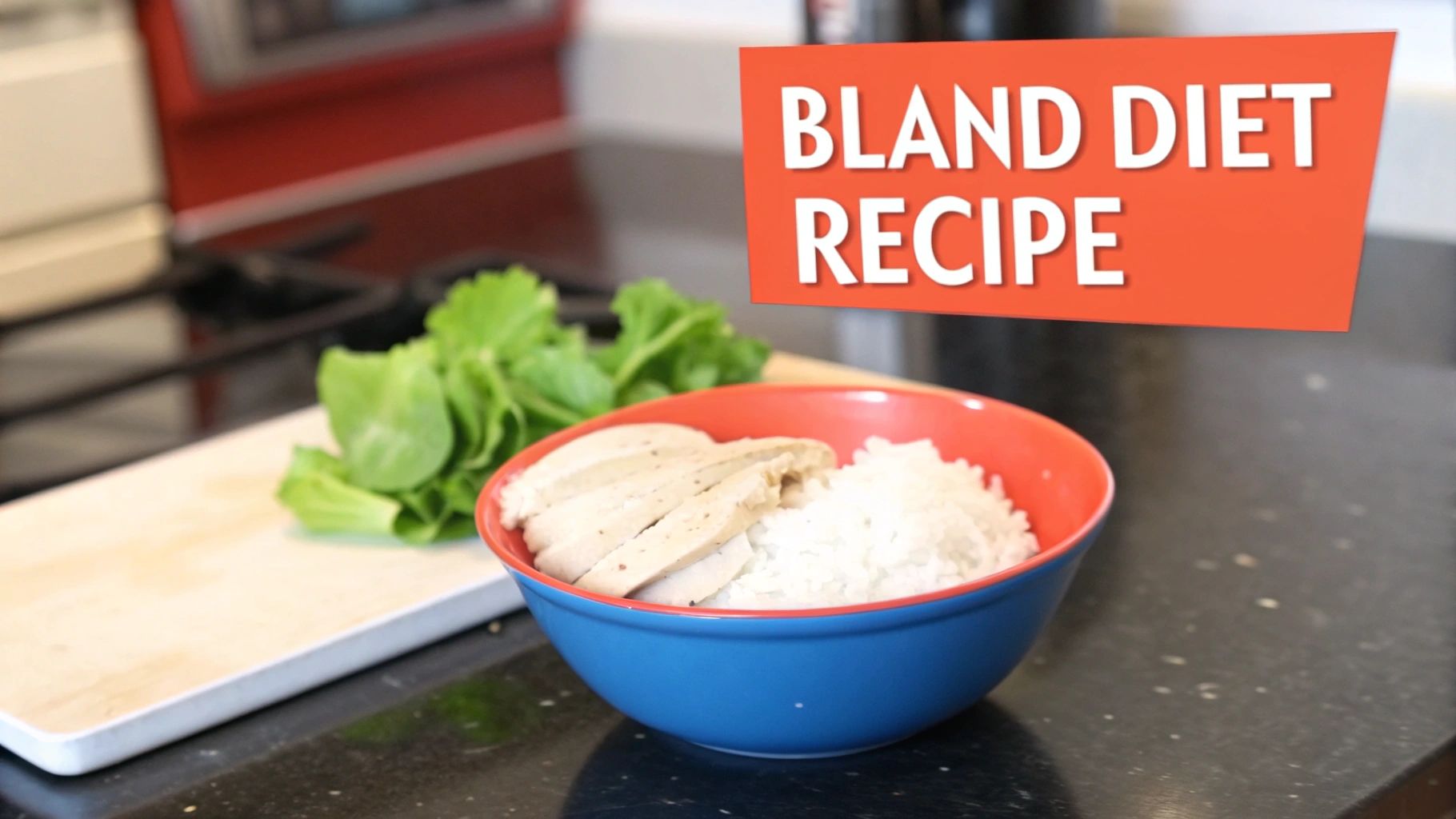
Sometimes, the simplest fix is the best one. When your dog's digestive system is in absolute turmoil, a temporary, home-cooked bland diet can work wonders. Think of it as hitting the "reset button" for their gut, giving it a much-needed break from complex ingredients and a chance to heal.
The classic bland diet is the go-to for a reason—it’s gentle, easy to whip up, and incredibly effective for short-term tummy troubles. It’s pretty much the dog version of the BRAT diet for humans.
The Classic Vet-Approved Recipe
The most trusted bland diet recipe has just two core ingredients. Its real power is in its simplicity, offering easy-to-digest nourishment that won't overwhelm a sensitive stomach.
Core Components:
- A Lean Protein Source: Boiled, boneless, skinless chicken breast is the gold standard here. You can also use lean ground turkey or even some low-fat cottage cheese. The main thing is to skip all fats, oils, and seasonings.
- A Simple Carbohydrate: Plain, boiled white rice is the perfect partner. It's incredibly easy for them to process and helps firm up stool, which is exactly what you want when dealing with diarrhea. Stay away from brown rice for now; its higher fiber content can be too harsh on an irritated gut.
A good starting point for the ratio is about one part boiled protein to two parts cooked white rice. So, for example, you could mix one cup of shredded chicken with two cups of rice. This simple meal is often all it takes to soothe an inflamed digestive tract.
When and How to Use a Bland Diet
A homemade bland diet is a first-response tool, not a forever food. It's the perfect solution for those sudden, mild cases of digestive upset, like a single bout of diarrhea after your dog got into something they shouldn't have.
Important Takeaway: A diet of just chicken and rice is not nutritionally complete for the long haul. It's missing a ton of essential vitamins, minerals, and fatty acids your dog needs to thrive. This is a temporary fix, meant to be used for only a few days at most.
When you start the diet, offer small, frequent meals throughout the day instead of one or two big ones. This puts less strain on their digestive system. If you see improvement after a day or two, you can start slowly reintroducing their regular dog food for intestinal problems by mixing a little bit into the bland diet over several days.
Pros and Cons of a Homemade Approach
Making your dog's food at home gives you complete control, but it also comes with real responsibility. It’s important to weigh the good against the bad.
- Pros: You know every single ingredient in their bowl, so there are no hidden triggers. It's also super appetizing for a dog who might have lost their appetite.
- Cons: The biggest risk by far is nutritional deficiency. Without help from a veterinary nutritionist, it’s practically impossible to create a balanced diet at home that meets all their long-term needs.
Keeping an eye on their stool is the best way to know if the diet is working. A tool like Potomo’s pooper scooper makes this daily check quick and hygienic, letting you easily see how their stool quality is changing without any mess. If things aren't firming up within 48 hours, that's your cue to call the vet.
Smart Feeding Strategies for Digestive Health
Picking the right dog food for intestinal problems is a huge first step, but it’s only half the battle. How you feed your dog is just as critical for a happy gut. A dog’s digestive system thrives on consistency, and big, infrequent meals can easily overwhelm an already sensitive system.
Think of your dog's stomach like a small engine. If you flood it with too much fuel all at once, it’s going to sputter and stall. The same thing happens with their food.
The Power of Smaller, More Frequent Meals
Instead of serving one or two giant meals a day, try splitting your dog's daily portion into three or four smaller ones. This simple change can make a world of difference. It prevents the digestive system from getting overloaded, giving it a chance to process food efficiently and absorb all those good nutrients.
For a dog struggling with tummy troubles, this one tweak can lead to:
- Fewer episodes of vomiting or regurgitation.
- Less uncomfortable gas and bloating.
- More stable energy levels all day long.
This strategy keeps their digestive system humming along at a steady, manageable pace instead of forcing it through a stressful cycle of feast and famine.
A 10-Day Plan for a Smooth Food Transition
Jumping straight into a new food—even a high-quality, specialized one—is a recipe for disaster. A slow, gradual transition is absolutely non-negotiable for a dog with a sensitive stomach. It gives their gut microbiome the time it needs to adjust to the new ingredients without freaking out.
Here’s a simple 10-day transition plan that works wonders:
- Days 1-3: Start with a mix of 75% old food and 25% new food.
- Days 4-6: Move to a 50/50 split of old and new.
- Days 7-9: Shift the balance to 25% old food and 75% new.
- Day 10: You’re there! Your dog can now enjoy 100% of their new, gut-friendly food.
During this entire process, your most important job is to be a poop-detective. Their stool is the number one indicator of how well they’re handling the change.
Why You Need to Monitor Stool Quality
Your dog's poop tells a story about what’s going on inside. Keeping a close eye on its color, consistency, and frequency is one of the best ways to manage intestinal problems. It helps you spot trouble early and tells you if your feeding plan is actually working.
But let's be honest, this daily check can be... unpleasant. This is where having the right tool changes the game. A hygienic and efficient device like the Potomo pooper scooper makes this daily health check fast, clean, and completely hands-off. It lets you quickly inspect their stool without any of the fuss, so you can focus on what really matters—helping your dog feel better.
Creating a predictable routine around mealtime and monitoring is key. It lowers stress for both of you, and a calm mind often leads to a calm gut.
When you combine the right food with these smart feeding strategies, you’re creating a powerful, two-pronged approach. It’s all about building a stable, supportive routine that gives your dog's digestive system its best shot at healing and thriving.
When You Need to Call Your Veterinarian
https://www.youtube.com/embed/Lv63ZUTp_IM
While finding the right dog food for intestinal problems is a powerful first step, it’s not a magic bullet. Some situations go beyond what a diet change can fix, and knowing when to pick up the phone and call your veterinarian is one of the most important things you can do for your dog’s health.
Think of food as a long-term management tool. But when something acute or serious is happening, you need a professional medical diagnosis. You can’t fix what you don’t understand.
Red Flags That Need a Vet Visit
If you spot any of the following symptoms, don't wait and see. It’s time to call your veterinarian right away, as these can signal a much more serious underlying condition.
- Persistent Vomiting or Diarrhea: A single episode isn't usually a crisis. But if it goes on for more than 24 hours, your dog can get dehydrated fast.
- Blood in Stool or Vomit: This is always a red flag. Bright red blood or dark, tarry-looking stools point to bleeding somewhere in the digestive tract and need immediate attention.
- Lethargy or Weakness: If your normally energetic dog is suddenly tired, weak, or just not acting like themselves, it’s a clear sign something is wrong.
- Signs of Abdominal Pain: Watch for a bloated or hard-feeling belly, whining when you touch their stomach, or a hunched-over posture. These are tell-tale signs of serious pain.
- Loss of Appetite: A dog refusing to eat for more than a day, especially when paired with any other symptom on this list, is a big deal.
Keeping an eye on your dog's stool is a crucial part of this. The consistency and color give your vet vital clues about what's going on inside. For an easier way to handle the daily check-in, you might want to learn about the best way to pick up dog poop, which makes the whole process cleaner and simpler.
What to Expect at the Vet
Knowing what's going to happen at the clinic can help ease any stress. Your vet will almost certainly start with a complete physical exam, gently feeling your dog’s abdomen and checking for signs of dehydration.
From there, they might suggest a few diagnostic tests. This could be something as simple as a fecal analysis to look for parasites, or bloodwork to get a clear picture of organ function. These steps are all about pinpointing the exact cause of the trouble so they can create the right treatment plan to get your dog feeling better.
FAQ: Your Top Questions Answered
Navigating your dog's digestive issues can bring up a lot of questions. Here are clear, solution-driven answers to some of the most common ones.
1. How quickly should a new food help my dog's stomach?
While every dog is different, you should generally start to see some improvement—like firmer stools and less gas—within one to two weeks of fully transitioning to the new food. For deeper-rooted issues like food allergies, it can take up to 8-12 weeks for their system to fully calm down, so be patient and consistent.
2. Are "grain-free" diets better for dogs with intestinal problems?
Not always. The "grain-free" trend created a lot of confusion. While a small number of dogs have true sensitivities to common grains like wheat or corn, most dogs do perfectly fine with high-quality, easily digestible grains like rice or oats. The real focus should be on the overall digestibility of the food, not just the absence of grains. Unless your vet has diagnosed a specific grain allergy, a well-made "grain-inclusive" food is often a fantastic choice.
3. What treats are safe for a dog with a sensitive stomach?
This is a great question, as treats can easily undo all your hard work! The safest bet is to use single-ingredient treats that align with their special diet. For example, if they eat a fish-based food, look for freeze-dried salmon treats. Small pieces of boiled chicken, carrots, or green beans are also excellent, low-fat options. Always introduce new treats one at a time.
4. What is the difference between IBD and IBS in dogs?
Inflammatory Bowel Disease (IBD) involves chronic inflammation of the gastrointestinal tract and requires a veterinary diagnosis, often through a biopsy. Irritable Bowel Syndrome (IBS), on the other hand, is less common in dogs and is often linked to stress or anxiety, causing temporary intestinal upset without physical inflammation. Both conditions require different management strategies, highlighting why a vet visit is crucial.
5. Can I give my dog probiotics without consulting a vet?
While over-the-counter probiotics for dogs are widely available, it’s always best to consult your veterinarian first. They can recommend a high-quality product with the right bacterial strains and dosage for your dog’s specific needs. This ensures you’re providing effective support rather than just guessing. The pet food world is definitely moving toward more personalized nutrition, with targeted probiotics becoming more common. In fact, the rise of personalized pet nutrition on reports.valuates.com shows just how much this tailored approach is growing.
No matter what’s in their bowl, a clean environment is a huge part of keeping your pet healthy. Using a proper dog waste disposal system helps cut down on the spread of bacteria and keeps your yard a safe, hygienic space for everyone.
And for daily walks, a clean pickup is just as critical. The Potomo pooper scooper offers a 100% hands-free, sanitary way to handle waste, making it easy to be a responsible owner. Learn more and get yours at https://potomo.net.