

Being a responsible dog owner means more than just providing food, water, and belly rubs. It means handling the dirty jobs, too—and disposing of dog waste is a non-negotiable part of that deal. This isn't just about being polite; it's a critical act for protecting public health and the environment from some pretty nasty bacteria and parasites.
Why Proper Dog Waste Disposal Actually Matters
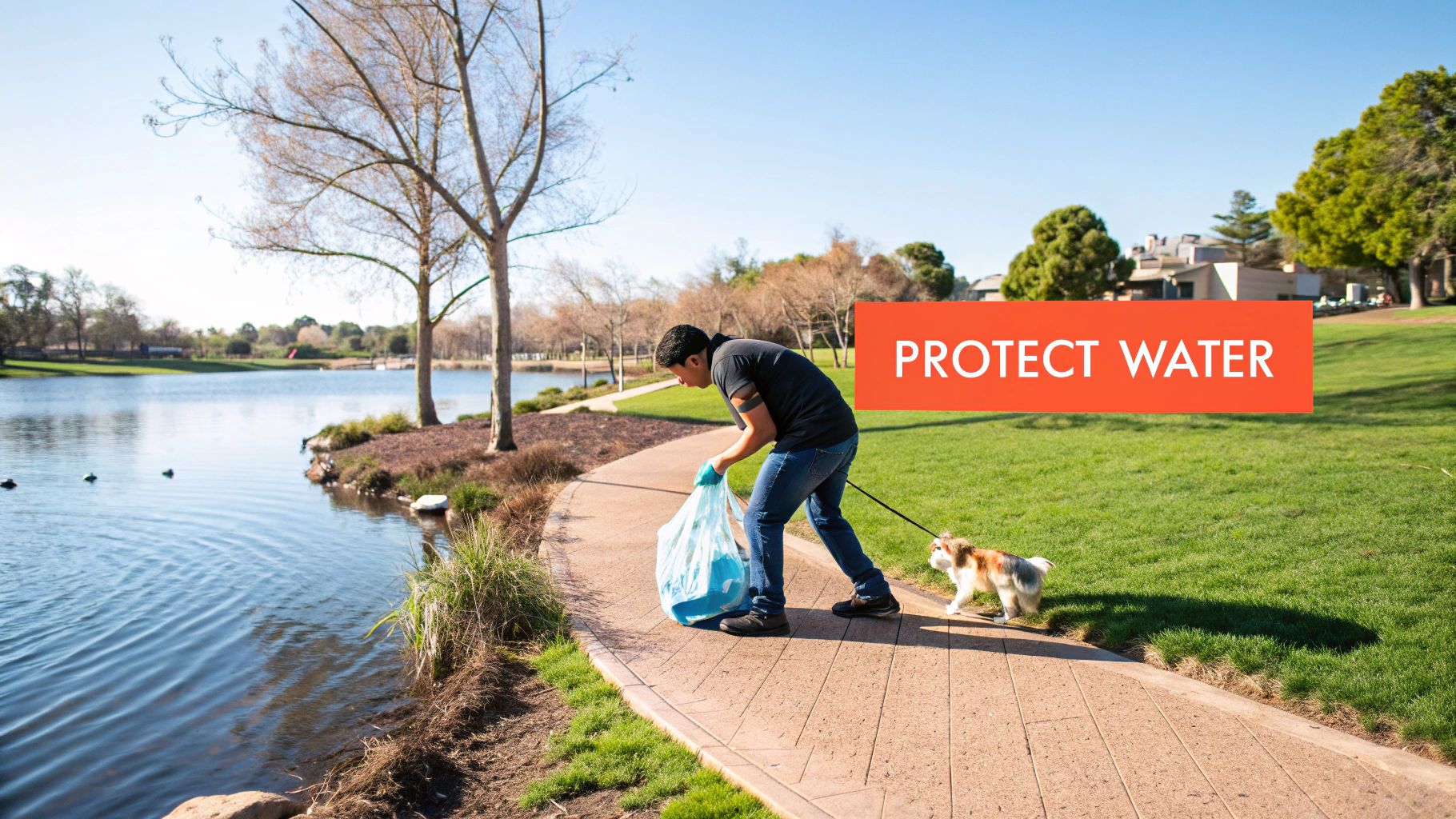
Let's be real—scooping poop is nobody's favorite chore. But the reasons we do it go way beyond avoiding a messy shoe. It's about community health and a bit of environmental science.
What looks like a small, harmless pile on the grass is actually a hotbed of pollution.
Quick Fact: A single gram of dog waste can harbor a staggering 23 million fecal coliform bacteria. We're talking pathogens like E. coli and salmonella.
When that waste gets left behind, it doesn't just magically disappear. Rain washes it into storm drains, which often lead directly to our local rivers, lakes, and streams—no treatment plant involved. This directly impacts water quality, making it unsafe for swimming and harming the fish and wildlife that live there.
The Scale of the Problem
The issue gets a lot bigger when you zoom out. In the United States alone, our dogs produce an unbelievable 21.2 billion pounds of waste every single year. A single medium-sized dog can easily generate over 180 pounds of waste in just twelve months. This volume turns a personal task into a massive public health responsibility.
And it's not just a ground-level problem. Shockingly, some studies have found that up to 50% of airborne bacteria in certain urban areas can be traced directly back to dog feces.
Picking up after your pet is one of the simplest yet most powerful things you can do to protect your local ecosystem and the health of your neighbors. It’s a small act with a huge ripple effect.
More Than Just a Nuisance
Beyond the obvious "yuck" factor, abandoned dog waste poses very real risks. Parasites and bacteria can survive in the soil for years, creating a health hazard for other pets and, more importantly, for people. Children playing in parks or backyards are especially vulnerable. To learn more, you can explore our guide on the unseen dangers in dog poop.
Understanding these risks is what pushes us to find better, cleaner solutions. The goal is to make the cleanup process as quick and hygienic as possible. Thankfully, modern tools are designed to take the hassle out of it. A hands-free tool like a pooper scooper makes the whole job less unpleasant, ensuring you never have to feel that dreaded warm-bag sensation again. By adopting easier, more sanitary practices, we can all do our part for a cleaner, safer community.
Choosing Your Tools for a Cleaner Cleanup
Let's be honest: having the right gear can turn a dreaded chore into a non-event. To make picking up after your dog as quick and painless as possible, it's worth taking a minute to put together your perfect cleanup kit. This isn’t about getting complicated; it’s about finding what actually works for you, your dog, and your daily routine.
The absolute essential, of course, is the bag. But not all poop bags are created equal, and the one you choose can make a real difference for the environment.
Selecting the Right Waste Bags
Standard plastic bags are everywhere, but they can stick around in landfills for hundreds of years. If you’re looking to make a more eco-conscious choice, you’ve got much better options.
- Biodegradable Bags: These are made to break down faster than typical plastic. The catch is that the term "biodegradable" can be a bit vague, and some may still leave microplastics behind.
- Compostable Bags: Made from plant-based materials like cornstarch, these are certified to decompose completely into non-toxic organic matter. Just remember, they need the specific, high-heat conditions of a commercial composting facility to break down properly.
Even when you're using greener bags, the best move is always to toss them in a proper trash can unless you have access to a special pet waste composting system. For a deeper look at all the responsible disposal methods, check out our complete guide on doggie waste disposal.
Beyond the Bag: Modern Cleanup Tools
While bags are non-negotiable, modern tools are what truly make the job more pleasant and hygienic. A lot of dog owners just plain dislike the feeling of picking up waste, even with a bag as a barrier. This is where a good pooper scooper really shines.
Traditional long-handled scoopers are fantastic for cleaning up the backyard, but they're completely impractical to haul around on a walk. This reality has pushed innovation, leading to portable, clever options designed for owners on the go.
The goal of a great tool is to remove the "yuck" factor entirely. It should make the process so quick and clean that you barely have to think about it.
A well-designed tool can completely transform your daily walk. For instance, the Potomo Clip-On Pooper Scooper was created to solve these exact problems. It offers a 100% hands-free pickup, so you never have to make contact, keeping your hands totally clean.
Because it clips right onto your leash or bag, it’s always there when you need it. This makes it a lifesaver for managing waste discreetly in public, especially if you’re juggling a couple of dogs or have your hands full. A simple, sanitary solution like this turns a daily chore into a seamless part of your walk.
At the end of the day, the best tools are the ones you'll actually use consistently. By pairing the right kind of bags with a practical scooper, you create a system that is efficient, clean, and responsible.
Your Guide to Dog Waste Disposal Methods
So, you’ve done the right thing and scooped the poop. Now what? The best way to get rid of it really depends on your lifestyle, where you live, and what’s most convenient for you. The good news is, you've got a few solid options.
This simple workflow shows the essential steps for every dog owner: always have bags, use a scooper for a clean pickup, and find a proper disposal bin.
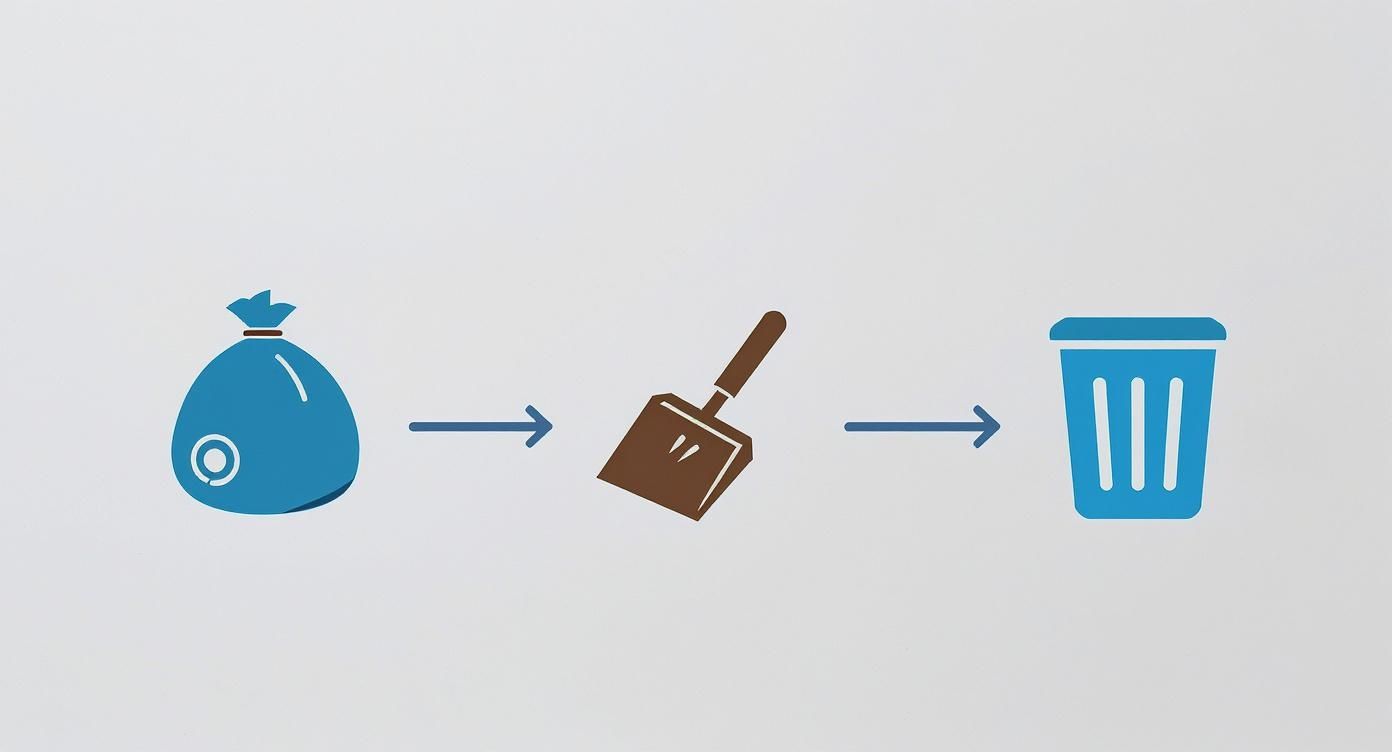
Following a simple, consistent routine like this makes managing pet waste almost effortless and, more importantly, hygienic.
The Standard Trash Can Method
For the vast majority of us, especially those living in apartments or cities, the most straightforward solution is bagging the waste and tossing it into a designated trash bin. This can be your own household garbage can or a public one you pass on your walk. It’s simple, effective, and gets the job done without any special gear.
This is the go-to method when you're out and about. Having a tool like the Potomo Clip-On Pooper Scooper makes this even easier by holding the bagged waste for you. That means your hands stay free and clean until you find the next available trash can—no more awkwardly swinging a bag of poop for blocks on end.
Designated Pet Waste Stations
You’ve probably seen these around. Many parks, apartment complexes, and popular walking trails now provide dedicated pet waste stations. These are a fantastic community resource, often stocked with both bags and a specific bin for disposal.
- Convenience: They are usually placed right where you need them in high-traffic dog-walking areas.
- Hygiene: They keep smelly pet waste separate from the general trash, which really helps control odors and bacteria.
Using these stations is a small but powerful way to be a good neighbor. It’s a simple act of community care that keeps shared spaces clean for everyone to enjoy.
In-Ground Disposal Systems
If you're a homeowner with a yard, an in-ground pet waste digester is a more advanced option worth considering. Think of it as a mini septic system just for your dog's waste. You install a small, lidded tank in the ground, drop the waste in, and add water and special digestive enzymes.
These enzymes work to break down the waste safely, allowing it to be absorbed into the surrounding soil. While it requires an upfront investment and a little installation work, it's a fantastic long-term solution that keeps pet waste out of landfills entirely. For a deeper dive on this and other options, you can explore our complete guide to building a dog waste disposal system.
The best disposal method is the one you can actually stick with. Whether it's a simple toss in the bin or a dedicated yard system, consistency is what keeps our communities clean and healthy.
Choosing the right disposal method can feel like a small detail, but it makes a big difference. To help you decide, here’s a quick breakdown of the most common options.
Dog Waste Disposal Methods at a Glance
| Disposal Method | Best For | Pros | Cons |
|---|---|---|---|
| Trash Can | Urban dwellers, apartment residents, walks away from home | Simple, accessible, no extra cost or setup | Can create odor in household bins, adds to landfill waste |
| Pet Waste Station | Public parks, community spaces, walking trails | Convenient, keeps waste separate, often provides free bags | Not available everywhere, relies on public maintenance |
| In-Ground System | Homeowners with yard space, multiple-dog households | Eco-friendly, keeps waste out of landfills, long-term solution | Upfront cost, requires installation and maintenance |
| Flushing | Not Recommended | (None) | Harms municipal water systems, can damage septic tanks |
Ultimately, the goal is to find a routine that’s both responsible and easy enough to do every single time.
Staying on the Right Side of the Law
Let's be honest, cleaning up after our dogs isn't just about being a good neighbor—it's often the law. Getting slapped with a fine because you weren't prepared is a surefire way to ruin a perfectly good walk. But figuring out the exact rules can be tricky, as they can change quite a bit from one town to the next.
These regulations, sometimes called "pooper scooper laws," are usually set at the city or county level. They spell out exactly how and where you're supposed to get rid of dog waste. The easiest way to find this info is to check your local municipality's website. Look for pages related to sanitation, public works, or parks and recreation. A quick Google search for something like "[Your Town's Name] pet waste ordinance" will almost always get you there.
A Quick Tip from Experience: Pay extra attention to the rules for public parks, nature trails, and shared community spaces. These areas often have stricter guidelines to protect public health and the local ecosystem.
When You Need to Call in the Pros
But what happens when life gets in the way? Maybe you're juggling a demanding job, have a few dogs running around the yard, or face mobility challenges that make the daily cleanup a real struggle. For a lot of us, keeping the yard consistently clean can feel like one chore too many.
That's where professional pet waste removal services have become a game-changer. Think of them like your lawn care or pool cleaning service, but for dog poop. A technician shows up on a set schedule—usually once or twice a week—and does a thorough sweep of your yard. They take care of everything: the scooping, the bagging, and the proper disposal, so you don't have to.
The Booming Business of Poop Scooping
This isn't just a niche service anymore; it's a rapidly growing industry. The global pet waste removal market was valued at a staggering USD 1.2 billion in 2023 and is on track to nearly double by 2032. It’s a direct result of so many of us welcoming pets into our families, coupled with a growing awareness of just how important proper hygiene is. You can dig deeper into this expanding market and its trends if you're curious.
This modern solution is a lifesaver for:
- Busy Families: When you're running between work, school, and soccer practice, poop scooping is the last thing you want to worry about.
- Multi-Dog Households: The more paws, the more poop. Keeping up with a whole pack is a serious commitment.
- Anyone with Physical Limitations: It offers a safe, reliable way to keep a yard clean without the physical strain.
In the end, it doesn't matter if you handle the cleanup yourself or hire some help. The goal is the same: keeping our communities clean, safe, and pleasant for everyone. For those daily walks, having a tool that makes the job painless is non-negotiable. A portable gadget like the Potomo Clip-On Pooper Scooper ensures you’re always ready to comply with local rules, making responsible pet ownership feel like second nature.
Exploring Eco-Friendly Waste Management
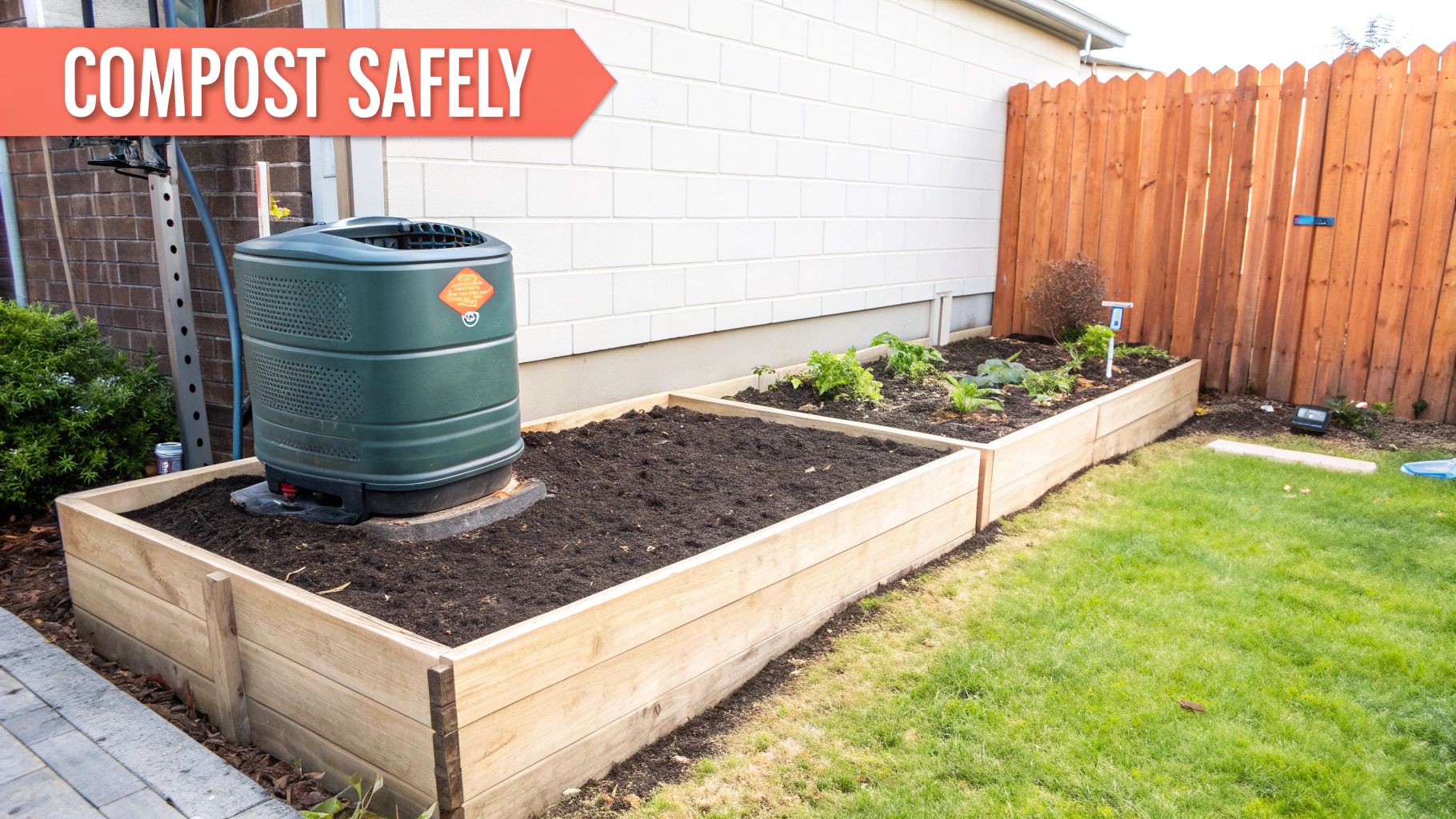
For those of us who think about our environmental footprint, just bagging and tossing dog waste can feel like a missed opportunity. If you're looking for greener alternatives that go beyond the black bin, there are a couple of really smart options worth exploring.
Fair warning: these methods take a bit more dedication than a standard trash can. But for the committed dog owner, they dramatically reduce your pet's environmental paw print by keeping all that waste out of landfills.
Home Composting Dog Waste Safely
Yes, you can compost dog poop, but this comes with a huge, non-negotiable warning: it must be done in a composting system that is completely separate from your regular garden compost. Dog waste is full of pathogens like E. coli and parasites you definitely don't want anywhere near your vegetable patch.
The secret to safe composting is heat. Your pile has to get hot—and stay hot—reaching temperatures between 135°F and 160°F (57°C to 71°C) to kill off all the nasty stuff. Honestly, hitting and holding that temperature is a real challenge for a casual backyard setup, but it’s the only way to do it safely.
A dedicated, well-managed hot composting system is the only safe way to turn dog waste into usable compost for non-edible plants. Never guess if it’s “cooked” long enough—safety comes first.
Once it's fully broken down, you're left with nutrient-rich soil that's fantastic for ornamental flower beds, shrubs, and trees. Just always remember the golden rule: never use it on anything you plan to eat.
In-Ground Pet Waste Digesters
Another brilliant green solution for homeowners is an in-ground pet waste digester. The easiest way to think about it is like a mini septic system built just for your dog's business.
These systems are surprisingly simple. You install a small tank with a lid in your yard, drop the waste in, and then add water and special digestive enzymes to get the process started.
Here’s what happens underground:
- Decomposition: The enzymes and helpful microorganisms get to work breaking the waste down into a liquid.
- Absorption: That liquid then gets safely absorbed into the surrounding soil, where it naturally filters.
- Containment: The whole system is buried and contained, so there are no odors and your yard stays perfectly clean.
This method completely diverts dog waste from the landfill, turning a daily chore into a discreet, out-of-sight solution right in your own backyard.
Choosing the Right Path for You
Going the extra mile with an eco-friendly disposal method is a fantastic commitment to make. But let's be realistic—these options aren't practical for everyone, especially if you live in an apartment or don't have a yard.
If that's you, don't sweat it. The single most important thing any dog owner can do is be consistent with cleanup, every single time.
Using a tool like the Potomo Clip-On Pooper Scooper means you’re always ready to pick up after your pet, no matter where your walk takes you. A fast, hygienic pickup is the foundation of responsible pet ownership, and that’s a step every single one of us can master.
Frequently Asked Questions (FAQ)
Let's tackle some of the most common questions dog owners have about disposing of dog waste.
1. Is it okay to flush dog poop down the toilet?
As a general rule, no. Most municipal water treatment systems aren't designed to handle the specific types of bacteria and parasites found in dog waste. It can also cause major problems for a home septic system. It's always safest to bag it and place it in the trash.
2. Can I throw dog waste in my home compost or green bin?
This is a common question with a clear answer: no. Dog waste contains pathogens that can contaminate your compost, making it unsafe for use on gardens, especially where you grow food. Similarly, city composting facilities are not equipped to handle pet waste, so it should never go in your green bin.
3. What's the real difference between biodegradable and compostable bags?
They sound similar, but they're very different.
- Biodegradable bags will eventually break down, but the process can be slow in a landfill and may leave microplastics behind.
- Compostable bags are made from plant materials and break down completely into organic matter, but only in the high-heat environment of a commercial composting facility.
For most people, the bag's main purpose is to contain the waste hygienically until it reaches a trash can.
4. Is burying dog waste in the yard a safe disposal method?
Unfortunately, no. Burying dog waste doesn't eliminate the harmful bacteria and parasites. These pathogens can survive in the soil for years, posing a health risk to your family and other pets, and can potentially contaminate groundwater.
5. Are pet waste removal services worth the cost?
For many people, absolutely! If you have multiple dogs, a large yard, or physical limitations that make cleanup difficult, a professional service can be a lifesaver. They ensure your yard stays clean and sanitary, taking one more chore off your to-do list.
Ready to make every walk cleaner and more convenient? The Potomo Clip-On Pooper Scooper offers a 100% hands-free pickup, so you never have to touch the mess. Upgrade your cleanup routine today at potomo.net.