

Dealing with pet odors in your home can be frustrating, especially when they linger in your carpets no matter how often you vacuum. From playful pups to curious kittens, pets bring joy—but also the occasional mess. This comprehensive guide will walk you through effective strategies, expert tips, and safe cleaning methods to keep your carpets fresh, odor-free, and looking their best.
Why Pet Odors Linger in Your Carpets
Have you ever cleaned up a pet accident, thought the smell was gone, only to have it reappear on a humid day? You’re not imagining things. There's a scientific reason why pet odors, especially urine, seem to have a life of their own.
Unlike a simple spill, pet urine is a complex cocktail of waste products. The main villain is uric acid, which forms stubborn, insoluble salt crystals as it dries. These pesky crystals don't just sit on the surface; they embed themselves deep in the carpet fibers, often seeping into the padding and even the subfloor below.
The Science of Stubborn Smells
Once those uric acid crystals have made themselves at home, they lie dormant. They reactivate the moment they come into contact with moisture—whether from humidity, a new spill, or even your next cleaning attempt. When they get wet, they release a pungent ammonia gas, and just like that, the smell is back.
This is precisely why standard carpet shampoos often fail. They might clean the surface stain beautifully, but they rarely penetrate deep enough to break down and dissolve the uric acid crystals. In fact, by just adding water, they can sometimes make the problem smell even worse.
Quick Fact: The challenge with pet odor is that you're fighting an invisible enemy. The source isn't just the visible stain; it's a chemical reaction happening deep within your carpet fibers.
Prevention Starts Before They Come Inside
Here's a tip many people overlook: a huge part of keeping carpets fresh starts outside. Your yard is the first line of defense. When pet waste is left in the grass, your dog can easily track fecal bacteria and other smelly residues into your home on their paws.
Incorporating a tool like Potomo’s pooper scooper into your daily routine keeps your yard clean and hygienic. Its clever leash-clip design makes it easy to clean up messes immediately, which dramatically cuts down on the chances of unwanted bacteria hitching a ride inside. You can learn more about the unseen dangers in dog poop in our detailed guide.
It’s clear this is a massive issue. The global pet stain remover and odor control industry was valued at over USD 9.8 billion in 2025 and continues to grow. This shows just how many of us are searching for a real, permanent solution.
Choosing the Right Cleaner for Pet Odor
Walking down the cleaning aisle can feel overwhelming. Dozens of bottles promise to be the miracle cure for pet stains, but how do you choose the right one for tough carpet cleaning for pet odor? The secret is this: cleaning the stain isn't enough. You have to completely destroy the odor at a molecular level.
This is where most standard carpet shampoos and household sprays fall short. They often rely on heavy perfumes to mask the smell. It might seem to work for a day or two, but as soon as there's a little humidity, that funky pet smell comes creeping back because the source was never truly eliminated.
The Unbeatable Power of Enzymatic Cleaners
When you’re dealing with organic messes—which is pretty much all of them with pets—the undisputed champion is the enzymatic cleaner. Think of them as a microscopic cleanup crew specifically trained to target pet waste.
- How they work: These formulas are packed with beneficial bacteria and enzymes that literally break down and digest the organic proteins found in urine, feces, and vomit.
- Why they're better: Instead of just covering up the smell, they "eat" the uric acid crystals that cause that lingering ammonia odor.
- The result: This process doesn't just mask the scent; it eliminates it for good. That's why a spot treated with a quality enzymatic cleaner is also less likely to become a repeat "go" spot—the scent marker is truly gone.
Comparing Pet Odor Cleaning Solutions
To see why enzymatic cleaners are the gold standard, it helps to compare them against other common options. Each has its place, but only one is built to handle the unique chemistry of pet accidents.
| Cleaner Type | How It Works | Best For | Safety Notes |
|---|---|---|---|
| Enzymatic Cleaners | Uses enzymes to break down and digest organic waste and uric acid. | Pet urine, feces, vomit, and other organic stains. The gold standard for odor removal. | Generally very safe for pets and carpets. Always check the label for fabric compatibility. |
| Oxygenated Cleaners | Uses oxygen-based bleach (like hydrogen peroxide) to lift stains and kill some bacteria. | General dirt, wine, and coffee stains. Can help with surface odors. | Can sometimes lighten carpet color. Test on an inconspicuous spot first. |
| Standard Shampoos | Uses detergents and surfactants to lift surface dirt and grime. | General cleaning and refreshing carpets without deep-set organic stains. | Does not break down uric acid; can leave a residue that attracts more dirt. |
| DIY Vinegar/Baking Soda | Vinegar neutralizes ammonia, while baking soda absorbs odors. | A temporary fix for fresh accidents, but not a deep-cleaning solution. | Not effective on old, set-in urine crystals and may not be color-safe. |
The entire carpet cleaning products industry, valued at USD 1.81 billion in 2023, is shifting as more pet owners learn what actually works. As people get savvy about the science, they're demanding effective solutions like enzymatic cleaners. You can see more about these market trends on GrandViewResearch.com. For reliable, permanent carpet cleaning for pet odor, investing in a good enzymatic cleaner is the smartest move you can make.
Your Deep Cleaning Action Plan for Carpets
Facing a lingering pet smell requires a solid game plan. This isn’t about just spraying a product and hoping for the best; it’s a strategic assault to eliminate the odor at its source. Proper carpet cleaning for pet odor always starts with good prep work.
First, clear the area. Move furniture so you can access the entire carpet. Next, grab your most powerful vacuum and go over the area multiple times, from different directions, to pull up as much surface-level hair, dander, and dirt as possible. This is a non-negotiable step—it allows your cleaning solution to reach the carpet fibers instead of getting blocked by debris.
Uncovering the Hidden Culprits
The trickiest part about pet accidents is that the visible spot is just the tip of the iceberg. Urine soaks down and spreads out underneath, creating invisible odor factories. To find every last spot, you need a secret weapon: a UV blacklight.
Wait until it's dark, turn off the lights, and methodically scan your carpet with the blacklight. Old urine stains contain salts that will fluoresce, usually glowing an eerie yellow or green. Use small sticky notes to mark every glowing spot you find. Don't be surprised if you find more than you expected!
This simple process map breaks down the core steps for dealing with these spots once you've found them.
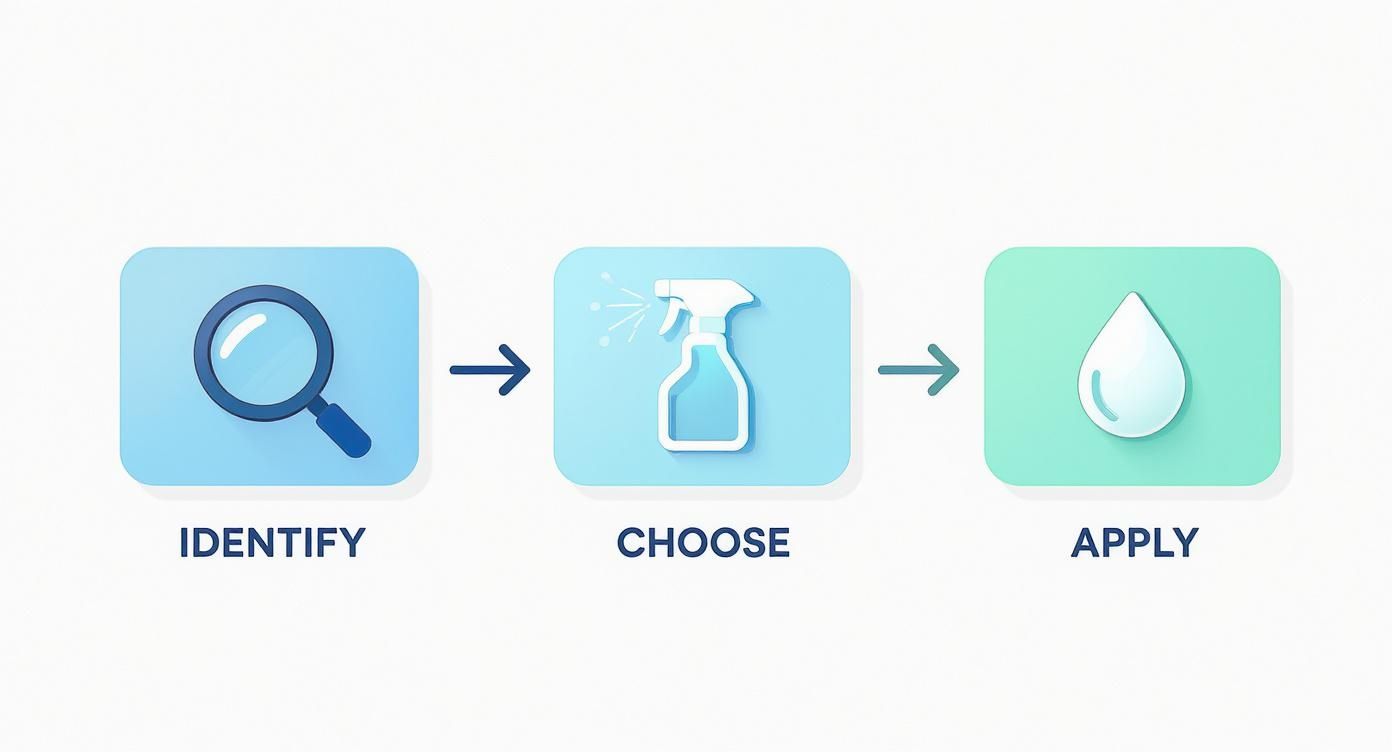
As you can see, it's a simple three-part attack: pinpoint the problem, choose the right enzymatic cleaner, and apply it correctly to get real results.
Mastering the Art of Application
Now that you’ve mapped out the problem areas, it’s time for the enzymatic cleaner. The absolute key here is saturation. The cleaner needs to go everywhere the urine went, including deep into the carpet padding.
Generously spray your enzymatic solution on each marked spot, extending about two inches beyond the stain's border to catch any overspray. Don't be shy—the area should be noticeably damp. This gives the enzymes enough moisture to get to work digesting the uric acid crystals.
The biggest mistake people make is not using enough cleaner or rushing the process. The enzymes need time and moisture to do their job. Think of it like a marinade; you can't just sprinkle it on and call it done.
Check the product’s instructions for the required "dwell time," which could be anywhere from 15 minutes to a few hours. For old, stubborn smells, I sometimes cover the treated spot with a damp towel to keep it from drying out, which keeps the enzymes active longer.
Once the time is up, grab a clean, white cloth and start blotting. Press down firmly to soak up the liquid. Never rub or scrub the spot. Rubbing just frays carpet fibers and can spread the stain. Keep blotting with fresh towels until the area is almost dry, then let it air dry the rest of the way.
Advanced Tactics for Stubborn Pet Odors
So, you’ve done everything right. You blotted the mess, saturated it with an enzymatic cleaner, and waited... only for that faint, musty pet odor to return. It’s frustrating, but it happens when the source of the smell has penetrated deeper than the surface fibers. When standard methods don't cut it, it’s time to bring out the big guns for your carpet cleaning for pet odor.
Bring in the Heavy Machinery
For those really stubborn, set-in smells, a spray bottle just won't cut it. This is where a carpet cleaning machine—whether you rent one or own your own—becomes your best friend.
These machines use hot water extraction to get deep into the carpet pile. They work by blasting a high-pressure stream of hot water and cleaning solution into the fibers, which breaks up and dissolves the grime and uric acid crystals. Then, a powerful vacuum immediately sucks the dirty water back out, pulling the source of the smell with it.
DIY Pre-Treatments to Boost Your Results
Before you start the machine, a little prep work can make a world of difference.
- Baking Soda Paste: Mix baking soda with just enough water to create a thick paste. Spread it over the spot, let it dry completely, and then vacuum it up. Baking soda is a fantastic natural odor absorber.
- Vinegar and Water Solution: In a spray bottle, mix equal parts white vinegar and cool water. Lightly mist the smelly area. The acetic acid in vinegar helps neutralize the ammonia in old urine stains, making them easier for your machine to lift out.
Always test these DIY tricks on a hidden spot of your carpet first (like inside a closet) to ensure they don't cause discoloration.
The goal here isn't just to clean the surface. We're trying to eliminate the entire "scent zone," which often includes the carpet padding and, in tough cases, even the subfloor underneath.
When the Problem Goes Deeper
How do you know if the urine has soaked through to the padding or subfloor? A few dead giveaways include:
- The odor returns very strongly, even right after cleaning.
- The spot feels squishy underfoot.
- If you pull back the carpet, you see discoloration on the subfloor.
If you suspect the padding or subfloor has been affected, no amount of surface cleaning will fix the problem. The padding will likely need to be replaced, and the subfloor may need to be sealed with an odor-blocking primer. At this point, it’s often best to call a professional carpet cleaning service.
The best defense is a good offense. For great tips on keeping your yard clean to reduce what gets brought inside, check out our guide on the best way to pick up dog poop. A tidy yard means fewer odor-causing bacteria on your carpets.
Preventing Future Pet Odors in Your Home
Finally getting that deep-set pet smell out of your carpet is a huge relief. The real win, however, is making sure it never comes back. The best strategy is to get ahead of the problem with a few simple, consistent habits that stop odors before they start.
Build a Foundation of Cleanliness Outside
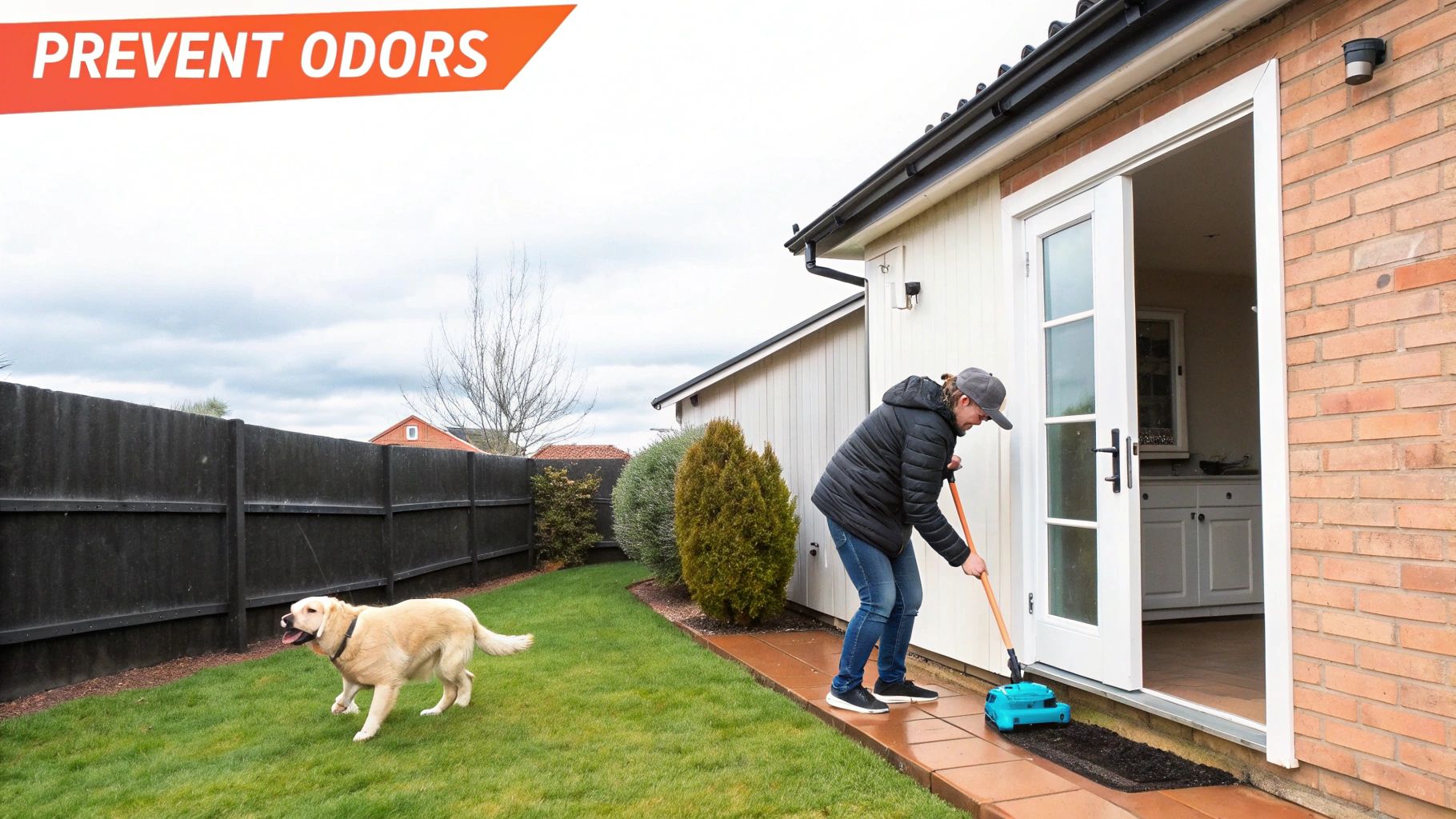
A lot of what makes your carpet smell funky doesn’t actually start inside your house. It gets tracked in from the outside. When dog waste sits on the grass, it becomes a breeding ground for odor-causing bacteria that can be tracked inside on paws.
This is why a clean yard is the cornerstone of a fresh-smelling home. Using a tool like Potomo’s pooper scooper as part of your daily routine is a game-changer. Its leash-clip design means you can clean up messes immediately, which drastically cuts down on the bacteria your dog brings indoors. If you want to level up your cleanup game, check out our guide on choosing the right dog waste disposal system.
Keeping your yard clean is one of the most underrated yet effective strategies for preventing pet odors inside. It stops the problem at the source.
Adopt Proactive Indoor Habits
A little consistency goes a long way indoors. These small tweaks to your routine can make a massive difference.
- Routine Vacuuming: Don't wait until you see the dirt. Vacuuming at least twice a week pulls up dander, hair, and grime before they can work their way deep into carpet fibers and start to smell.
- Regular Grooming: A clean dog means a cleaner house. Regular baths and brushing reduce shedding and wash away oils and dirt on their coat that cause that classic "dog smell."
- Immediate Accident Response: The second you spot an accident, act fast. Blot it immediately to soak up as much as possible, then hit it with your enzymatic cleaner to neutralize the odor before it sets.
It's no wonder pet owners are constantly seeking better hygiene solutions. In North America, the demand for effective pet odor eliminators is booming. You can read more about this trend on MaximizeMarketResearch.com.
Frequently Asked Questions (FAQ)
1. Why does my carpet sometimes smell worse after cleaning it?
This common issue is called "wicking." As the carpet dries, moisture from deep within the padding rises to the surface, pulling trapped odor particles up with it. It means the first cleaning didn't go deep enough. Let the area dry completely, then treat it again, ensuring you fully saturate the spot.
2. How do I find old pet urine stains that are no longer visible?
Your best tool for this is a UV blacklight. In a dark room, shine the light over your carpet. Old urine contains salts that fluoresce under UV light, usually glowing a yellowish-green color. This is the most reliable way to find exactly where you need to treat.
3. Can I just use my regular carpet shampoo for pet urine?
It's tempting, but it won't be effective. Standard cleaners are great for dirt but lack the specific enzymes needed to break down the uric acid crystals in pet urine—the true source of the smell. You need a formula designed to "eat" those organic proteins to eliminate the odor for good.
4. Will baking soda and vinegar really get rid of pet odor?
While this DIY combo can help neutralize fresh accidents, it's not a permanent solution for set-in odors. Vinegar can neutralize the ammonia smell temporarily, and baking soda can absorb some odor, but neither will break down the underlying uric acid crystals like an enzymatic cleaner will.
A truly fresh home starts before the paws even hit the carpet. The Potomo Clip-On Pooper Scooper helps you stop odors at their source by making yard cleanup effortless. Keeping outdoor messes from being tracked inside is your first line of defense. See how easy hands-free cleanup can be at https://potomo.net and keep your home smelling great.