

Many homeowners wonder if it’s safe to dispose of dog waste in their septic system. While it may seem like a convenient solution, putting dog poop in a septic tank can have unexpected consequences for your system’s health and efficiency. Understanding how septic systems work and the potential risks of introducing pet waste is essential for keeping your tank functioning properly and avoiding costly repairs down the line.
Why Dog Waste and Your Septic System Are a Terrible Mix
Think of your septic tank as a living ecosystem buried in your backyard. It’s not a magic trash can; it's a carefully balanced biological machine. Its one job is to break down human waste and septic-safe toilet paper using a specific colony of beneficial bacteria.
When you introduce something it wasn't designed for, like dog poop, you're essentially poisoning that ecosystem. To really get why this is such a bad idea, you need to understand just how different dog waste is from what your system is built to handle. It's not a minor variation—it's fundamentally incompatible.
What Makes Dog Poop a Septic Hazard?
Several key factors make flushing Fido's business a recipe for disaster. Human waste is mostly digested food, but dog poop is a whole different story. It's packed with things your septic system's bacteria simply can't process, leading to a rapid buildup of solid waste. That means you'll be calling the pumping truck far more often.
Here’s a closer look at what's really going on:
- Indigestible Fillers: Your dog's diet isn't the same as yours. Their waste often contains grass, fur, and even tiny bits of toys or rawhide chews. None of this breaks down in the tank, contributing directly to the sludge layer at the bottom.
- Dangerous Parasites: Dog waste is a known carrier of parasites like roundworms, hookworms, and Giardia. Their eggs are incredibly tough and can easily survive inside your septic tank. From there, they can leach into your drain field and contaminate the surrounding soil and groundwater.
- Chemical Contaminants: Think about the medications your dog takes. Flea, tick, and deworming treatments are powerful chemicals. These pass through your dog's system and end up in their waste, where they can be toxic to the very bacteria your septic tank needs to function.
Quick Fact: The golden rule for a healthy septic system is simple: Only human waste and toilet paper go down the drain. Flushing dog poop is like pouring gravel into your car's engine—it’s not a matter of if it will break down, but when.
To make it even clearer, let's break down the key differences.
Human vs. Dog Waste: A Septic System's Perspective
This table gives you a scannable look at why one type of waste is perfectly fine for your system, while the other is a one-way ticket to a septic emergency.
| Characteristic | Human Waste | Dog Waste | Impact on Septic Tank |
|---|---|---|---|
| Bacterial Makeup | Composed of bacteria that septic systems are designed to process. | Contains different bacteria, some of which are harmful to the septic ecosystem. | Disrupts the natural balance needed for waste breakdown. |
| Parasites | Generally free of resilient parasites in treated human populations. | Often contains tough-shelled parasite eggs (e.g., roundworm) that survive septic treatment. | Contaminates the drain field and local groundwater, posing a health risk. |
| Dietary Byproducts | Primarily digested food, easily broken down by anaerobic bacteria. | Contains indigestible materials like grass, hair, and fillers from dog food. | Increases the solid sludge layer, requiring more frequent and costly pump-outs. |
| Chemicals | Typically free from medications that are toxic to septic bacteria. | May contain residues from flea, tick, and deworming medications. | Kills the beneficial bacteria responsible for breaking down solid waste. |
As you can see, the two are worlds apart from your septic tank's point of view.
How Your Septic Tank Actually Works
To really appreciate why flushing dog poop is a septic tank's worst nightmare, you have to understand the brilliant, natural process happening under your lawn. Your septic system isn't just a holding container; it's a self-contained ecosystem. Think of it as a tiny wastewater treatment plant powered by billions of helpful microorganisms.
It’s basically a bacterial buffet. Everything you flush travels down a pipe to a large, buried tank where the magic happens. Inside, the waste separates into three distinct layers.
The Three Layers of a Healthy Septic Tank
A properly functioning septic tank is all about balance. Here’s a quick tour of what’s going on in there:
- The Scum Layer: At the top, you'll find a layer of scum where lighter stuff like fats, oils, and grease floats. This layer is important—it helps keep odors down and maintains an oxygen-free environment for the bacteria working below.
- The Effluent Layer: The middle is the largest layer, a cloudy liquid called effluent. This is the wastewater that's been partially clarified as the heavy solids sink and the light fats float.
- The Sludge Layer: At the bottom, heavy organic solids settle to form a sludge layer. This is where anaerobic bacteria (the kind that don't need oxygen) get to work, digesting the solids and reducing their volume over time.
This infographic shows the simple but disastrous path that foreign objects, like dog poop, take to throw this whole system out of whack.
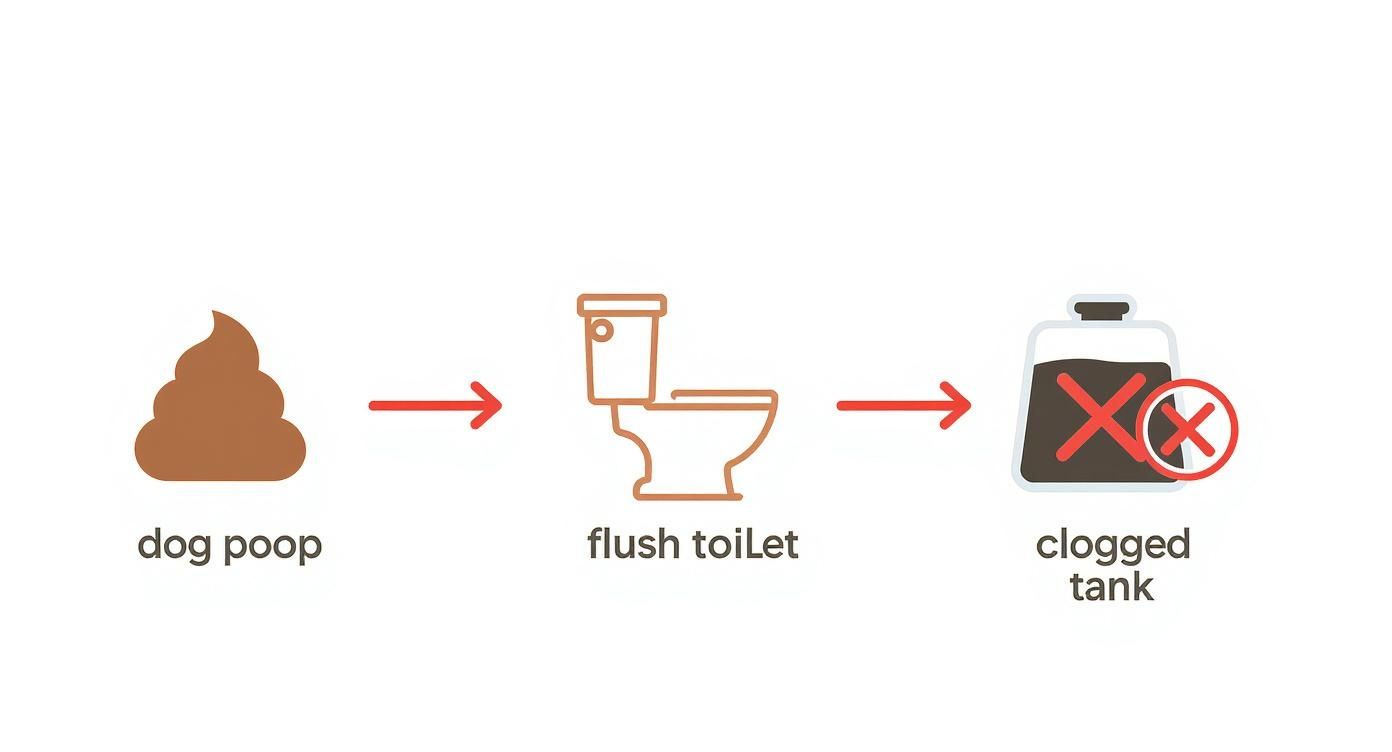
As you can see, flushing dog waste shoves indigestible materials into a system that isn't built for them. It overloads the sludge layer and is a direct route to a clogged, failing tank.
From Tank to Drain Field
Once the bacteria have done their job, the relatively clear effluent from the middle layer flows out of the tank to the drain field (or leach field). This is a network of perforated pipes buried in your yard.
Key Takeaway: Your septic tank is a living system. Its entire function depends on a colony of specialized bacteria breaking down specific types of waste. Introducing the wrong materials can kill these vital bacteria or add solids they simply cannot digest.
This is the final stage of treatment. The effluent slowly seeps out of the pipes and into the surrounding soil, which acts as a massive natural filter. It removes any remaining impurities before the water safely makes its way back to the groundwater table. Understanding this process makes it clear why only human waste and toilet paper should ever go down the drain.
Four Reasons Dog Poop Wrecks Septic Tanks
Now that you know how the delicate ecosystem in your septic tank works, let’s get to the heart of the matter. Flushing dog poop isn't just a small misstep; it actively sabotages the entire system.
Think of it as introducing four system-wrecking criminals into that carefully balanced bacterial community.
Each time you flush your dog's waste, you're setting the stage for clogs, backups, and a shorter lifespan for your septic system. Let's break down exactly how.
1. Indigestible Materials Overload the System
Your septic tank is designed for a very specific diet: human waste and toilet paper. That’s it. Dog waste, on the other hand, is a cocktail of materials that the bacteria in your tank simply can’t digest.
Just think about your dog’s poop. It’s almost certainly mixed with:
- Grass and stray leaves
- Their own hair or fur
- Tiny fragments of a rawhide chew or toy
None of this stuff breaks down. Instead, it sinks right into the sludge layer, causing it to build up much faster than it should. This translates directly to more frequent—and more expensive—pump-outs.
2. Parasites and Pathogens Contaminate Groundwater
This is one of the most serious risks, and it goes far beyond your property lines. Dog feces can carry incredibly resilient parasites like roundworms, hookworms, and Giardia. Their tough-shelled eggs can easily survive inside your septic tank.
From there, they ride out with the liquid effluent and flow into your drain field. This contaminates the surrounding soil and can seep into the local groundwater, posing a significant health risk to your family, neighbors, and local wildlife.
Did You Know? Putting dog waste into your septic system is like creating a direct pipeline for harmful parasites from your backyard to your groundwater. The tank is not a purification system for these resilient organisms.
3. Medications Poison Your Helpful Bacteria
Does your dog take regular flea, tick, or heartworm medication? Those treatments contain potent chemicals designed to kill organisms, and they don't just disappear. Residues are passed right out in their waste.
When these chemicals hit your septic tank, they act like a poison. They kill off the beneficial anaerobic bacteria that are essential for breaking down solid waste. With a weakened bacterial colony, the whole process grinds to a halt, leading to a rapid pile-up of sludge and eventual system failure.
4. Sheer Volume Overwhelms Your Tank's Capacity
Finally, it’s a simple matter of math. Septic systems are sized based on the expected wastewater volume from the humans in the house. Adding the daily waste from even one medium-sized dog—which can be nearly a pound a day—can increase the solid load on your tank by 25% or more.
This extra volume pushes your system beyond what it was designed to handle. The scale of this problem is bigger than just one yard, too. The Environmental Protection Agency notes that waste from just 100 dogs can release enough bacteria to temporarily close a nearby waterbody to swimming and fishing.
All these factors make one thing crystal clear: keeping dog poop out of the septic tank is non-negotiable for a healthy system.
The Environmental Ripple Effect of Pet Waste
The problem with dog poop doesn't stop at your property line. When dog waste is left on the lawn, it becomes a serious environmental hazard that affects the entire community, creating a ripple effect in local waterways.
When it rains, stormwater runoff acts like a taxi service, picking up everything left on the ground. This includes bacteria, parasites, and the high levels of nutrients in dog waste. These pollutants get washed straight into storm drains, which often lead directly to our local streams, rivers, and lakes without any treatment.
From Your Lawn to Local Lakes
Think of a single pile of dog poop as a tiny, super-concentrated fertilizer pellet. It's packed with nitrogen and phosphorus, the exact ingredients that cause explosive growth in harmful algal blooms.
These thick, green mats of algae do more than just make the water look gross. They create huge problems:
- Oxygen Depletion: Algal blooms block sunlight, killing healthy underwater plants. As the algae dies and decomposes, it sucks up massive amounts of dissolved oxygen from the water.
- Creation of "Dead Zones": This oxygen-starved environment creates aquatic "dead zones" where fish and other wildlife can't survive.
- Toxin Release: Certain types of algae can release toxins that are harmful to both animals and humans who come into contact with the water.
Anecdote from a Lake Community: A friend living on a small lake noticed it getting greener and murkier each summer. A local study revealed that a primary cause was nutrient runoff from un-scooped pet waste in the surrounding neighborhoods. A community-wide "scoop the poop" campaign made a visible difference in water clarity within just two years!
The sheer scale of this issue is mind-boggling. Every time you pick up after your dog, you stop these harmful nutrients from entering the water cycle. The unseen dangers in dog poop aren't just a risk to human health; they're a direct threat to our shared natural resources. Using a convenient tool like Potomo’s pooper scooper makes this essential daily task quick and effortless, ensuring responsible pet ownership is an easy habit to keep.
Septic-Safe Ways to Dispose of Dog Waste
Okay, so flushing dog poop is a definite no-go. Now what? The good news is you have several fantastic, septic-friendly options that protect your plumbing, your yard, and the environment.
It’s all about finding a method that fits your lifestyle while keeping that waste far away from your septic tank.
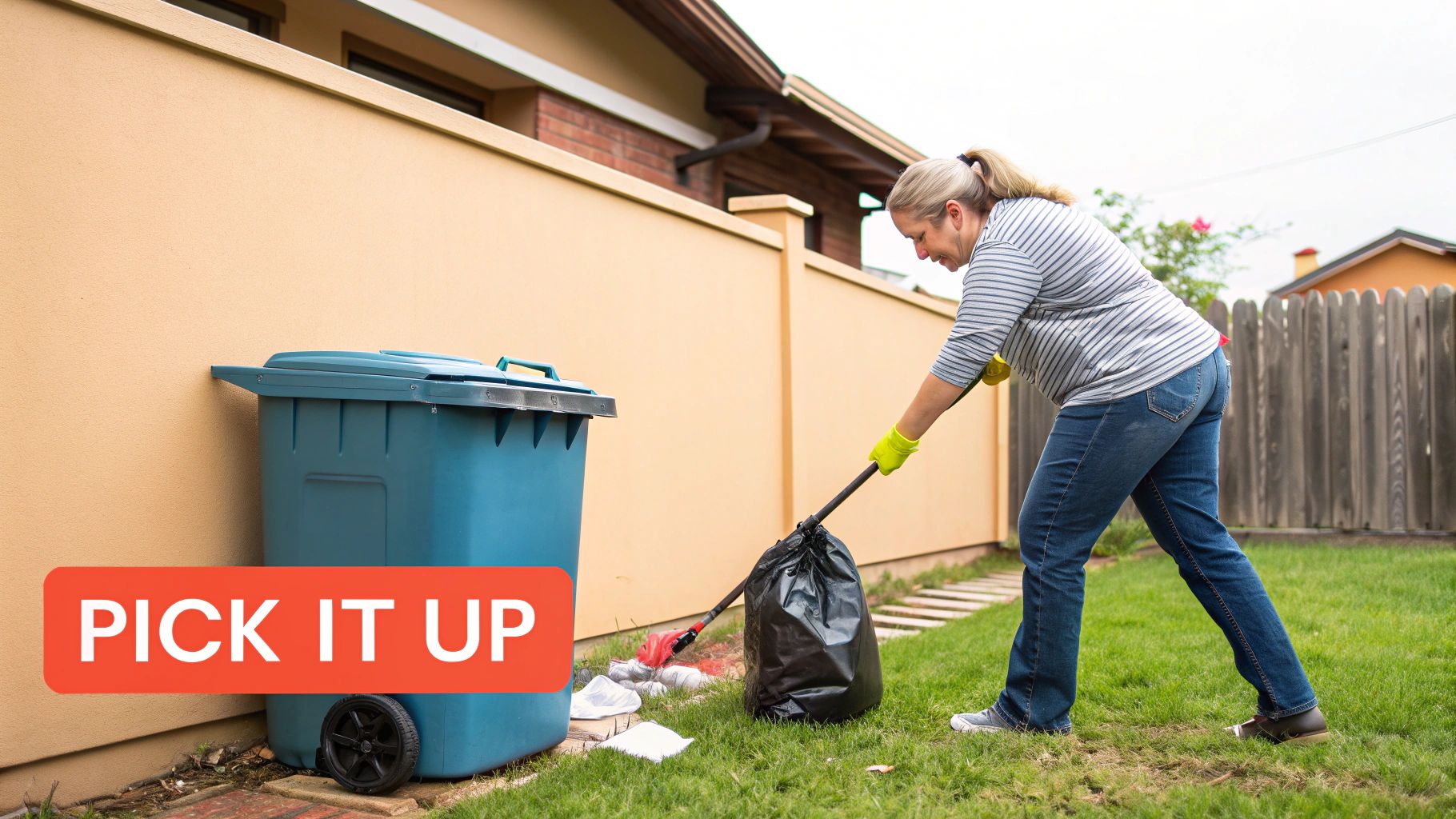
No matter which route you take, every responsible disposal plan starts with one simple action: picking it up. A reliable pooper scooper like Potomo’s makes this daily chore fast, clean, and surprisingly easy. It helps turn a dreaded task into a quick, simple habit.
1. The Classic Bag-and-Trash Method
This is the most common and straightforward solution for a reason—it works.
- How to do it: Simply bag the waste and toss it into your regular household trash bin.
- Why it's safe: It keeps the pathogens contained and guarantees they won't end up in your septic tank or local waterways.
- Pro-tip: Opt for biodegradable or compostable bags to help cut down on plastic in landfills.
2. Dedicated Pet Waste Composting
If you’re a gardener, composting might seem like a natural choice. But hold on—you can't just toss dog waste into your regular compost pile that you use for vegetables.
- How to do it: You need a dedicated hot composting system designed to consistently hit temperatures of 140-160°F, which is hot enough to neutralize harmful bacteria and parasites.
- Why it's safe: The high heat effectively sterilizes the waste.
- Important Safety Note: Compost made from dog waste should only be used on non-edible plants like flowers and ornamental shrubs. Never use it in your vegetable garden.
3. In-Ground Pet Waste Digesters
Think of an in-ground digester as a mini septic system just for your dog's waste. It's a fantastic, low-maintenance solution.
- How to do it: You bury a lidded, bottomless container in your yard. Drop the poop in, add water and special digesting enzymes, and let nature take its course.
- Why it's safe: Microorganisms break the waste down into a liquid that safely seeps into the subsoil below, keeping it out of your septic tank and the landfill.
- Learn More: You can explore a complete dog waste disposal system guide that dives deeper into these methods.
FAQ: Your Top Questions Answered
Let's tackle a few more common questions to make sure you're confident in your dog waste disposal plan.
Q1: Are 'flushable' dog waste bags okay for a septic tank?
A: Absolutely not. These bags do not break down in a septic system. They contribute directly to clogs and bulk up the sludge layer, making them a major threat to your tank's health. Always throw them in the trash.
Q2: What if I only flush dog poop once in a while? Is that really so bad?
A: Yes, it is. Even occasional flushing is asking for trouble. Every single time you do it, you introduce all the problems we've discussed—indigestible materials, parasites, and chemicals. The damage is cumulative and best avoided entirely.
Q3: Does my dog's food change whether the poop is septic-safe?
A: No. While a higher-quality diet might change the consistency, it doesn’t magically remove the indigestible hair, grass, harmful bacteria, and potential medication residues. These are the core reasons that make dog poop unsafe for any septic tank, regardless of what your dog eats.
Q4: Can I bury dog poop directly in the yard?
A: Please don't do this. Just burying untreated dog waste doesn't solve the problem. Harmful parasites and bacteria can survive for years in the soil and can still leach into groundwater. A proper digester or hot composting system is needed to break down those pathogens safely.
Q5: What is the best septic-safe disposal method?
A: The "best" method depends on your lifestyle.
- Easiest: Bagging and trashing is the simplest.
- Most Eco-Friendly: A pet waste digester is a fantastic set-it-and-forget-it option.
- For Gardeners: Hot composting is very effective but requires more hands-on management.
The bottom line is clear: your septic system is for human waste only. Recent research on dog waste and bacterial pollution reinforces just how important proper disposal is for both your property and the environment. For more tips, check out our guide covering other important aspects of doggie waste disposal.
Managing dog waste responsibly is a huge part of being a great pet owner, especially with a septic system on the line. The easiest way to get it right is to start with the right tool for the daily pickup. Potomo’s clip-on pooper scooper makes the job fast, hygienic, and completely hands-free, so you can keep your yard clean and your septic system safe without the usual hassle. Make cleanup effortless with Potomo today.