

Training a dog to use a litter box may sound unusual, but it’s a practical solution for many pet owners. Whether you live in an apartment, face harsh weather conditions, or have a puppy still learning house rules, litter box training can provide convenience and reduce accidents in the home. With patience, consistency, and the right setup, many dogs can learn to use a litter box reliably.
Understanding your dog’s behavior and natural instincts is key to success. Unlike cats, dogs typically prefer outdoor elimination, so adapting them to a litter box requires a step-by-step approach, positive reinforcement, and some trial and error. This guide explores the methods, tips, and challenges you might face, helping you determine whether litter box training is a suitable option for your furry companion.
Quick Answer And Key Points
Indoor potty training boils down to three essentials: consistent timing, the ideal tray setup, and plenty of praise.
For apartment living, switching from frantic park dashes to a calm corner tray often feels like a breath of fresh air—for you and your dog.
Benefits Of Indoor Training
- Cuts down accidents by up to 75% during rainy or snowy days
- Replaces that morning sprint to the door with a simple step inside
- Works hand-in-hand with a PoTomo Clip-On Pooper Scooper to halve cleanup time
- Gives busy pet parents genuine peace of mind—no more emergency umbrella runs
Ideal Breeds And Timeline
Tiny breeds like Chihuahuas and Dachshunds—and even some mid-sized pups—often master the tray in 4–8 weeks. Keep your dog on a familiar schedule: first thing in the morning, right after each meal, and again before lights-out.
“Nailing the timing and using the right tray setup made all the difference for us.”
Take Maria’s Frenchie, Bruno. She swapped one bleary-eyed walk for an indoor visit—and by week six, accidents were history.
Indoor Versus Outdoor Potty Summary
Below is a quick side-by-side look at outdoor walks versus indoor tray training:
| Criteria | Outdoor Walks | Indoor Litter Box |
|---|---|---|
| Ease | Depends on the weather | Always at your fingertips |
| Frequency | 3–5 outings daily | 5–7 sessions for tiny breeds |
| Cleanup | Leash, bags, waste bins | Fast scoop and liner swap |
Even the most dedicated walkers find a hybrid approach works best—fresh air breaks plus a reliable indoor option.
Key Takeaways
- Consistency is everything: stick to your timing
- A low-entry tray and soft substrate speed up learning
- Celebrate each success with treats or praise
- Blend outdoor strolls with indoor stops for maximum flexibility
- Rain or shine, you’ll dodge last-minute panic trips
Ready to dive deeper? Next, we’ll explore the gear checklist—from tray dimensions to pad materials—and share pro tips on placement, airflow, and fine-tuning your training schedule.
Understanding How Litter Box Training Helps Dogs
Small breeds often face a puzzle: tiny bladders, fast metabolisms and frequent accidents when you rely only on outdoor breaks. More dog parents are turning to indoor trays as a practical workaround. Learn more about these insights on Pedigree
When you wonder can you litter box train a dog, it really comes down to timing, a clear signal and plenty of positive reinforcement. Suddenly, no more mad dashes to the door. Instead, you’ll slot in predictable indoor potty breaks and watch your pup’s confidence—and your carpet’s cleanliness—skyrocket.
- Slot visits right after meals, naps or playtime
- Offer a low-entry tray that won’t trip up tiny paws
- Reward the moment they go with treats and praise
Biological Factors Behind Frequent Breaks
Small dogs digest food and water faster, so they might need a bathroom stop every 1–2 hours. That urgency can overwhelm busy owners and lead to frustration.
A simple tray routine helps by:
- Matching potty breaks to natural meal and sleep rhythms
- Cutting down confusion so dogs know exactly where to go
- Avoiding last-minute scrambles when “nature calls” strike
Case Study Urban Chihuahua Routine
Bella, a city Chihuahua with a jam-packed schedule, used to circle the living room whenever she had to go. Her owner tucked a tray under the stairwell and, within six weeks, Bella had it down cold.
“We cut Bella’s cleanup time by 75% and finally reclaimed our living room,” her owner laughs. “It felt like we were speaking the same language.”
Pairing short outdoor walks with indoor trays gives both of you flexibility and peace of mind.
Debunking Common Litter Training Myths
Myth: Dogs lack the instincts cats have for litter.
Reality: With clear verbal cues, consistent timing and tasty rewards, most pups pick it up fast.
Training Tips
- Place puppy pads under a thin litter layer so it still feels familiar
- Tuck treats in the tray corners to spark exploration
- Scoop waste twice a day—dogs avoid soiled spots just like we do
- Add a second tray if you share space with multiple pets or have a sprawling home
Cleaning Up With Ease
When scooping time rolls around, a hands-free Potomo pooper scooper can slash cleanup time in half. Clip it by the door for quick access and keep waste disposal virtually hands-free.
Combo Strategy For Success
Outside walks and an indoor tray system play nicely together. You get reliable relief, regardless of weather or schedule changes.
- Regular potty spots reduce stress and mishaps
- Rain or snow no longer ruin your routine
- Reinforcing both environments boosts your dog’s confidence
- A handy PoTomo scooper means cleanup is never a head-scratcher
Take Alex, a high-rise resident who swapped bleary-eyed pre-dawn walks for a quick tray routine. Within two weeks, accident reports dropped to zero and mornings became calm instead of chaotic.
Next we’ll cover gear essentials—from tray dimensions to substrate picks—to build your perfect indoor station and streamline every step of your training plan.
Setting Up Indoor Station
Choosing the right corner and materials makes all the difference. Aim for a spot that’s quiet, well-ventilated and out of high-traffic zones.
Key Setup Tips:
- Keep the tray away from food and beds
- Use low-odor litter designed for dogs
- Stash extra liners and a PoTomo scooper within arm’s reach
- Ensure airflow to cut down on lingering smells
With these basics in place, your dog will see this setup as their go-to bathroom spot—no room for confusion and far fewer accidents.
Starting Puppy Litter Box Training Early
Right from the moment your puppy is about three to four weeks old, you’re seeing the beginnings of bladder control. That’s when a low-entry litter tray in a small, penned-off corner can work wonders.
Setting up an accessible spot does two things: it protects your floors and gives your pup a clear “go here” signal.
- Choose a tray just a bit larger than your puppy so they can turn around without making a mess
- Fill it with soft, non-toxic pellets or paper-based litter designed for sensitive tummies
- Tuck the box into a quiet nook, away from busy doorways and rambunctious siblings
One family tucked the tray into a calm corner and saw their pup using it consistently by week three.
Building A Puppy Potty Schedule
To make this habit stick, weave tray visits into your daily routine:
- Swing by the tray every hour when your puppy is awake
- Guide them back after naps and snacks to reinforce the new behavior
- Mark success instantly with a clicker or a cheerful “Good job!” then follow up with a tiny treat
In one home, this pairing of precise markers and rewards produced 90% success in under seven weeks—proof that timing is everything.
Now take a look at this process flow showing how routine steps work together to speed up training.
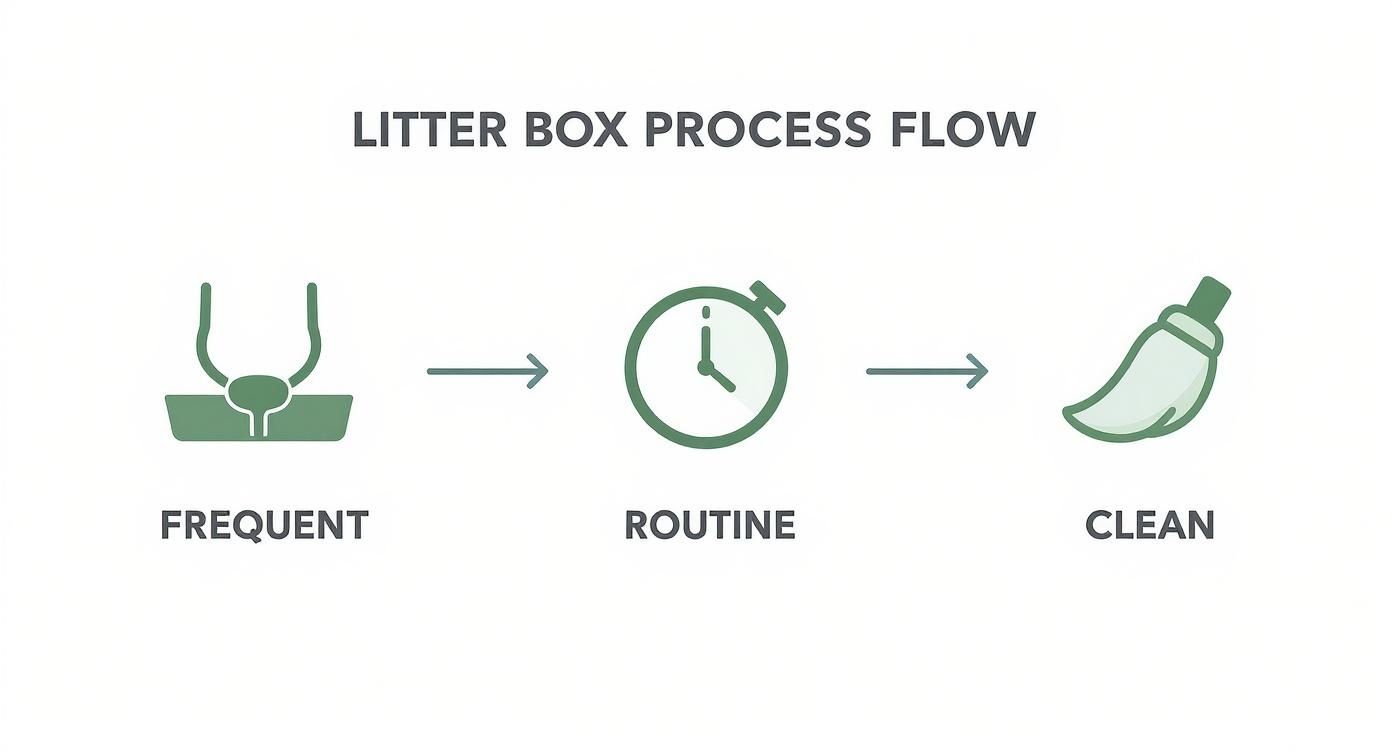
This graphic lays out how regular check-ins, punctual timing, and clean trays join forces to accelerate your puppy’s learning curve.
Training can begin as early as 3½ weeks of age, matching the developmental window when pups naturally gain bladder control. In fact, The Retriever Nation recorded over 90% daily success by seven weeks old—dramatically cutting down on mess and odor. Learn more about early puppy litter box training success on YouTube.
Phasing In Outdoor Routine
Once your pup masters the indoor system, sprinkle in outdoor breaks so they learn both environments without mixed signals.
For a smoother cleanup, keep a PoTomo pooper scooper at the ready when you head into the yard.
- Start outdoor trips immediately after indoor successes to link the two routines
- Gradually add five more minutes between outings to build stronger bladder control
- Use the same verbal cue outside and follow it with praise to unify the behavior
- Make both the indoor tray and outdoor spot equally easy to access to avoid confusion
Key Takeaway: Keep both indoor and outdoor spots familiar to your puppy to ensure smooth training.
Maintaining the indoor tray—even as you add trips outside—cements good habits and keeps accidents to a minimum.
Adapting Litter Box Training For Adult Dogs
Older dogs come with established routines, so teaching them a new habit indoors is all about patience and consistency. Begin by creating a clear schedule tied to meals, naps and evening wind-downs. Reward every success to reinforce the behavior.
- Offer a high-value treat the moment your dog finishes in the tray
- Use a clicker or a cheerful phrase like “Done good” as a marker
- Visit the tray every 2–3 hours on day one, then gradually lengthen the gap
Breed Size Tweaks
Not every dog fits the same tray. Medium dogs usually feel comfortable in a 18×24 inch pan, while smaller breeds need something closer to 12×18 inches with a low entry point. For the big guys, a 24×30 inch pan—or even a DIY liner plus puppy pads—works best.
- Small Breeds: 12×18 inch tray, easy step-over lip
- Medium Breeds: 18×24 inch tray, hide treats around the edges
- Large Breeds: 24×30 inch pans or custom liners with extra absorbency
I once helped a rescue Greyhound named Molly. She refused anything under 24×30 inches, so we built a makeshift station in the laundry room. By week three, stepping into her tray was second nature. Meanwhile, a terrier mix loved having trays in both the living room and mudroom—an extra option kept him on track.
Reinforcing Success
Celebrating small wins keeps momentum going. When your dog nails the tray, follow up immediately with praise and a treat before launching into a quick play session. That positive spark makes all the difference.
“Patience and consistency turned our stubborn Buddy into an indoor pro in six weeks.”
To keep things tidy, pair training with a cleanup gadget. Potomo’s Clip-On Pooper Scooper cuts your exchange time in half. You scoop waste in seconds and leave the tray fresh.
- Tip: Use scented litter designed for dogs to naturally draw them back to the tray
Daily Checkpoints
Alarms aren’t just for mornings—they’re your training ally. An evening reminder helps you nip late-night accidents in the bud.
As your dog racks up successes, stretch those intervals. Over a few weeks, four-hour checks can boost confidence and reliability.
Training adult dogs on a litter tray takes time, consistency and the right tools. Success rates differ by breed, age and personality, but sticking to a steady routine, using positive reinforcement and adjusting tray size will set you up for victory. Learn more about these findings on Rogue Pet Science
Practice makes perfect—keep your timing chart handy, tweak trays for comfort and reward every triumph. Next, we’ll dive into station maintenance so your dog stays motivated and your home stays spotless.
Setting Up And Maintaining A Clean Litter Station
Getting your dog comfy with a litter station starts with a clean setup. When everything is in place—tray size, substrate, location—cleanup feels almost effortless and smells stay minimal.
I like to tuck the tray in a low-traffic corner with decent airflow. That simple move keeps odors from settling in.
Choosing The Perfect Location
Pinpointing the right spot teaches your dog where to go and cuts down on surprises elsewhere. I once suggested a hallway nook for a busy family; it stayed quiet, dry, and gave everyone peace of mind.
Avoid sunny windowsills. Heat warps plastic trays and releases odors faster.
- Ventilation keeps air moving and smells at bay
- A private corner helps dogs feel safe
- A flat, sturdy surface stops spills and wobbles
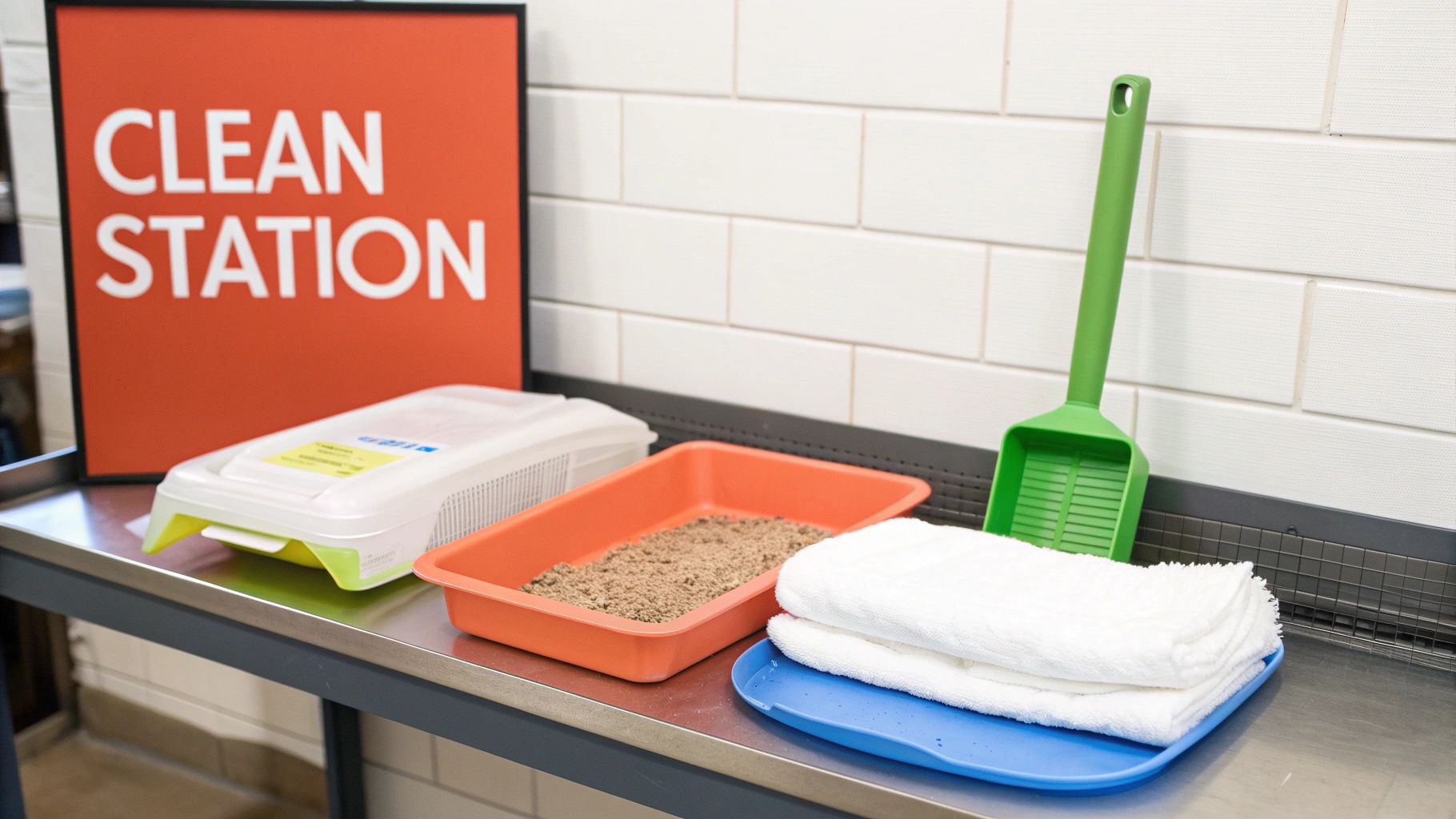
You’ll notice how the PoTomo scooper clips right onto leashes. No bending, no mess—everything you need stays within arm’s reach.
Daily Scooping And Deep Cleaning
Keeping bacteria in check doesn’t require a massive time investment. A quick scoop twice every day is enough to stay on top of odors, and swapping liners every two days prevents saturation.
Once a week, I dive into a deeper clean:
- Empty the old substrate and toss liners
- Rinse the tray with a pet-safe detergent
- Let the tray air dry before refilling
A hot-water rinse paired with an enzyme cleaner will clear away any hidden grime.
Comparison Of Cleaning Tools
Before picking your gear, it’s helpful to see how traditional scoopers measure up against the PoTomo Pooper Scooper.
| Feature | Traditional Scooper | Potomo Pooper Scooper |
|---|---|---|
| Capacity | Small capacity means frequent emptying | Large chamber holds up to 50 scoops |
| Odor Control | No built-in sealing leads to smell | Sealing lid and bag dispenser lock odors |
| Ease Of Use | Manual hold and tilt may strain wrists | Hands free clip-on design for comfort |
Quick takeaway Potomo cuts cleanup time in half and locks in odors.
Storage Hacks And Odor Control
Storing liners, sprays, and scooper right next to your tray makes those twice-daily cleanups a breeze. I keep everything in a small caddy that slides beneath the sink—out of sight but easy to grab.
A few tricks I swear by:
- Airtight bins hide extra liners and neutralize smells
- A light dusting of baking soda under the tray soaks up moisture
- Keep enzyme cleaner and gloves labeled and ready
Check out our guide on doggie waste disposal methods to learn more about seamless station maintenance.
Pet Parent Success Story
An apartment dweller I know reclaimed their living room in just days. They tucked the tray behind the couch and accidents dropped to zero.
“My guests can’t even tell there’s a potty station back there,” they told me, praising how the PoTomo scooper clipped right on for instant disposal.
Quick Tips For A Clean Station
- Scoop every morning and evening to keep buildup away
- Slide a folded newspaper under trays for extra spill protection
- Position supplies within reach—no more last-minute scavenging
Long Term Maintenance
Over time, change things up to keep your dog’s interest and maintain hygiene. Swap between paper pellets and wood substrates to see what suits them best, and retire any tray that’s cracked or stained.
- Inspect trays monthly for wear
- Rotate liners and brands seasonally
- Deep clean accessories and air them in the sun
Troubleshooting Odor Issues
If smells persist, there’s usually trapped moisture or residue hiding in corners. I sprinkle baking soda around the base and let it sit. A small fan nearby also works wonders.
Other fixes:
- Use an enzyme spray right after scooping
- Place a washable mat under the tray for stray bits
- Flip substrates—sometimes a different material cuts odors entirely
Benefits Of A Clean Station
A spotless tray means your dog knows exactly where to go. Fewer accidents, more confidence, and a fresher home environment.
Fact 73% of dog owners report fewer complaints from guests when indoor stations stay clean.
Consistency builds good habits. And when scooping, storage, and odor control come together, litter training truly takes off.
Next Steps For Station Upkeep
Each week, glance over your cleanup chart and spot any areas that need tweaking. Try new substrates or adjust scooping frequency until you find a groove.
Link your station routine back to training cues. When cleanup is synced with play or potty commands, dogs catch on faster.
Real World Outcome
Alex hid their tray with foam panels in a corner and instantly got compliments on the tidy setup. Bella’s owner uses an enzymatic spray daily—no odors, even after two weeks.
When you combine clear visuals, consistent care, and a hands-free scooper like PoTomo, the litter station becomes as reliable as your training commands. Stay consistent, stay patient, and let the right tools do the heavy lifting.
Troubleshooting Litter Box Training Challenges
Sometimes you hit a frustrating wall and wonder if a dog can ever really adapt to a litter tray. Yet, a few well-chosen tweaks often switch things around almost instantly.
Even veteran trainers run into issues like tray refusals or stray accidents. Below are real-world fixes that turn those hiccups into smooth progress.
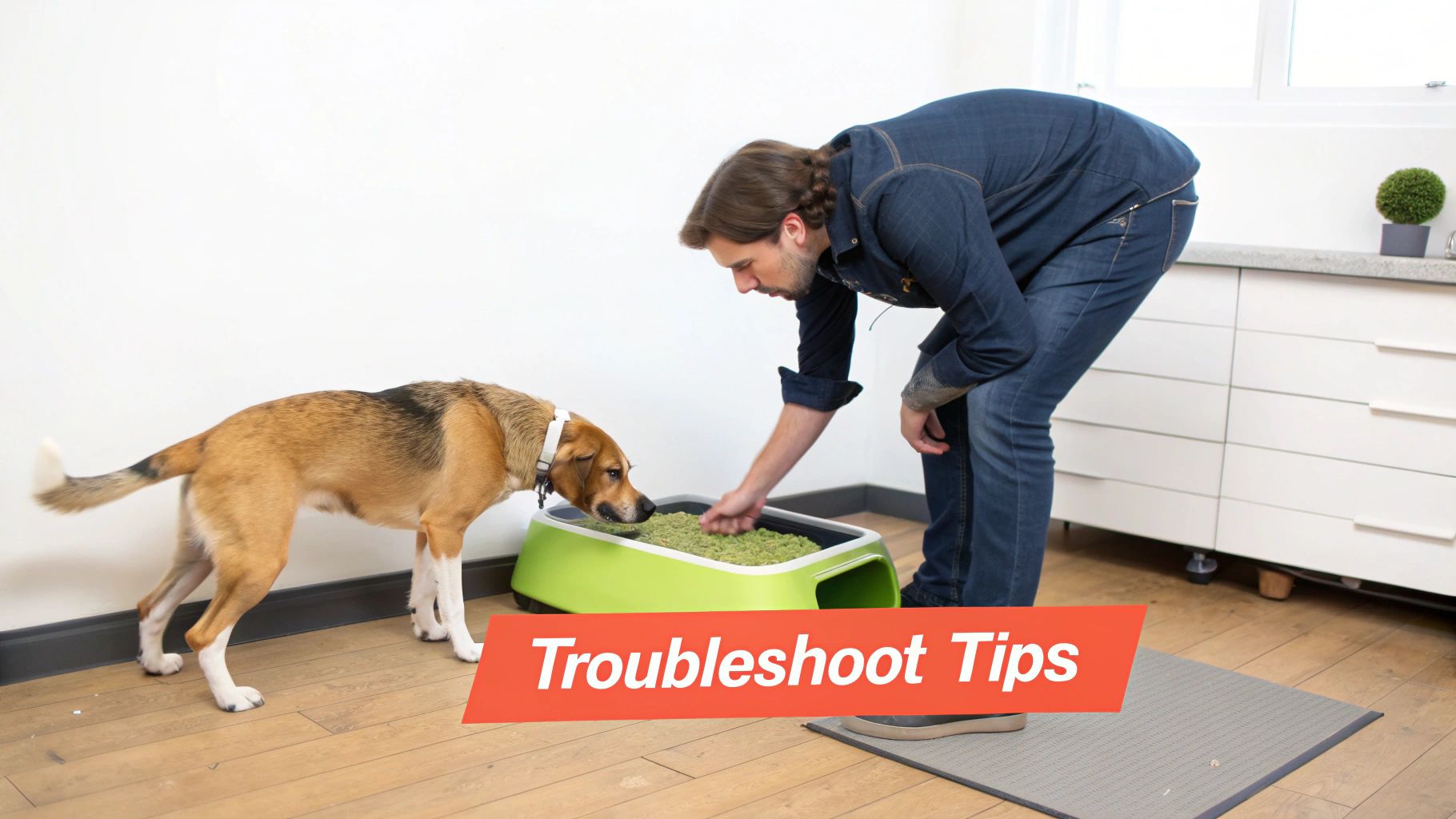
Begin by simply watching your dog’s approach to the tray. Notice every pause, sniff, or sudden retreat. Chances are the substrate’s feel or the spot you chose is giving them pause.
I once worked with a feisty terrier who flat-out refused clay pellets. The moment we swapped to recycled paper, she marched in first thing the next morning without a backward glance.
Often these minor swaps save you from a full routine overhaul. Let’s start by looking at where and how you place that tray.
Identify Refusal Reasons
- Place Tray 2 Feet From Doors to cut down on foot traffic and noise distractions
- Try a Softer Substrate like paper pellets if clay feels too rough under paws
- Add a Second Station in a calm corner when you have more than one dog
- Use a Dog-Friendly Scent Attractant to gently lure them in
If your pup still hesitates, install a low step-over ramp for easier access. Time how quickly they enter and exit—those seconds tell you whether the ramp helps. Jot down each change so you spot the pattern.
Stop Marking Outside The Tray
Marking around the tray isn’t spite—it’s stress talking. Yelling only raises their anxiety. Instead:
- Erase Old Odors with an enzyme cleaner so they don’t get drawn back
- Place a Catch Pad beneath the tray to handle small overshoots
- Schedule Tray Time right after meals using a timer for reliable consistency
- Scatter Treats at the far edge to encourage full entry
- Reward Calm Behavior near the tray to reinforce peaceful pauses
In one household, adding a second tray by the laundry room cut marking incidents by 80%.
“Seeing the marked spots disappear after enzyme cleaning was a game changer.”
These moves prove you can train a dog to use a litter box—even if they’ve marked before.
Handle Scatter Accidents
Digging or playful flinging can turn litter time into a cleanup headache. Contain it with:
- A Low-Rim Tray with Guard Walls to keep stray pellets in place
- A thin layer of paper pellets beneath the tray to capture spills
- Potomo’s Clip-On Pooper Scooper for a touchless, faster cleanup
- Multiple trays on different floors so each dog has its own station
Playful late-night digging? Stash trays out of sight during play sessions. Also check that you’re not overfilling—the deeper the litter, the more they want to dig.
When To Seek Professional Help
If refusals persist past two weeks of consistent tweaks, an animal behaviorist can spot subtle anxiety cues you might miss.
- Sessions often include personalized goal-setting and timed desensitization
- Trainers may introduce new reward signals or swap out tray cues entirely
Don’t let waste hazards catch you off guard—discover the unseen dangers in dog poop highlighted by CDC experts.
Keep observing daily, make subtle adjustments, and reward every win. Small changes spark big strides—and before you know it, your dog will view the tray as the only place to go.
Frequently Asked Questions
Here are some common questions about litter box training your dog:
-
What size litter box fits my dog?
Aim for a tray just a few inches wider than your dog’s shoulders. 12×18 inches usually suits toy breeds, 18×24 inches works for medium dogs, and bigger pups often need a custom or extra-large liner. -
How fast will my dog catch on?
Puppies often master the routine in about 4–6 weeks when you stick to a schedule. Older dogs with outdoor habits can take 6–8 weeks, but the payoff is worth it. -
How do I keep odors at bay?
Scoop at least twice a day and swap liners every 48 hours. An enzyme cleaner and a compact air purifier right by the tray can make all the difference. -
Can senior dogs adapt to a tray?
Definitely. Invite them to the tray every 2–3 hours, match rewards to the treats they love, and tie indoor breaks to the cues they already know.
Key Takeaway Consistency, clear cues, and a setup that fits your dog’s size are the secret sauce for stress-free litter training.
Additional Resources
For an in-depth look at substrate options, ideal placement, and fixing common hiccups, head over to our FAQ hub.
Explore Detailed Tips on Dog Litter Training
Tips To Maintain Consistency
- Use your phone’s timer to remind you about tray visits
- Stash training treats in a visible spot so you never miss a reward
- Jot down each success in a simple log—you’ll spot patterns and wins
Ready to streamline cleanup and maximize convenience? Get your hands on the ultimate hands-free scooper from PoTomo today and easily transform your daily routine: Shop the PoTomo Scooper