

A great hands-free dog leash should feel like a natural extension of your body, not another piece of gear to juggle. It needs a comfortable, easy-to-adjust belt, a shock-absorbing bungee to handle any sudden lunges, and hardware that’s built to last. The best ones even throw in thoughtful extras like reflective stitching for those early morning or late evening walks and a traffic handle for when you need to keep your dog close. It's a simple tool, but it completely changes the game.
Why Hands-Free Leashes Are a Game-Changer
Imagine going for a run with a normal arm swing, carrying groceries without a leash handle digging into your palm, or just feeling more stable on a tricky hiking trail. That’s the freedom a hands-free leash gives you. It stops being just another leash and becomes an essential tool for anyone who loves getting outdoors with their dog. For many of us, it’s about getting back a little bit of independence and making that shared time even better.
This isn’t just some niche product, either. It’s part of a bigger shift in how we include our dogs in our lives. The market for these leashes is booming, hitting a global valuation of around USD 375 million in 2024. That growth is all about people wanting to bring their dogs along for every adventure. You can dig into more of the data on this trend over at datainsightsmarket.com.
The Real-World Benefits
Once you make the switch to a hands-free system, you start noticing a bunch of practical perks you might not have expected.
- Better Safety and Control: Anchoring the leash to your center of gravity gives you way more stability. This is a huge plus if your dog gets excited and pulls unexpectedly. My friend, who has a 70-pound Golden Retriever, says it was the first time she felt truly in control on icy sidewalks.
- A More Natural Running Form: If you run with your dog, you can finally maintain a proper gait without that awkward leash hand throwing off your balance. It can even help prevent shoulder and back strain.
- The Freedom to Multitask: Pushing a stroller, taking photos on a hike, or just answering a quick call becomes so much easier when you have both hands free.
- Hassle-Free Cleanup: Picking up after your dog is no longer a juggling act. With no leash to manage, you can easily use a tool like the Potomo pooper scooper for a fast, clean pickup without any fumbling.
The point of a great hands-free leash isn't just about freeing up your hands. It's about creating a safer, more connected, and all-around better walking experience for you and your dog.
This guide will break down everything you need to know to find the perfect hands-free leash for your specific needs.
Waist-Worn vs. Crossbody: Which Style is Right for You?
When you start digging into hands-free dog leashes, you’ll quickly find two main camps: the waist-worn crew and the crossbody advocates. They both get the job done—freeing up your hands—but the experience is totally different.
Figuring out which one is right for you comes down to how you live, what your dog is like, and what you’re hoping to get out of your walks. Getting this first step right is the key to finding a setup that feels like a natural extension of yourself.
This little decision tree can help you see which path makes the most sense for your lifestyle.
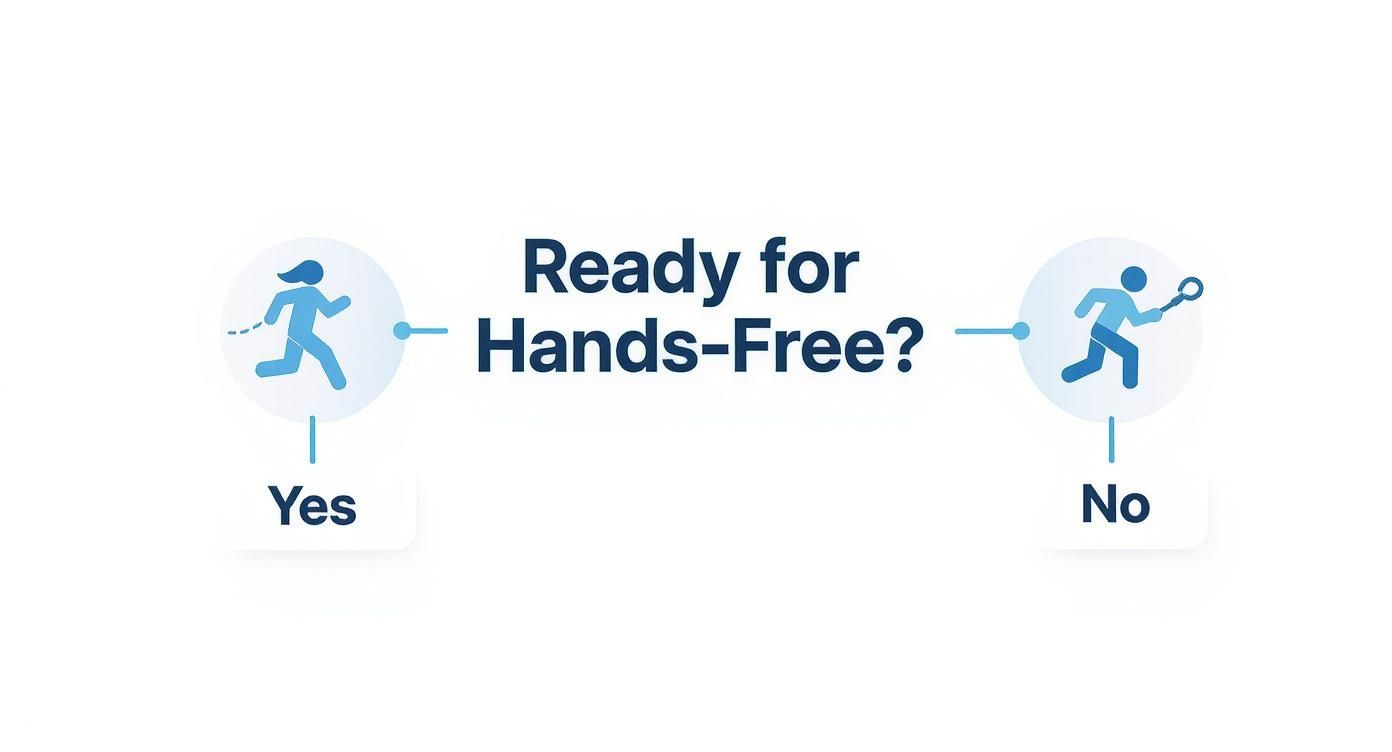
As you can see, what you plan to do on your walks—whether it's a 5k run or just a casual stroll to the coffee shop—is the biggest factor.
The Stability of Waist-Worn Leashes
A waist-worn leash is the undisputed champion for runners, hikers, and anyone whose dog has a bit of horsepower. By anchoring the leash right at your core, it spreads your dog's pull evenly across your center of gravity. That means way more stability and balance, which is an absolute game-changer on a rocky trail or a fast-paced jog.
Picture this: you're in the zone on your run, and a squirrel makes a sudden dash. With a waist leash, that jolt gets absorbed by your entire core instead of violently yanking on your arm or shoulder. It’s not just about preventing an injury; it helps you keep your stride and stay in form.
The Accessibility of Crossbody Leashes
On the other hand, a crossbody leash—worn like a sash from your shoulder to your opposite hip—is brilliant for more relaxed, day-to-day use. It keeps your dog comfortably at your side, which is perfect for navigating a busy sidewalk, a crowded farmer's market, or a training session where you need to give treats and quick leash corrections.
This style really shines when you need to switch between hands-free and hand-held mode. If you see another dog coming, you can grab the leash in a second without any fumbling. It strikes a perfect balance between freedom and control, making it ideal for city life.
Let's take a quick look at how these two styles stack up side-by-side.
Comparing Hands-Free Leash Styles
Here's a quick breakdown of the two main hands-free leash designs, their ideal uses, and key features to help you decide.
| Leash Style | Best For | Key Advantage | Potential Downside |
|---|---|---|---|
| Waist Worn | Running, hiking, owners of strong pullers | Superior stability by using your core strength | Can feel bulky for casual, short walks |
| Crossbody | City walks, training, quick errands, social outings | Easy to grab for manual control; less bulky | Less ideal for high-impact activities or big pullers |
Ultimately, both are great options, but they're built for different missions.
The best choice isn't about which leash is "better" in a vacuum. It's about which one fits so seamlessly into your life that you forget it's even there.
And here’s a benefit of any hands-free system that people often forget: it makes cleanup a breeze. That dreaded moment when you have to juggle a leash, a poop bag, and, well, the poop itself? Gone.
With both hands free, using a tool like Potomo’s pooper scooper becomes ridiculously easy. It clips right onto your belt, allowing you to manage the mess in seconds without ever dropping the leash or losing your rhythm. It’s one of those small conveniences that makes every single walk just a little bit better.
Must-Have Features for Safety and Durability
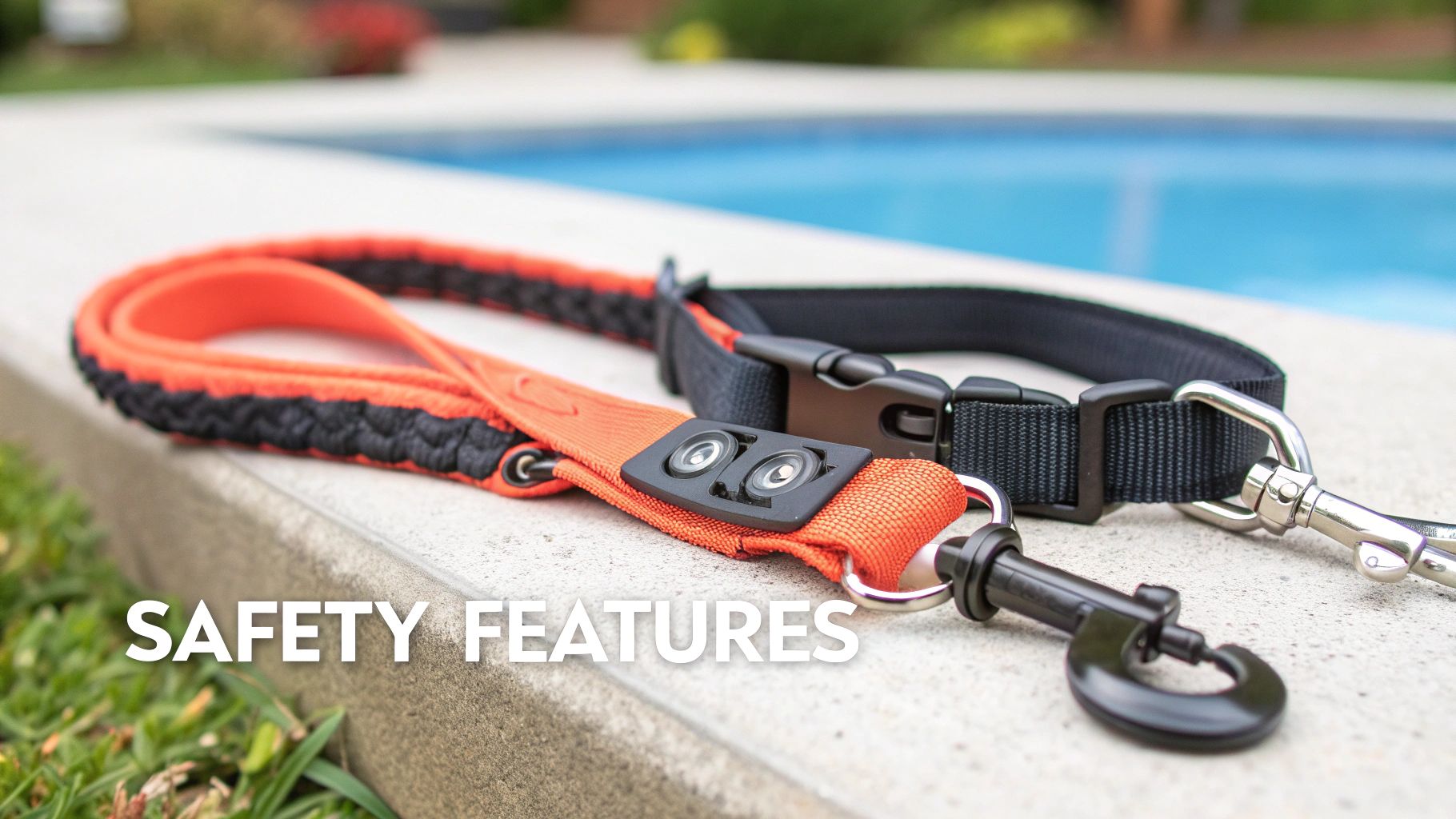
When you're picking out a hands-free dog leash, it's the little details that separate a frustrating gimmick from a piece of gear you can't live without. The best designs have thoughtful features that boost both your safety and the leash's lifespan.
These aren't just fancy add-ons; they're what turn a simple strap into a reliable tool for your daily adventures.
The Bungee for Shock Absorption
If you have an enthusiastic dog, a good shock-absorbing bungee isn't optional—it's essential. Think of this elastic section as the suspension system for your walk.
When your dog suddenly lunges for a squirrel, the bungee stretches and absorbs the jolt. This simple feature saves your back from jarring pulls and stops your dog from getting a sharp, unpleasant yank on their collar or harness. It makes the whole experience much smoother and safer for both of you.
Control Features for Urban Environments
Even when you're hands-free, you'll inevitably face situations where you need instant, close control. This is exactly why a traffic handle is so important.
It’s a second, unpadded handle sewn right onto the leash, near your dog’s collar. It lets you quickly pull your dog in close when navigating a busy street, a crowded farmer's market, or passing another dog on a tight trail.
Another game-changer is reflective stitching. When woven directly into the leash material, it makes you and your dog much more visible to cars during those early morning or late-night walks. It's a simple addition that adds a critical layer of safety.
Materials and Hardware That Last
The leash's material is the foundation of its durability. It determines how it will hold up to daily use and different weather conditions. The two most reliable options you'll see are:
- Nylon Webbing: This is the industry standard for good reason. It’s tough, lightweight, and won't break the bank. High-quality nylon will have reinforced stitching to keep the hardware secure and prevent fraying over time.
- Biothane: This is a PVC-coated webbing that is completely waterproof and stink-proof. If your adventures involve rain, mud, or a dip in the lake, Biothane is a fantastic choice. It won't absorb moisture or odors, and you can just wipe it clean.
Beyond the strap itself, look closely at the hardware. Flimsy plastic clips are a huge safety risk because they can snap under pressure. Always opt for high-quality metal clips and D-rings (like zinc alloy or stainless steel) that feel solid and operate smoothly.
A well-made leash is an investment in peace of mind. The confidence you get from knowing the hardware won't fail is worth every penny.
This focus on better design is part of a bigger trend. The hands-free leash market has seen a "premiumization" push, with owners investing in better ergonomic designs and even smart features like GPS. You can check out more on these market trends at wisuyreports.com.
On a practical note, a hands-free setup also makes cleanup much easier. With both hands free, you can manage waste bags quickly, which is a big help. If you want to understand the health side of proper cleanup, you might be interested in the unseen dangers in dog poop as highlighted by health experts. It’s a small but significant perk of a great leash.
Choosing the Right Leash for Your Dog
Finding the best hands-free dog leash isn't a one-size-fits-all deal. What works wonders for your neighbor’s calm 15-pound terrier could be a total disaster for your energetic, 90-pound retriever.
The single most important thing you can do is match the leash to your dog’s size, strength, and personality. It’s more than just a tether; it’s your line of communication and a crucial safety device. Getting this right is the secret to making every walk comfortable, secure, and fun for both of you.
For the Dog Who Pulls Like a Freight Train
If your arm feels like it's being pulled out of its socket on every walk, your top priority is durability. A standard leash just won't cut it. You need a system built from the ground up to handle serious, repetitive force without giving out.
Here’s what to look for:
- Heavy-Duty Hardware: The clips and D-rings have to be solid metal. Flimsy alloys or plastic are an absolute no-go. A locking carabiner clip is a game-changer, giving you that extra layer of security against a sudden, accidental unlatching.
- Reinforced Stitching: Look closely where the webbing meets the hardware. You want to see bar-tack stitching (a series of tight, zigzag stitches). It’s the hallmark of high-quality construction that won’t fray or snap under pressure.
- A Bungee That Can Handle It: The shock absorber is critical. For a big, powerful dog, you need a bungee with serious tensile strength. It should absorb a lunge without snapping you forward or overstretching into uselessness.
For a strong puller, that leash is a piece of safety equipment. Focusing on burly construction isn’t just about making it last—it's about preventing a dangerous breakaway on a busy street.
What About Small Dogs and Their Comfort?
With smaller breeds, the challenge is completely different. A leash designed for a German Shepherd will feel heavy, bulky, and downright awkward for a Dachshund. The hardware can be especially clunky, banging against their little body and weighing them down.
For the little guys, think lightweight. Thinner webbing and smaller, lighter metal clips make a world of difference. A gentler bungee with less resistance is also key, so it doesn't give them a jarring yank with every movement.
Introducing the Leash to an Anxious Pup
A dog’s temperament is just as important as their size. If you have a nervous or reactive dog, the new feeling of a leash around your waist might be unsettling at first. The trick is a slow, positive introduction.
Start at home. Let your dog sniff the new leash and belt, rewarding them with treats. Then, attach it for short periods inside the house without actually going anywhere. This helps them get used to the sensation.
When you do head outside, keep the first few sessions short and in a quiet, familiar spot. This gradual process helps build a good association and makes the transition smooth and stress-free.
The Overlooked Advantage of a Cleaner Walk
When people first get a hands-free leash, they're usually thinking about the big stuff, like improving their running form or having more stability on a tricky hiking trail. But one of the best perks is actually much simpler: it completely changes the game for cleanup duty.
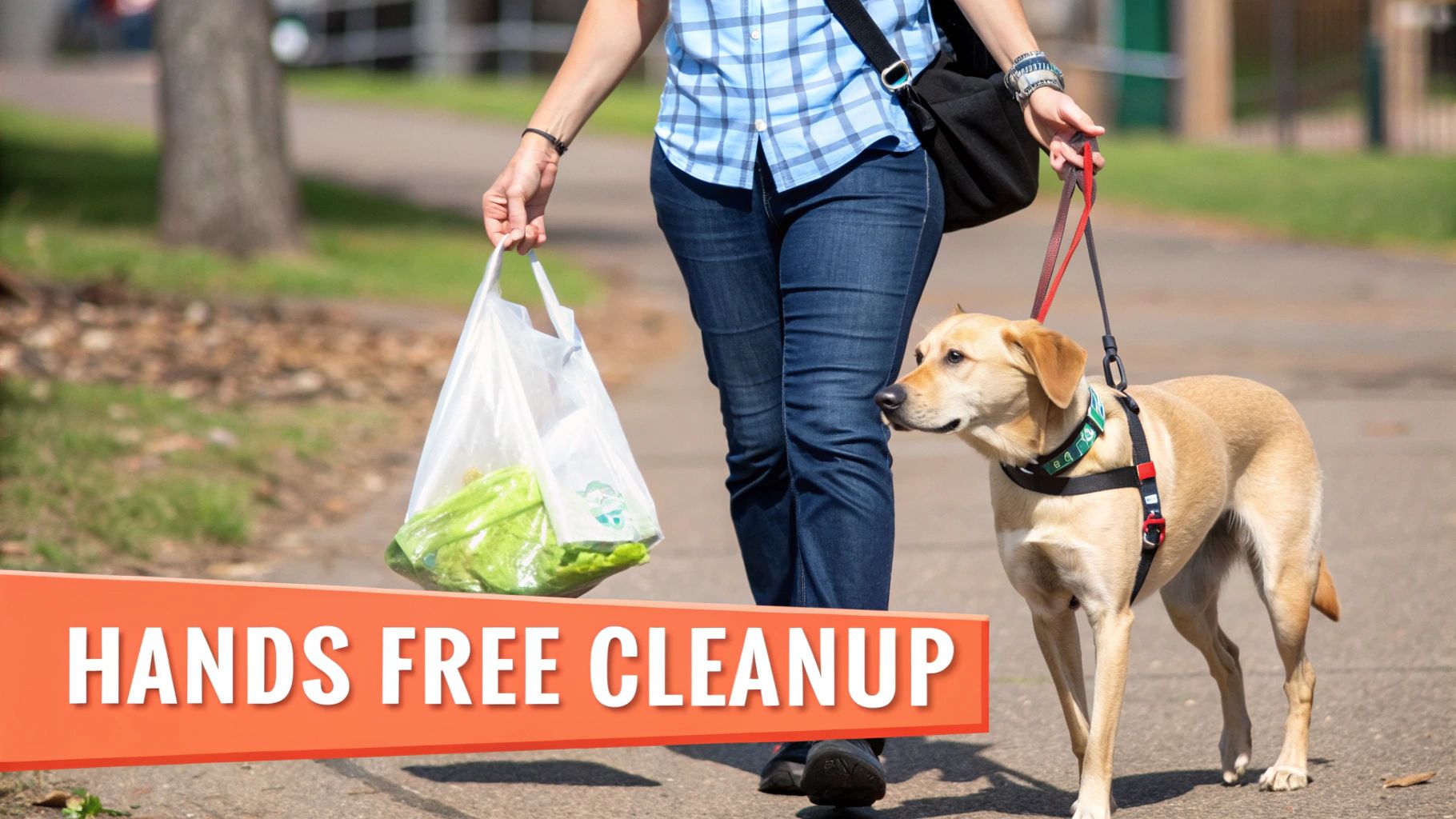
We've all been there. You're trying to hold a leash handle, peel open a flimsy poop bag with one hand, and keep your dog from darting into the street all at once. It’s an awkward juggling act nobody enjoys. A hands-free system just erases that whole struggle. Both your hands are free to take care of business quickly and, more importantly, hygienically.
The Ultimate Convenience Pairings
This new freedom makes it so much easier to use tools designed for a cleaner, faster pickup. Instead of fumbling with the leash, you can manage a pooper scooper without missing a beat.
For instance, a clip-on scooper like Potomo’s becomes the perfect partner for your hands-free setup. Its lightweight design means you can attach it directly to the leash or your belt, so it’s always ready when you need it. You just unclip it, scoop, and get back to your walk without ever breaking stride or feeling like you're losing control of your dog. It turns a clumsy chore into a seamless part of your routine.
The real magic of a hands-free system isn't just about what you can do—it's about removing the small, daily frustrations that get in the way of enjoying time with your pet.
This simple switch also means better hygiene. With two hands, you can tie off the bag securely without any fuss, minimizing contact and keeping everything clean. If you want to dive deeper, we have a complete guide on doggie waste disposal with even more tips.
In the end, this overlooked advantage is about making your entire routine more pleasant. When cleanup isn't a hassle, you can stay present and focused on the walk itself. It’s a small detail that makes a huge difference in the quality of your daily adventures with your best friend.
Getting It Right: Your Final Choice and First Walks
Alright, you've done the homework. You know what makes a good hands-free leash and what to look for. The market for this stuff is huge—the global pet leash industry reportedly hit $2.1 billion in 2023, which tells you there are a ton of options out there. If you're curious, you can learn more about these pet industry trends and what they mean for us as dog owners.
Before you hit that "buy" button, just run through a quick mental checklist. Think about what you'll actually be doing. Is it mostly for running or casual neighborhood walks? How big is your dog, and are they a puller? Did you double-check for a traffic handle and some reflective stitching? Getting these details right is what separates a frustrating piece of gear from a tool you'll love using every day.
Your First Few Outings
Switching to a hands-free leash is a small change, but it does take a little getting used to for both you and your dog. The first couple of walks are all about making sure it's safe and comfortable.
Here’s how to make that transition a smooth one:
- Dial in the Fit: Adjust the waist belt or crossbody strap so it feels snug, but not like it's squeezing you. If the belt is too loose, it'll slide all over the place, which can cause chafing or, worse, throw you off balance if your dog suddenly pulls.
- Start Somewhere Quiet: Don't make your first walk a trip down a busy city street. Head to a park you both know, somewhere with fewer distractions. This gives you a chance to get a feel for the bungee's give and the leash's real-world length without any added stress.
- Make Friends with the Traffic Handle: Practice reaching for and grabbing the traffic handle. Do it a few times so it becomes muscle memory. This little loop is your best friend when you need to get instant, close control.
The goal here is to build confidence until the leash feels like a natural part of your stride, not a weird new accessory. A good first experience paves the way for countless awesome adventures down the road.
Remember, the perfect hands-free leash isn't just about freeing up your hands to carry a coffee or check your phone. It's about making your walks, runs, and hikes together safer and way more enjoyable for everyone involved.
FAQ: Your Hands-Free Dog Leash Questions Answered
Making the switch to a hands-free leash often brings up a few questions. Here are the answers to some of the most common ones we hear.
Are hands-free leashes safe for strong dogs that pull?
Yes, but only if you choose the right one. A heavy-duty hands-free leash can actually provide more stability than a handheld one. Look for these key features: a strong shock-absorbing bungee, reinforced stitching (bar-tack is best), and solid metal hardware like a locking carabiner. This combination is built to handle the force of a strong puller, protecting your back and keeping your dog secure.
Can I use a hands-free leash for a puppy?
It's best to wait until your puppy has mastered basic loose-leash walking with a traditional leash first. Puppies require constant guidance and quick corrections, which are easier to provide with a handheld leash. Once they walk politely without pulling, transitioning them to a hands-free system for runs or hikes is a great next step.
What's better: a waist-worn or crossbody leash?
It depends on your activity.
- Waist-worn leashes are superior for running, hiking, and managing strong pullers because they anchor to your center of gravity, providing maximum stability.
- Crossbody leashes are perfect for city walks, training sessions, and casual outings where you might need to quickly grab the leash for manual control.
How do I stop my dog from getting tangled?
This is a common concern! A leash with a 360-degree swivel clip can significantly reduce tangles as it allows the leash to rotate freely. Also, keeping the leash length appropriate for your environment helps. Use a shorter setting in crowded areas and a longer one in open spaces where your dog can roam without circling you.
What is a "traffic handle" and do I need one?
A traffic handle is a second, shorter handle sewn close to the leash clip. It's an essential safety feature that allows you to quickly and securely pull your dog close to you when crossing a busy street, passing other dogs, or navigating crowded spaces. We highly recommend choosing a leash that includes one.
Ready to complete your setup? A great hands-free leash pairs perfectly with a convenient cleanup tool. The Potomo pooper scooper clips directly to your belt or leash, making it the ideal accessory for a truly seamless and hygienic walk. Discover more at https://potomo.net and elevate your daily adventures.